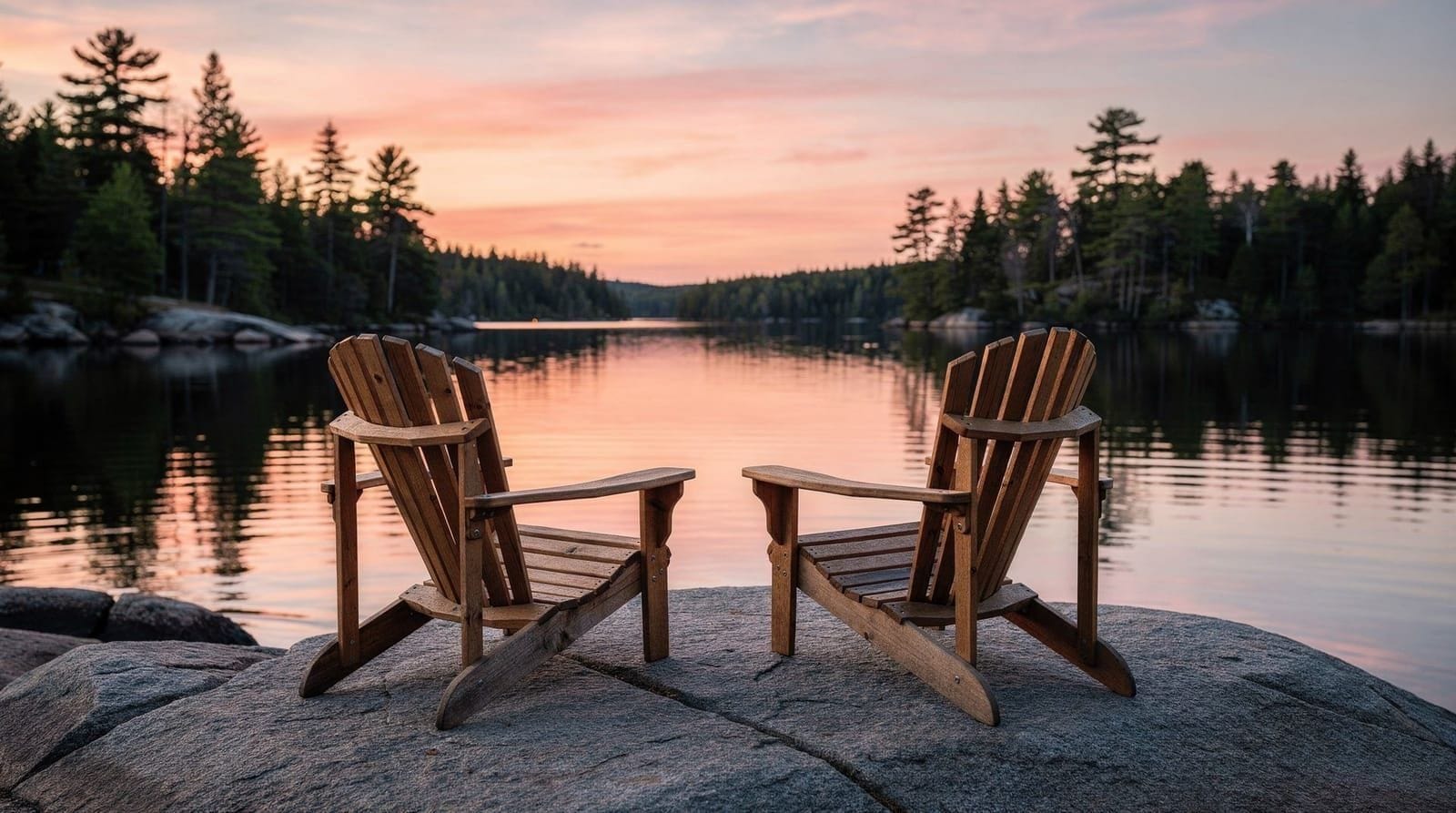
Muskoka cottage country escape
Muskoka: High Falls, Hardy Lake & Huckleberry Rock Tour
Cottage country, without owning a cottage
Muskoka is Ontario’s classic lake-country retreat — the region where a large share of Toronto’s wealthier residents have owned family cottages for generations, which has shaped the area into a mix of genuinely beautiful shoreline and, in places, resort pricing to match. This itinerary is built for visitors without a cottage of their own: four days split between Bracebridge and Huntsville, Muskoka’s two main towns, using resort or inn stays and rental canoes rather than a private dock. It’s rated moderate difficulty mainly for the short hikes involved, not because anything here is physically demanding.
A car is essential — Muskoka has no meaningful public transit between its towns, lakes and trailheads, and the whole appeal of the region depends on being able to move between a lake, a lookout and a small town on your own schedule. Budget varies widely here depending on where you stay: a full-service lake resort like the JW Marriott Rosseau Muskoka Resort & Spa or Deerhurst Resort runs $350–600+ CAD/night in peak season (roughly late June through early September, when demand is highest), while a straightforward inn or motel in Bracebridge or Huntsville is closer to $160–240 CAD/night. Plan on $220–320 CAD per person per day at a mid-range pace within that range, more if you’re staying at one of the destination resorts.
This is also one of the few Ontario regions where a short-term cottage rental can genuinely compete with a hotel on cost for two or more couples traveling together — a shared lakefront cottage for a group of four to six often works out to a comparable or lower per-person nightly rate than individual hotel rooms, with the added benefit of a private dock and kitchen. If a hotel-style stay isn’t a requirement, it’s worth pricing out a rental alongside the resort options above.
| Where | Bracebridge and Huntsville, Muskoka |
| Cost | around $220–320 CAD/person/day |
| Getting there | car essential — no transit between towns |
| Best time | late May–June or September for fewer crowds |
| Booking | resorts weeks ahead in peak summer |
Day 1: Arrival and Bracebridge
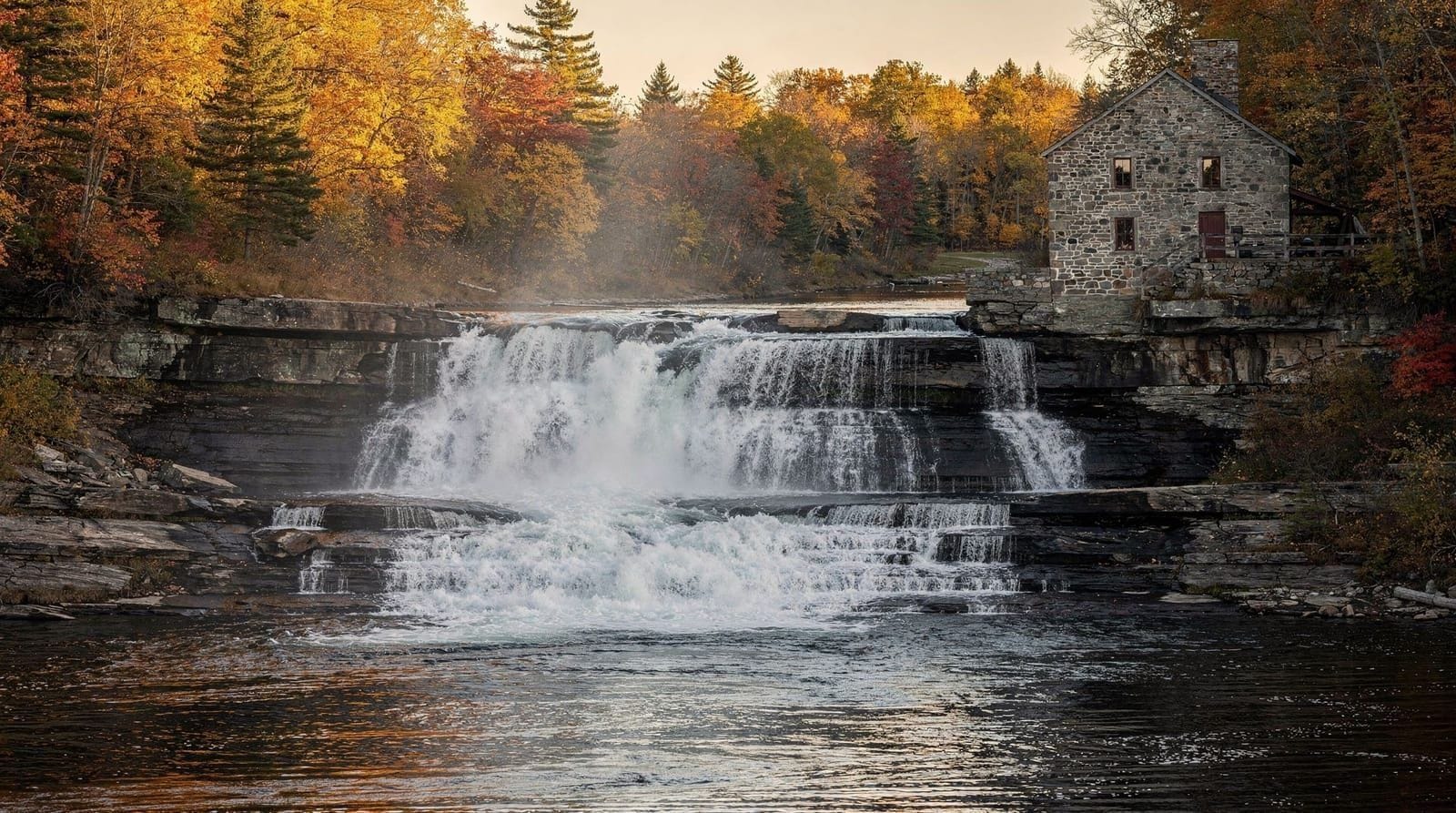
Drive about 2 hours north from Toronto, arriving in Bracebridge by early-to-mid afternoon. Bracebridge Falls runs directly through the center of town — an unusually urban waterfall setting, worth a short walk before you’ve even checked into your accommodation. Spend the rest of the day settling in and exploring downtown Bracebridge’s small shops and cafés, a manageable, low-key first afternoon after the drive. If you’re arriving with daylight to spare, the falls are especially good around golden hour, when the light catches the water — worth timing a coffee break around if photography is part of why you’re here.
Getting oriented before Day 1
Muskoka’s road network is straightforward but rural — Highway 11 is the main north-south spine connecting Bracebridge and Huntsville, with smaller regional roads branching off toward individual lakes and trailheads. Cell coverage is generally reliable along Highway 11 itself but thins out on some of the smaller lake-access roads, so it’s worth downloading offline maps for the region before you leave Toronto rather than assuming a signal at every turn. Fuel up before leaving the highway corridor, since gas stations are sparser and slightly pricier once you’re on Muskoka’s rural roads.
Choosing between Bracebridge and Huntsville as your base
Both towns work as a base for this itinerary, and the choice mostly comes down to which lakes and trailheads you want to be closest to. Bracebridge sits nearer to Lake Muskoka and the High Falls/Hardy Lake/Huckleberry Rock circuit that anchors Day 2, while Huntsville is closer to Algonquin’s west gate if you’re tempted to extend this trip north. Neither is meaningfully more than a 30–40 minute drive from the other, so this decision matters less than it might first appear — pick based on where your accommodation is rather than trying to optimize the drive times too precisely.
Day 2: High Falls, Hardy Lake and Huckleberry Rock
This is the region’s best single day of short hikes and lookouts, and the Muskoka: High Falls, Hardy Lake & Huckleberry Rock Tour covers all three in a single guided outing — useful if you’d rather not spend the morning researching trailhead locations yourself, since Muskoka’s rural roads aren’t always well signed for visitors. Huckleberry Rock’s lookout, an open granite outcrop overlooking Lake Muskoka’s islands and shoreline, is the day’s highlight and one of the region’s most photographed views.
If you’d rather explore independently, all three stops are drivable within about 30–45 minutes of Bracebridge, and none require more than a short, moderate walk to reach the viewpoint. Pack a picnic lunch for this day — none of the three stops has meaningful food infrastructure, and stringing them together as a single loop works better without a sit-down restaurant break interrupting the flow. Bring water and sun protection regardless of season; the granite outcrops at Huckleberry Rock offer little shade, and the exposed rock surface reflects heat noticeably on a sunny summer afternoon.
Day 3: Lake time and Huntsville
Spend the morning on the water — rent a canoe or kayak at one of the public launch points on Lake Muskoka or Lake Rosseau, or simply book a couple of hours of dock or beach time if your accommodation has lake access. In the afternoon, drive about 20–30 minutes to Huntsville, Muskoka’s other main town and gateway to Algonquin Provincial Park’s west entrance, roughly an hour further east if you wanted to extend this trip.
Huntsville’s downtown along Main Street has a good concentration of independent restaurants and shops, worth an afternoon and dinner stop even if you’re not continuing to the park. The Muskoka hiking and canoeing guide covers paddling routes and rental locations in more detail if you want to plan a longer canoe outing.
Muskoka’s lake culture runs on a distinctly relaxed schedule compared to a city itinerary — many public launch points and rental operations open by 9am but slow down by late afternoon, so front-loading the water time earlier in the day tends to work better than trying to squeeze it in after a late lunch. If you’re not confident paddling a canoe, most rental operators offer a brief orientation, and Muskoka’s larger lakes are generally calm enough for beginners on an average summer day, though afternoon winds can pick up on Lake Muskoka specifically, worth checking before heading out later in the day.
Day 4: A relaxed morning before heading back
Use the last morning for whatever you didn’t get to — one more short trail, a final swim, or simply breakfast on a dock or patio before the roughly 2-hour drive back to Toronto. The Muskoka Day Trip with Bracebridge RV-Motorhome Tour is worth considering if you’d rather see a broader loop of the region’s scenic points on your way out rather than driving directly back.
A quieter alternative to the peak-summer crowds
Late May and June, before Muskoka’s peak summer season fully kicks in, offer a genuinely different version of this trip — lower prices, easier booking, and noticeably quieter trails and lookouts, at the tradeoff of cooler lake water for swimming. September carries similar advantages with the added bonus of foliage beginning toward the end of the month. If crowds and cost matter more to you than warm-water swimming specifically, either shoulder-season window is worth considering over the busier July-August stretch.
Adding a canoe-focused half-day
If Day 3’s lake time leaves you wanting more time on the water rather than in Huntsville’s shops, it’s straightforward to swap that afternoon for a longer paddle instead. Lake Rosseau in particular rewards a half-day rather than an hour or two, since its shoreline is dotted with historic cottage architecture worth paddling past slowly rather than rushing back to the dock. Public launch points don’t require advance booking outside of the busiest July-August weekends, so this swap can be a same-morning decision based on weather rather than something to plan in advance.
Honest notes on seasonal timing
Muskoka runs heavily on a seasonal calendar — many resorts, restaurants and rental operations scale back or close entirely between roughly late October and early May, and cottage-country roads can be slow or occasionally impassable after significant snowfall in winter. If you’re visiting outside the late-May-to-mid-October window, call ahead to confirm your specific accommodation and activities are actually open, rather than assuming year-round operation. Peak season (late June through early September, plus fall foliage in late September/early October) also means peak pricing and the highest likelihood of needing to book accommodation weeks or months ahead.
What to pack for a Muskoka cottage-country trip
Beyond swimwear and water shoes for lake time, a couple of Muskoka-specific items are worth including: a light hiking shoe for the short granite-outcrop trails, insect repellent (blackflies and mosquitoes are most persistent late May through early July), and a printed or downloaded offline map, since cell coverage genuinely thins out on some of the smaller rural roads between lakes. If you’re renting a canoe or kayak independently rather than through a guided tour, quick-dry clothing makes the transition between paddling and everything else considerably more comfortable.
If you want more than lake time
This itinerary deliberately stays within Muskoka rather than pushing into Algonquin. If you’d rather combine both regions, see the fall foliage escape: Algonquin & Muskoka itinerary for a foliage-timed version, or the 10-day Ontario road trip for a longer loop that adds Niagara Falls and Ottawa on either side of this region.
Resort, inn or cottage rental: which fits your trip
| Full-service resort | Bracebridge/Huntsville inn | Shared cottage rental | |
|---|---|---|---|
| Price range | $350–600+ CAD/night | $160–240 CAD/night | Varies, often lowest per-person for 4–6 |
| Best for | Couples wanting a full-service stay | Budget-conscious couples, flexible base | Groups of two+ couples |
| Private dock/kitchen | Sometimes | No | Usually yes |
| Booking lead time | Months for peak weeks | Weeks | Months for the best-located ones |
A full-service resort suits couples who want spa access, dining on-site and structured amenities without arranging any of it themselves. An inn in Bracebridge or Huntsville suits travelers who’d rather spend the savings on activities or dining out. A shared cottage rental is the strongest option specifically for two or more couples traveling together, since it’s the only option here with a genuine per-person cost advantage at that group size.
Frequently asked questions about this Muskoka itinerary
Is Muskoka worth visiting without a cottage or resort membership?
Yes — public lake access points, rental canoes, and hotel or inn stays in Bracebridge and Huntsville give visitors without a family cottage a genuine version of the Muskoka experience, just with slightly less direct lake access than owning a dock would provide.
How expensive is a Muskoka trip compared to Niagara or Toronto?
It runs higher at the top end, mainly because of full-service resort pricing (JW Marriott Rosseau, Deerhurst) in peak season, but a straightforward inn or motel stay in Bracebridge or Huntsville is comparable to mid-range Toronto hotel pricing.
What’s the best time of year to visit Muskoka?
Late May through early October covers the region’s full season for lake activities and open restaurants. Fall (late September/early October) adds foliage color; winter is quieter and colder but workable for a different, lower-key visit if key attractions are confirmed open.
Do I need a car for this itinerary?
Yes — there’s no public transit connecting Muskoka’s towns, lakes and trailheads, and the itinerary depends on driving between them on your own schedule.
Is Muskoka good for a relaxing trip, or is it more activity-focused?
Both, depending on how you structure it — this itinerary deliberately mixes one active day (Day 2’s hikes and lookouts) with slower lake time (Day 3) and open mornings (Days 1 and 4), which is a reasonable template for balancing relaxation with at least one substantial outing.
How does Muskoka compare to Algonquin Provincial Park?
Muskoka is more developed, with towns, resorts and private lake homes woven through the landscape, while Algonquin is a genuine wilderness park with far less infrastructure. See the Muskoka vs Algonquin guide for a fuller comparison if you’re deciding between the two or wondering whether to combine them.
Can I rent a cottage instead of staying at a hotel or resort?
Yes, and for groups of four or more, it’s often the better value — a shared lakefront cottage typically works out to a comparable or lower per-person cost than individual hotel rooms, with private dock access as a genuine advantage over a resort’s shared waterfront. Book well ahead for peak summer weeks, since the best-located rentals go quickly.
Is Muskoka good for a solo traveler, or is it mainly a couples/family destination?
It leans toward couples and families, given the resort and cottage-rental infrastructure, but a solo traveler comfortable with independent activities (hiking, paddling, reading on a dock) can have a genuinely relaxing trip here too — just expect fewer solo-traveler-specific amenities than you’d find in Toronto.
What’s the closest airport to Muskoka?
Toronto Pearson is the practical option for most visitors, about 2 hours’ drive from Bracebridge. Muskoka does have a small regional airport near Gravenhurst with limited seasonal charter service, but it’s not a realistic option for most travelers compared to driving from Toronto.
Top experiences
Bookable activities with verified prices and instant confirmation on GetYourGuide.