Elora Gorge hiking guide
How long is the hiking trail at Elora Gorge?
The main trail network within Elora Gorge Conservation Area runs about 5 km total along both rims of the limestone gorge, doable as a loop in 1.5-2 hours. It connects to the longer Elora Cataract Trailway, a flat former rail line running roughly 47 km toward Cataract, for those wanting a much longer, gentler walk or cycle.
A limestone gorge carved by glacial meltwater, an hour and a half from Toronto
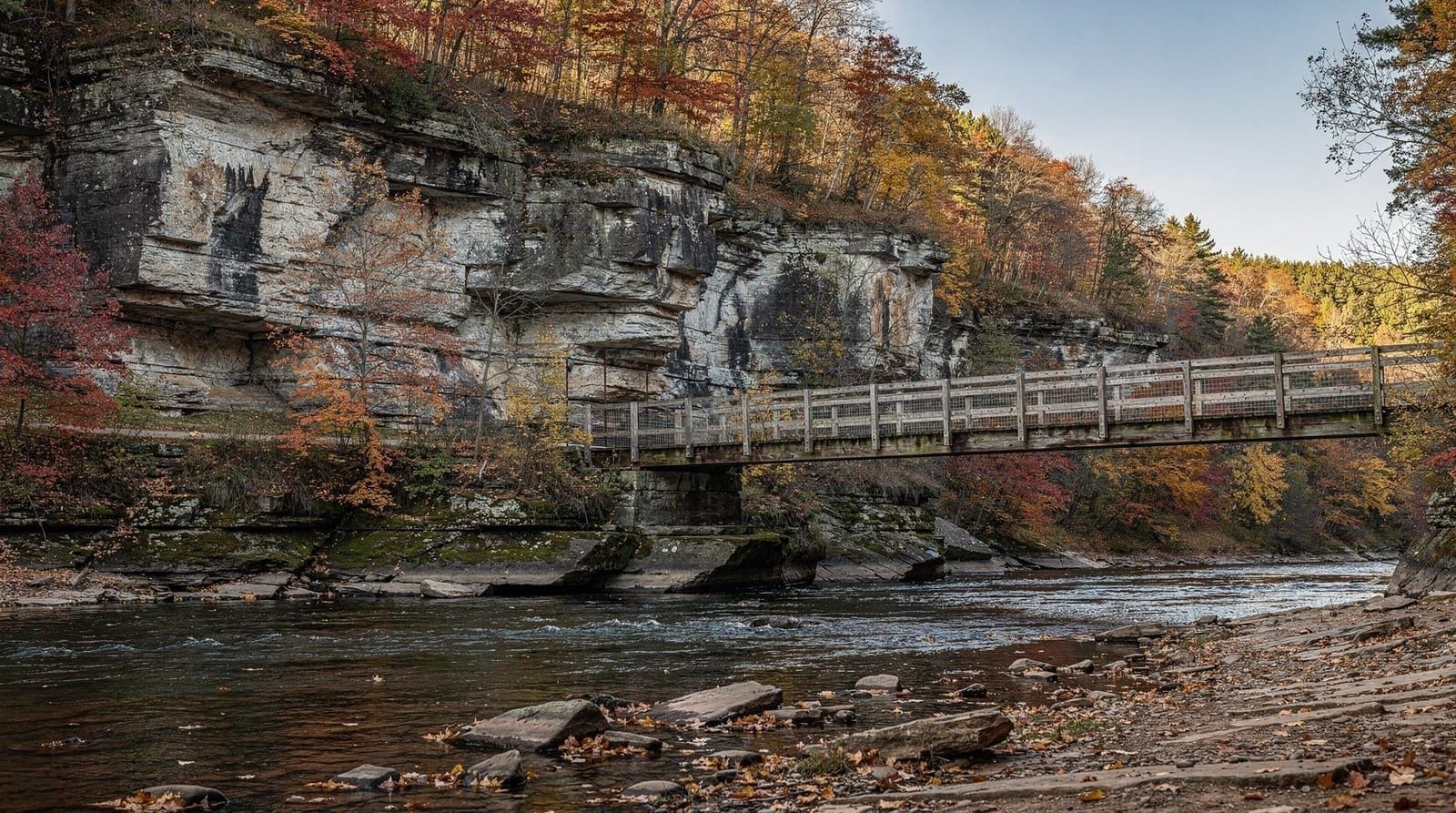
Elora Gorge Conservation Area, on the edge of the village of Elora, centres on a dramatic limestone gorge cut by the Grand River over thousands of years, with cliffs reaching up to 25 metres in places. It’s a genuinely different hiking landscape from the granite Canadian Shield terrain of Algonquin or Muskoka — layered sedimentary rock, caves, and overhangs shaped by water rather than glaciation-scoured bedrock — and manages to pack a compact, rewarding hike into a conservation area small enough to fully explore in a half-day.
| Where | Elora Gorge Conservation Area, edge of Elora village |
| Cost | CAD $9-14 day-use admission; tubing ~$12-18/person extra |
| Time needed | 1.5-2 hours for the full 5 km rim loop |
| Getting there | ~1.5 hr drive from Toronto; no practical public transit |
| Best time | Fall for colour and smaller crowds; early morning in summer to beat tubing crowds |
How Elora compares to Ontario’s other conservation-area hikes
Elora Gorge occupies a similar niche to Ball’s Falls or Dundas Peak — a compact, accessible conservation area built around a single dramatic natural feature rather than an extensive backcountry trail network. Of the three, Elora’s limestone gorge is the most visually distinct, given how different sedimentary rock formations look from the granite and shale found at the other two, making it a worthwhile addition even for visitors who’ve already done the Niagara Escarpment or Hamilton waterfall circuits.
The gorge trail network
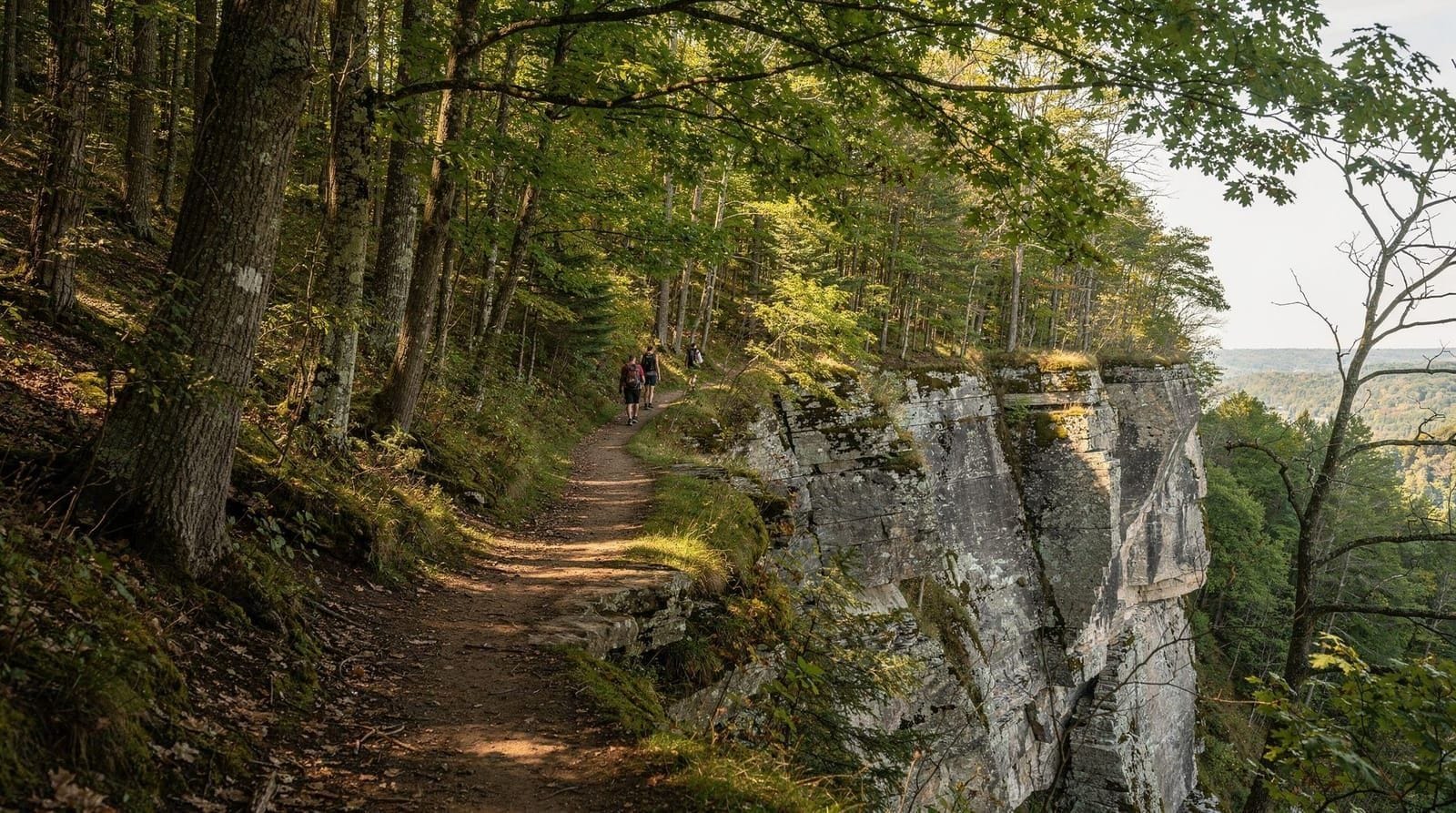
Elora Gorge Conservation Area maintains marked trails along both the north and south rims of the gorge, connected by footbridges, totalling roughly 5 km. The trails hug the cliff edge closely in several spots with fenced overlooks providing views straight down into the river below — a highlight for photographers, though not ideal for anyone uneasy with heights or hiking with small children who might dart toward the railings. A full loop covering both rims takes about 1.5-2 hours at an easy pace, with several natural stopping points at named overlooks and the gorge’s small cave formations.
The Elora Quarry
Adjacent to the main gorge, the Elora Quarry Conservation Area (a separate but nearby property, also Grand River Conservation Authority-managed) is a flooded former limestone quarry that’s become a popular summer swimming spot, with clear turquoise-tinted water and a cliff-jumping area. It’s worth noting as a distinct destination from the gorge trails themselves — swimming isn’t generally permitted within the main gorge given the current and rock hazards, but the quarry offers a managed, lifeguarded alternative in summer.
Tubing the Grand River
In summer, Elora Gorge Conservation Area rents inner tubes for float trips down a calmer stretch of the Grand River within the park, a popular warm-weather activity that runs alongside (rather than through) the more dramatic gorge sections. It’s a separate activity from hiking but often combined into the same visit, particularly with families, since it requires no hiking fitness and the conservation area’s shuttle system returns tubers to the starting point.
The Elora Cataract Trailway — for a longer, flatter walk
For hikers or cyclists wanting more distance than the gorge trails offer, the Elora Cataract Trailway is a former rail line converted to a flat, crushed-gravel multi-use trail running roughly 47 km between Elora and Cataract, passing through Fergus and several smaller communities along the way. Unlike the gorge’s cliff-edge terrain, this trail is gentle and accessible, suitable for a family bike ride or a long, unhurried walk without technical difficulty — a good option if the gorge trails feel too short or too exposed for your group.
The gorge’s caves and rock formations
Along the trail, several small caves and undercut rock shelves are visible in the limestone face, carved by the same water action that shaped the broader gorge. Signage at a few points explains the local geology — the layered sedimentary rock records millions of years of shallow sea deposits, quite different from the granite bedrock found further north in Muskoka or Algonquin. These formations are best viewed from the marked trail rather than approached directly, since the rock ledges near the cliff edge are unstable in places.
Fergus — a nearby stop worth combining
Fergus, a short drive or a stop along the Elora Cataract Trailway from Elora, is another well-preserved 19th-century Scottish-founded town along the Grand River, with its own smaller gorge section and a walkable historic downtown. Pairing Elora and Fergus into a single day is common, particularly for visitors cycling the Cataract Trailway between the two, and adds a second, less-touristed stop to round out a southwestern Ontario day trip.
The Grand River watershed
The Grand River, which carved Elora Gorge over thousands of years, is Ontario’s longest river flowing entirely within the province, and the Grand River Conservation Authority manages a chain of conservation areas along its length beyond just Elora Gorge — a broader watershed context worth knowing if the gorge sparks interest in exploring further stretches of the river, several of which have their own hiking and paddling access points further downstream toward Cambridge and Brantford.
Village of Elora — pairing the hike with a visit
Elora itself, a short walk from the conservation area entrance, is a well-preserved 19th-century mill village with limestone buildings, independent shops, and restaurants clustered along the gorge’s edge — including the Elora Mill, a former grist mill now operating as a hotel and restaurant with a gorge-side patio. Pairing a morning hike with lunch in the village is the standard way to structure a visit, and it’s worth allowing time for both rather than treating the gorge as a quick stop.
St. Jacobs — extending the trip further
For visitors willing to extend the day, St. Jacobs, a Mennonite farming community with a well-known farmers’ market, sits a short drive from Elora and is commonly combined into the same southwestern Ontario loop. It doesn’t have hiking trails of its own comparable to the gorge, but it’s a practical add-on for a fuller day if the gorge and village alone don’t fill your schedule.
Admission and practical details
Elora Gorge Conservation Area charges a day-use admission fee, typically in the CAD $9-14 range depending on season and whether you’re arriving by vehicle, which covers parking and trail access; tubing rentals are priced separately, generally around CAD $12-18 per person including shuttle return. The conservation area also operates a campground within the park, popular with families in summer. Trails can close temporarily after heavy rain due to slippery cliff-edge conditions — checking the Grand River Conservation Authority’s site before a visit avoids a wasted trip during wet weather.
Getting there from Toronto
Elora is roughly 1.5 hours from Toronto by car, generally paired with Stratford or St. Jacobs for a fuller southwestern Ontario day trip given the relatively short driving distances between them. There’s no practical public transit route to Elora itself — a car is necessary. See Elora Gorge day trip from Toronto for a full day-trip itinerary combining the gorge with the village and nearby stops.
Camping at Elora Gorge
The conservation area’s campground is a popular base for families wanting more than a day visit, with sites ranging from tent-only to full-service RV hookups, generally booking up well in advance for July and August weekends. Staying overnight also means access to the gorge trails at quieter early-morning and evening hours, before day visitors arrive and after the main crowds leave — a genuine advantage for photography or simply a calmer walk.
Best season to visit
Late spring through early fall is peak season, with tubing running roughly June through August when water levels and temperatures allow. Fall brings strong colour along the gorge rim from the surrounding maple and oak cover, with noticeably smaller crowds than summer weekends. Winter hiking is possible but trails can ice over on the cliff-edge sections, making sturdy, grippy footwear essential if visiting December through March.
Elora Gorge trails vs. an Elora day trip
This page focuses specifically on the gorge trail network and its admission, tubing, and seasonal details. If you’re planning a fuller day that also covers the village’s shops, the Elora Mill, and a realistic hour-by-hour schedule, see the companion Elora Gorge day trip from Toronto guide, which builds the hike into a complete itinerary.
Frequently asked questions about hiking Elora Gorge
How long does it take to hike the full Elora Gorge trail loop?
The full loop along both rims runs about 5 km total and takes roughly 1.5-2 hours at an easy pace, including stops at the main overlooks.
Can I swim in Elora Gorge?
Swimming isn’t generally permitted within the main gorge due to current and rock hazards, but the adjacent Elora Quarry Conservation Area offers a managed, lifeguarded swimming spot in summer.
Is tubing at Elora Gorge suitable for kids?
Yes, the tubing route uses a calmer stretch of the Grand River separate from the dramatic gorge sections, and the conservation area’s shuttle system handles the return trip, making it accessible for families.
Do I need to pay admission to hike Elora Gorge?
Yes, Elora Gorge Conservation Area charges a day-use fee, typically CAD $9-14, covering parking and trail access.
How far is Elora from Toronto?
Roughly 1.5 hours by car, similar driving distance to Stratford, making the two a natural pairing for a single day trip through southwestern Ontario.
Is the Elora Cataract Trailway the same as the gorge trails?
No — the gorge trails are shorter, cliff-edge paths within Elora Gorge Conservation Area, while the Elora Cataract Trailway is a separate, much longer (roughly 47 km) flat rail-trail connecting Elora to Cataract, better suited to cycling or a long, easy walk.
Is Elora Gorge suitable for young children?
The main gorge trails involve cliff-edge sections with fenced but sometimes close overlooks, so close supervision is needed with young kids. The flatter Elora Cataract Trailway or the lifeguarded Elora Quarry are better suited to families with younger children.
Should I visit Elora Gorge or Fergus first?
Either order works well since the two are a short drive or trailway ride apart. Starting at Elora Gorge in the morning while trails are quieter, then finishing the day in Fergus, is a reasonable default sequence.