Stratford
Home to the world-renowned Stratford Festival — Shakespeare, fine dining and a walkable riverside downtown 1.5 hours from Toronto.
Quick facts
- Distance from Toronto
- 1.5 hours (150 km) by car or direct VIA Rail
- Known for
- The Stratford Festival, one of the largest classical repertory theatres in North America
- Season
- Festival runs roughly April through October
- River
- The Avon River, with resident swans
A theatre town named for Shakespeare’s, twice over
Stratford’s connection to Shakespeare is a coincidence turned deliberate: the town was named after England’s Stratford-upon-Avon by an early settler, and its river was named the Avon to match, decades before anyone imagined it would host serious theatre. That naming accident became self-fulfilling in 1953, when local journalist Tom Patterson persuaded British director Tyrone Guthrie to help launch a Shakespeare festival in a tent on the riverbank — a modest beginning that grew into the Stratford Festival, now one of the largest classical repertory theatre companies in North America, staging Shakespeare alongside musicals, contemporary drama, and new Canadian work across four theatres each season.
That theatre-first identity shapes everything about how the town functions: restaurants time their service around curtain calls, hotels fill around performance schedules rather than typical weekend patterns, and the town’s population of roughly 33,000 swells considerably during peak festival months as visitors arrive from across Ontario and beyond.
| Where | Southwestern Ontario, ~1.5 hrs / 150 km from Toronto |
| Time needed | 1-2 days |
| Getting there | Direct VIA Rail from Union Station, or car |
| Cost | Tickets vary widely; budget CAD 60-180+/show |
| Best time | June-September for the fullest festival calendar |
The Stratford Festival
The festival’s season typically runs from spring through fall, staging productions across the Festival Theatre (its largest, purpose-built thrust-stage venue), the Avon Theatre, the Studio Theatre, and the Tom Patterson Theatre, a striking modern building on the riverbank that opened in 2020. Programming mixes marquee Shakespeare productions with musicals and contemporary plays, and the festival draws a genuinely mixed audience — serious theatre pilgrims alongside families and first-time visitors who came mostly for a nice weekend away from Toronto.
Booking ahead matters here more than almost anywhere else in this part of Ontario: popular productions, especially musicals and star-driven Shakespeare stagings, sell out weeks or months in advance during peak summer.
The Avon River and downtown
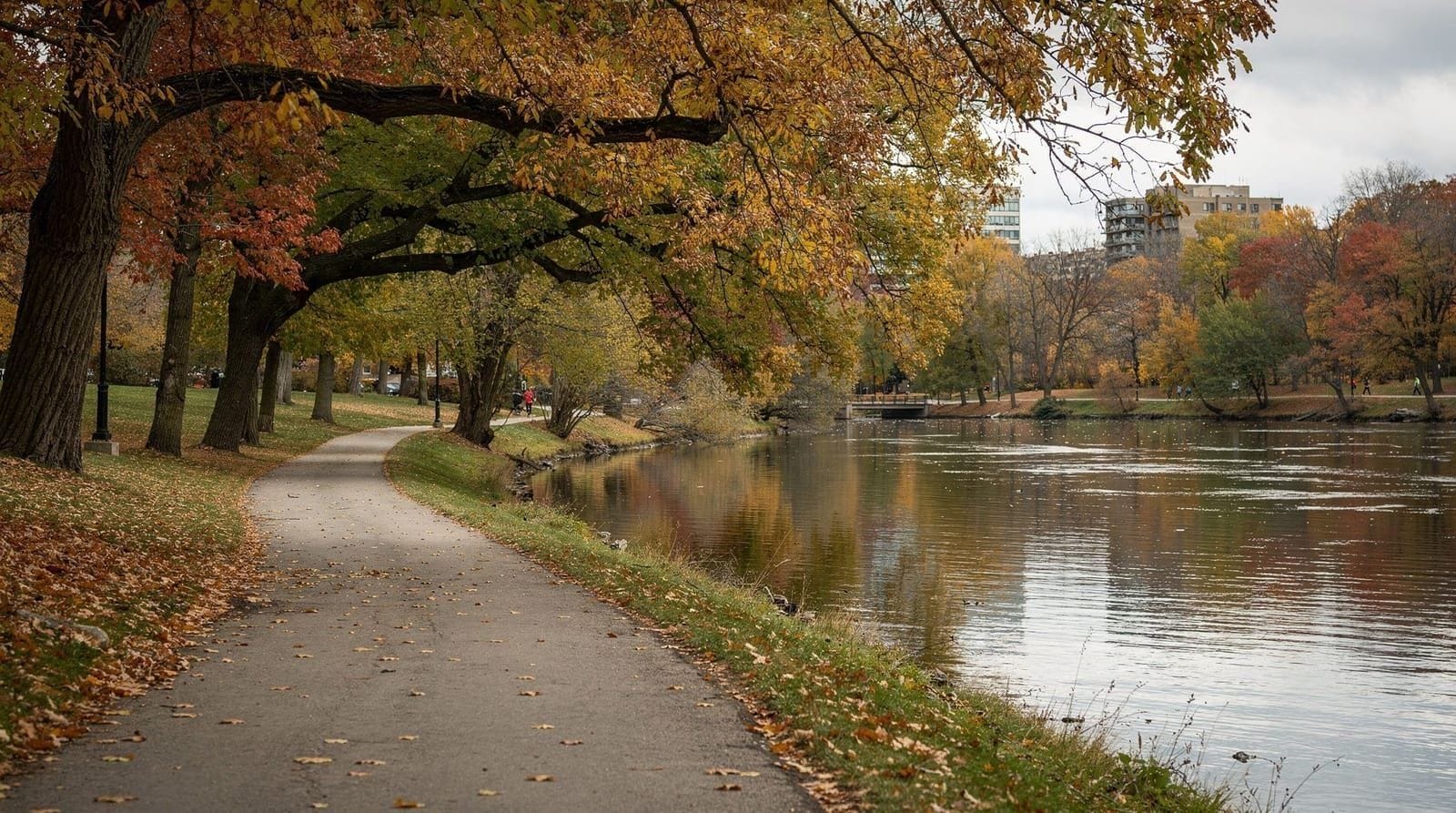
The Avon River runs through the middle of town, complete with a resident population of mute swans that has become something of a local mascot — the town even holds an annual swan parade marking their return to the river each spring. A paved riverside path loops through parkland along the water, offering an easy, scenic walk between the downtown core and several of the festival theatres.
Downtown Stratford itself, centered around Ontario Street, has a well-preserved 19th-century commercial streetscape, a legacy of the town’s earlier life as a railway and manufacturing center before theatre took over as its main economic identity.
Fine dining built around festival crowds
Stratford’s restaurant scene is disproportionately strong for a town its size, largely because theatre audiences expect a proper pre- or post-show meal. The Stratford Chefs School, a well-regarded culinary training program based in the town, has fed talent into local kitchens for decades, and several of the town’s better restaurants have reputations that extend well beyond southwestern Ontario. Reservation timing matters — restaurants near the theatres fill quickly around performance start times, so booking a table before or well after curtain call is often easier than trying to squeeze in right around show time.
Getting there from Toronto
Stratford is about 1.5 hours (roughly 150 km) from Toronto via Highway 401 and Highway 8, or a direct VIA Rail connection from Union Station, which drops you close enough to downtown and the festival theatres to manage without a rental car. The train option is popular specifically among festival-goers who’d rather not deal with parking or driving home after an evening performance.
If you’re combining Stratford with more of southwestern Ontario, the drive to Elora is under an hour, making a two-town weekend a realistic itinerary. The Stratford and Elora countryside escape itinerary lays out a ready-made version of that trip, and travelers coming from Toronto specifically should check the Stratford day trip from Toronto guide for train timing and how tight a single-day round trip really is around an evening show.
A two-day plan versus a day trip
A single day works if you’re focused purely on one show — the direct VIA Rail connection makes a there-and-back evening performance realistic without staying overnight. But Stratford genuinely rewards two days: a full day exploring the riverside parks, downtown shops, and the Stratford Art Gallery, an evening matinee or performance, and a second show or a slower morning before heading back. The Stratford Festival guide and things to do in Stratford guide both go deeper on filling out a longer stay beyond the theatre itself.
| Trip length | What you get |
|---|---|
| Day trip | One show, a riverside walk, a pre- or post-show meal |
| Overnight (2 days) | Two shows, downtown shops, the art gallery, a relaxed pace |
| Weekend + Elora | Stratford’s theatre culture plus Elora’s gorge and outdoor activities |
Combining with St. Jacobs
Travelers approaching from the east sometimes fold in St. Jacobs and its Mennonite farmers’ market, about 45 minutes north, though ambitious itineraries that try to do St. Jacobs, Elora, and Stratford in a single day tend to feel rushed at every stop. Two separate day trips, or a single overnight in Stratford with St. Jacobs as a stop en route, tends to work better than cramming all three destinations into one day.
Beyond the festival
Even outside festival months, Stratford has enough on offer to justify a visit: the riverside parks, a small but respected art gallery (the Stratford Art Gallery), and a walkable downtown with independent shops and cafés. It’s a quieter version of the town, without the performance-driven bustle of peak season, but it retains the same physical charm that draws theatre crowds in the first place.
Architecture and the town’s railway history
Stratford’s downtown architecture reflects its 19th-century origins as a railway hub — the Canadian National Railway once operated a major repair shop here, and the industrial history is still visible in some of the town’s older brick buildings, even though tourism and theatre have long since eclipsed manufacturing as the town’s economic engine.
When to visit
The Stratford Festival’s core season runs roughly from spring through fall, with the fullest range of productions typically available from June through September. Outside that window, the town is quieter and several theatres go dark, so visitors specifically drawn by the festival should confirm the production calendar before planning a trip.
Practical notes
Parking near the Festival Theatre fills up on performance nights, and many festival-goers arrive well before curtain to secure a spot or to enjoy a leisurely dinner first. Hotel and inn availability tightens considerably for weekends featuring popular productions, so booking accommodation alongside theatre tickets — rather than after — is the more reliable approach for a festival-season visit.
Frequently asked questions about Stratford
Do I need to see a show to enjoy visiting Stratford?
No, though it’s the main draw for most visitors. The riverside walks, downtown architecture, and restaurant scene are worthwhile even outside a specific performance, and the town has a genuine charm independent of the festival calendar.
How far in advance should I book Stratford Festival tickets?
For popular productions, especially musicals, several weeks to a few months ahead is advisable, particularly for weekend performances during peak summer. Less in-demand shows and weekday performances are generally easier to book closer to the date.
Can I visit Stratford without a car?
Yes — VIA Rail runs a direct connection from Toronto’s Union Station, and the downtown core, riverside path, and most festival theatres are within walking distance of each other once you arrive.
What’s the best way to combine dinner with a show?
Booking a restaurant reservation either well before the performance’s start time or well after it tends to work more smoothly than trying to fit a full meal into the narrow window right around curtain call, when the town’s restaurants are at their busiest.
Is Stratford only worth visiting during the festival season?
The festival is the main draw and most visitors time their trip around it, but the town’s riverside parks, architecture, and restaurants make it a pleasant, quieter destination in the off-season too, for visitors less focused on theatre specifically.
How does Stratford compare to Elora as a day trip?
Stratford is built around theatre and fine dining in a historic town setting, while Elora centers on a dramatic limestone gorge and outdoor activities like tubing. The two are under an hour apart and pair well as a combined southwestern Ontario weekend.
Should I stay overnight in Stratford or day-trip from Toronto?
A day trip works for a single evening show thanks to the direct VIA Rail connection, but an overnight stay lets you see two productions, explore downtown and the riverside parks at a relaxed pace, and avoid a late train home after a performance.
Is Stratford worth combining with St. Jacobs?
It can be, but treat it as two focused stops rather than one rushed day — St. Jacobs’ Mennonite market and Stratford’s theatre culture are different enough experiences that each deserves unhurried time on its own.