Elora Gorge day trip from Toronto
Can you visit Elora Gorge as a day trip from Toronto?
Yes — Elora is about 100 km and roughly 1.5 hours by car, making it one of the shorter day trips from the city, though a comfortable one to spend a full day, combining the limestone gorge with the village's shops, galleries, and the Elora Mill area.
A limestone gorge and a mill village, closer than you’d think
Elora is one of those small Ontario towns that photographs so well it barely seems real — a cluster of 19th-century limestone buildings perched on the edge of a dramatic gorge carved by the Grand River, with the enormous, restored Elora Mill anchoring the view. At around 100 km and 1.5 hours from Toronto, it’s also one of the closer and more manageable day trips on this list, which makes it a popular choice for a shorter outing that still delivers a genuine change of scenery.
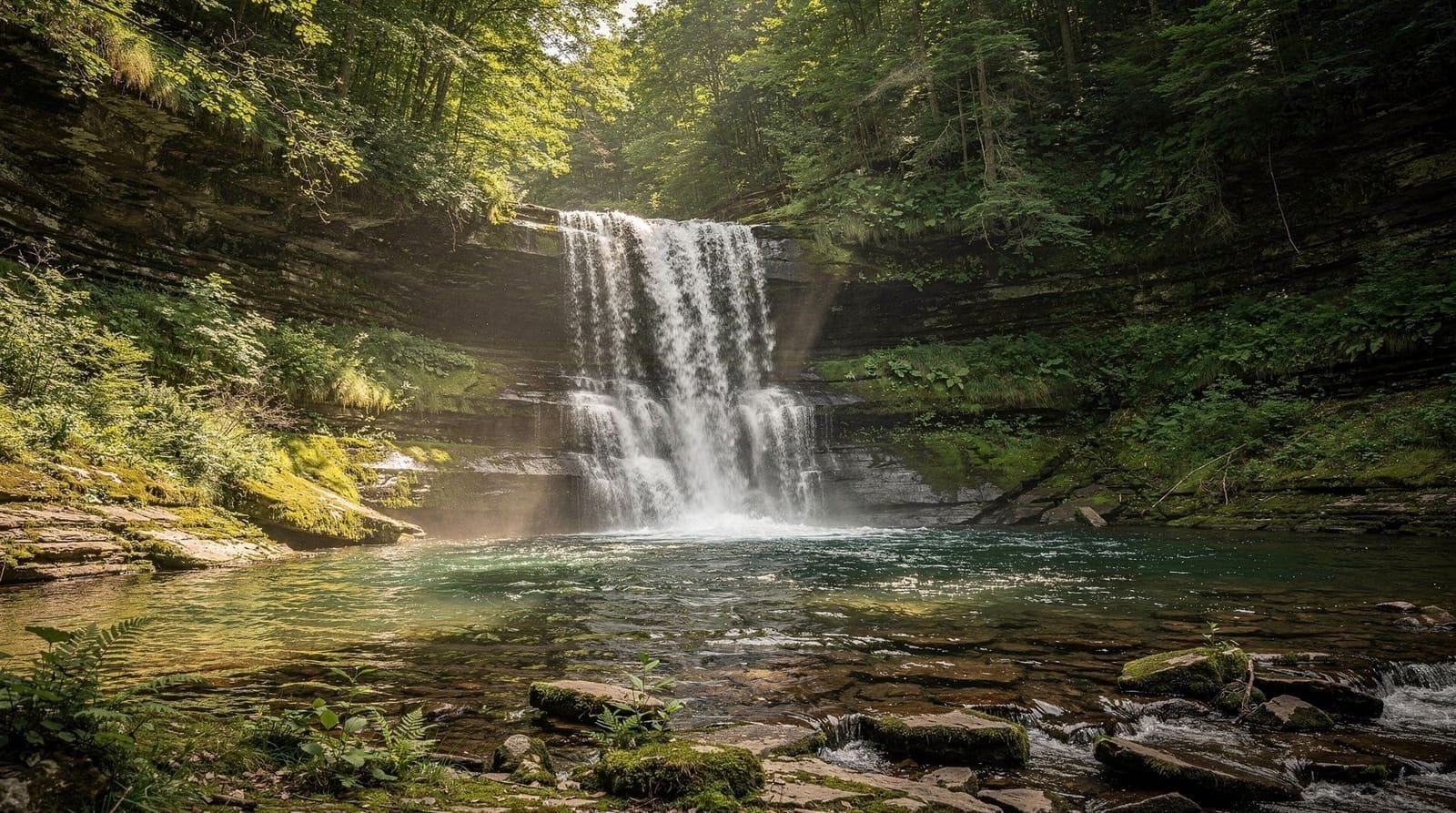
The village itself grew up around 19th-century grist and woolen mills powered by the Grand River, and much of that industrial-era limestone architecture survives, now housing boutiques, galleries, and cafés rather than mills. The gorge — a 22-metre-deep limestone canyon the river has been carving for thousands of years — is the natural centerpiece, protected as the Elora Gorge Conservation Area just outside the village core.
| Where | Elora Gorge Conservation Area, ~100 km from Toronto |
| Cost | ~40-60 CAD/person for entry + lunch; +25-40 CAD for tubing |
| Time needed | 4-5 hours without tubing, a full day with it |
| Getting there | ~1.5 hr drive via Highway 401/6 or 400/9/89; largely car-only |
| Best time | Weekday or early arrival in summer; fall for the quietest gorge hike |
Getting there
By car, the drive from Toronto takes roughly 1.5 hours via Highway 401 west to Highway 6 north through Guelph, or via Highway 400/9/89, depending on your starting point in the GTA. Traffic is generally lighter on this route than the Niagara-bound QEW, making Elora one of the more predictable drives time-wise.
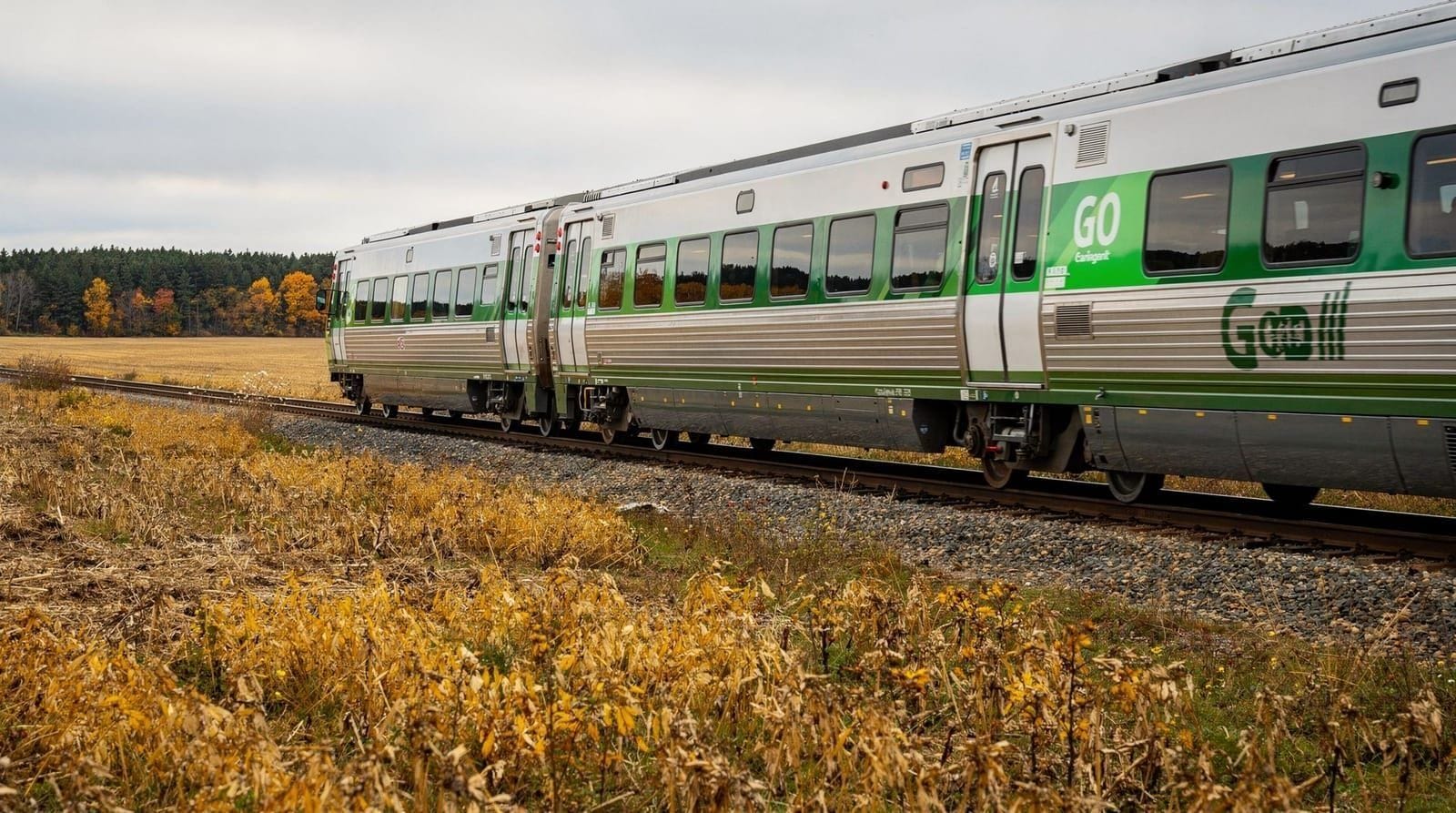
Public transit is genuinely limited here, more so than most destinations in this series. There’s no direct train or bus route to Elora itself. The most workable non-driving option is a GO Train or intercity bus to Guelph, roughly an hour from Toronto, followed by a taxi or rideshare for the final 25-minute leg to Elora — availability for that last stretch can be inconsistent, so this only really works if you’re comfortable with some uncertainty or book a car service in advance. In practice, this is a car-trip destination for most visitors.
Elora Gorge Conservation Area
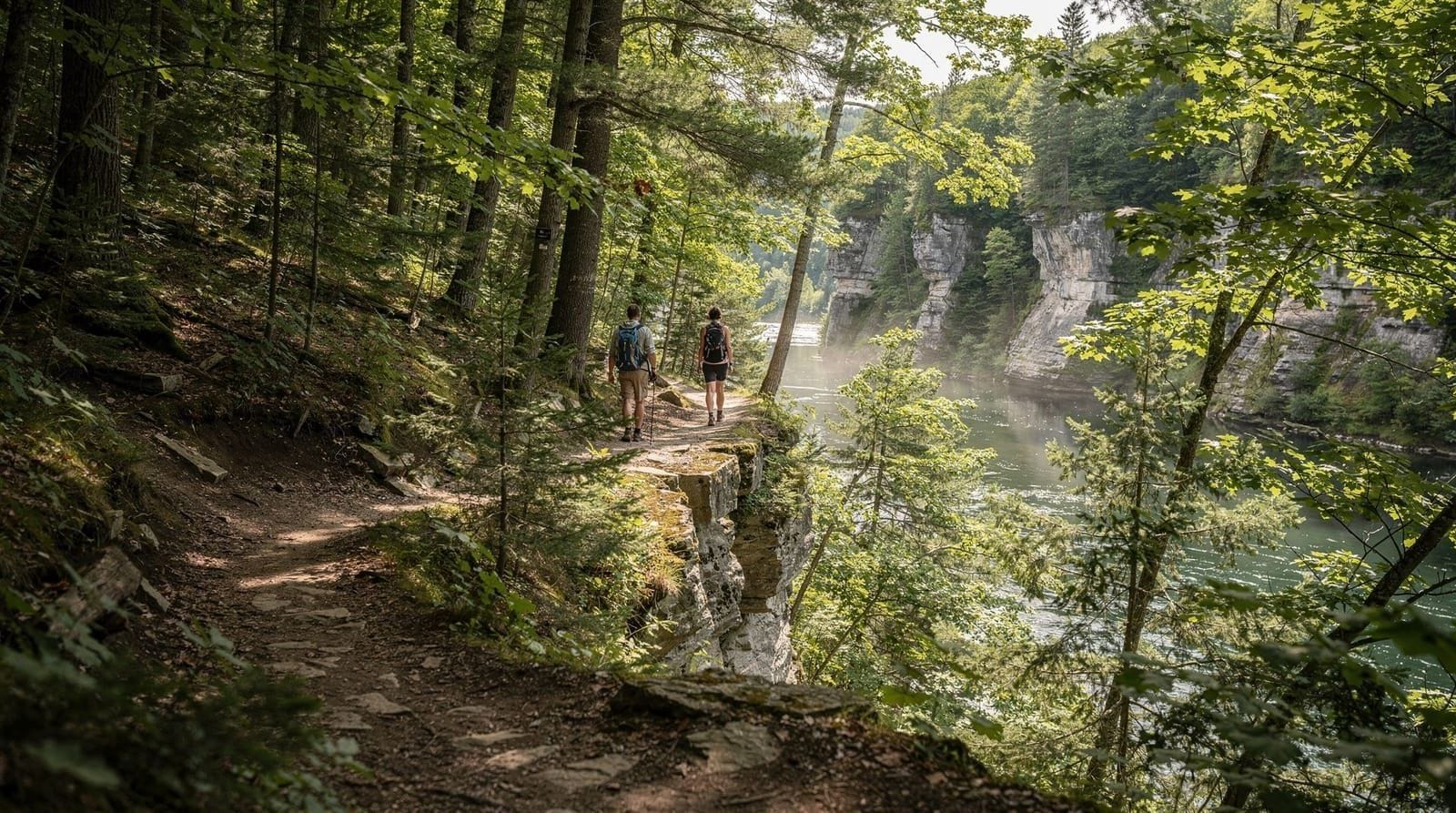
The gorge is the main event, and the Grand River Conservation Authority manages it as a day-use park with an entry fee (typically 10 to 15 CAD per person). A rim trail of roughly 3 to 4 km follows the gorge edge, taking about 1.5 to 2 hours at an unhurried pace with stops at the various viewpoints and lookout platforms. The trail has some genuine elevation change and, in sections, unguarded cliff edges directly above the water, so this isn’t a stroller-friendly flat path — sturdy shoes and reasonable caution matter, especially with kids.
Summer brings tubing, the activity Elora Gorge is arguably best known for regionally: floating the river through the gorge on a rented inner tube, typically running from late May through early September depending on water levels and weather. It’s a managed activity with designated entry and exit points rather than a free-for-all, and rental operators near the conservation area handle equipment and shuttle logistics. Wild swimming outside the managed tubing route is discouraged and, in places, explicitly prohibited — the current and submerged rock formations are more dangerous than the postcard-pretty water suggests, particularly after rainfall raises the flow.
The village itself
Downtown Elora is compact enough to explore fully in an hour or two, centered on Mill Street and Metcalfe Street, lined with independent shops selling everything from local pottery to antiques to artisanal food products. The Elora Mill, a five-story 19th-century grist mill perched directly over the river, has been converted into a boutique hotel and restaurant complex, and even if you’re not staying or dining there, the building and its riverside patio are worth a look for the sheer drama of the setting — few small-town Ontario buildings have this kind of visual impact.
The Elora Quarry, a former limestone quarry turned swimming hole a short drive from the village core, is a separate attraction from the gorge and worth knowing about as an alternative if the gorge’s managed tubing schedule doesn’t align with your visit — it operates its own seasonal swimming program with lifeguards, roughly June through Labour Day.
A realistic one-day itinerary
Arrive by late morning after the roughly 1.5-hour drive. Start with the gorge rim trail while energy is fresh, budgeting close to 2 hours for the full loop with photo stops. Follow with lunch in the village — several cafés and restaurants along Mill Street handle the midday crowd well, and reservations aren’t generally necessary outside peak summer weekends. Spend the early afternoon browsing the village shops and taking in the Elora Mill’s riverside setting, and if visiting in tubing season and the timing works, budget an hour or two for a float down the gorge before heading back to Toronto in the late afternoon.
If tubing isn’t part of the plan, the gorge trail and village combined comfortably fill 4 to 5 hours, leaving room for either an earlier departure from Toronto or a slower, less rushed pace throughout the day — Elora rewards the latter more than most destinations on this list. For how it stacks up against the region’s other short outings, see the best day trips from Toronto by train guide, though note Elora itself is largely a car-trip destination as covered above.
Combining Elora with Stratford or St. Jacobs
Elora sits in reasonable driving range of both Stratford (about an hour) and St. Jacobs (about 30 to 40 minutes), and combining Elora with St. Jacobs’ Mennonite market and shops in particular is a popular full-day pairing for drivers, since both are relatively compact stops. Adding Stratford on top of Elora in the same day is more ambitious and generally only works if you’re skipping a Festival performance and treating Stratford as a shorter stop rather than a matinee-anchored visit — see the Stratford day trip from Toronto guide for how that pairing works on its own.
How Elora’s mill economy shaped what you see today
The village’s name and identity come directly from its 19th-century industrial past — grist mills and woolen mills built to harness the Grand River’s power at the exact point where it drops into the gorge, a natural site for water-powered industry. As those industries declined through the 20th century, many of the limestone mill buildings survived rather than being demolished, largely because Elora’s remote-enough location meant less development pressure than towns closer to Toronto or larger cities.
That accident of geography preserved an unusually intact stretch of industrial-era architecture, which by the 1970s and 80s had attracted enough artists and craftspeople looking for cheap studio space that Elora developed its current identity as an arts-and-crafts village, a reputation that continues to draw the boutique galleries and studios found along Mill Street today.
Photography tips for the gorge
The gorge’s limestone walls and the river below photograph best in the softer light of early morning or late afternoon, when harsh midday sun creates strong shadows across the canyon that can wash out detail in photos. The main lookout platforms along the rim trail offer the most accessible vantage points without requiring any scrambling off the marked path, which is worth sticking to both for safety and because informal trails off the main route have contributed to erosion issues the conservation authority has worked to manage. Fall, when the gorge’s forest cover turns, is widely considered the most photogenic season, though the tradeoff is a shorter window of good light given the earlier sunsets.
Seasonal notes
Summer (roughly late May through early September) is peak season, driven almost entirely by tubing — expect the gorge parking lot and rental operators to be busiest on hot weekends, and book tubing rentals ahead if your visit falls on a Saturday in July or August. Fall brings some of the best conditions for the gorge hike itself: cooler temperatures for walking, good colour along the limestone cliffs, and a noticeably quieter conservation area once tubing season ends after Labour Day.
Winter closes tubing entirely, but the village shops and the gorge trail (icy in sections, so footwear matters) remain accessible for a quieter, colder version of the same day trip. Spring sees the river running high and fast from snowmelt, which makes for dramatic viewing from the rim trail but is generally too early and too cold for tubing.
A note on capacity limits during peak tubing weekends
Elora Gorge Conservation Area has, in recent years, implemented capacity limits on its busiest summer weekends given how popular tubing has become, meaning the parking area and even the conservation area entry itself can reach capacity and turn away additional visitors on the hottest July and August Saturdays. If your day trip is specifically timed around tubing during peak summer, arriving early — ideally before 10 a.m. — meaningfully improves your odds of getting in without a wait, and checking the conservation authority’s website or social media for same-day capacity updates before making the drive is a reasonable precaution given how disappointing a turned-away arrival after a 1.5-hour drive would be.
Budget for a day trip
A gorge-and-village day with the conservation area entry fee and lunch runs roughly 40 to 60 CAD per person, among the more affordable day trips in this series. Adding a tubing rental (typically 25 to 40 CAD per person including shuttle) pushes the total closer to 70 to 100 CAD. There’s no widely available guided tour bundle specifically for Elora from Toronto at this time, so this is largely a self-drive or self-organized trip rather than a booked-tour destination.
Nearby Fergus, often overlooked
Fergus, a Scottish-heritage town just a short drive from Elora along the Grand River, is frequently overlooked by day-trippers focused entirely on Elora itself, but it holds its own limestone downtown and a somewhat lower-key, less touristy character. If Elora feels busier than expected on a summer weekend, a short detour to Fergus offers a quieter version of a similar small-town Ontario experience, along with its own stretch of riverside walking trail worth a look if time allows.
Elora vs. Dundas Peak, if you’re choosing one gorge hike
Both are Toronto-area gorge day trips, but they suit different priorities. Dundas Peak is closer (45 min-1 hr) and centred on a single dramatic overlook plus two waterfalls, but requires a peak-season reservation. Elora is a bit further (1.5 hrs) but pairs the gorge with a genuinely walkable village of shops and cafés, plus summer tubing, and needs no advance booking beyond arriving early on hot weekends. If you want a village to linger in as much as a trail, Elora is the better choice; if the single best photo payoff for the shortest drive matters more, Dundas Peak wins.
Practical notes before you go
Cell coverage in and around Elora village is generally reliable, though it can drop out in sections of the gorge trail itself, particularly lower down near the water. Wear closed-toe shoes with good grip for the gorge trail — the limestone surfaces can be slick, especially after rain, and several viewpoints sit close to unguarded drops. If tubing, expect the water to be genuinely cold even in July, since it’s fed by an upstream reservoir release rather than warming naturally like a lake.
Parking in the village fills up on summer weekends, so arriving before mid-morning improves your odds of a close spot. For a hike-focused visit rather than the full village day, see the dedicated Elora Gorge hiking guide, which breaks down the trail network, admission, and tubing season in more depth.
Frequently asked questions about an Elora Gorge day trip
Is Elora Gorge safe for kids?
The rim trail has sections with unguarded drops close to the path, so young children need close supervision throughout. The managed tubing program, run with designated entry and exit points and generally requiring a minimum age for unsupervised tubing, is a more controlled way for families to experience the water than the gorge trail alone.
What’s the difference between Elora Gorge and the Elora Quarry?
The gorge is the limestone canyon carved by the Grand River, primarily a hiking and tubing destination managed by the Grand River Conservation Authority. The Elora Quarry is a separate, smaller former limestone quarry nearby that operates as a managed swimming hole with its own seasonal lifeguard program — a calmer water option than the gorge’s current.
Can I visit Elora without a car?
It’s difficult but not impossible — a GO Train or bus to Guelph followed by a taxi or rideshare covers the remaining distance, though this adds cost and some uncertainty around availability. Most visitors find driving considerably more practical for this particular destination.
How busy does Elora get in summer?
Summer weekends, particularly hot ones during tubing season, bring significant crowds to both the conservation area and the village’s limited parking. Visiting on a weekday or arriving early on a weekend meaningfully improves the experience if crowds are a concern.
Is there anywhere to eat besides the Elora Mill?
Yes — the village has several independent cafés, bakeries, and restaurants along Mill Street and Metcalfe Street that don’t require the reservations or price point of the Mill’s dining room, making a casual lunch easy to find without planning ahead.