Guide to Yorkville
Royal Ontario Museum Admission Ticket
What is Yorkville known for?
Yorkville is Toronto's luxury shopping and dining district, nicknamed the 'Mink Mile' for the flagship stores lining Bloor Street West. It sits directly north of the Royal Ontario Museum and the Art Gallery of Ontario, and it was Toronto's countercultural folk-music hub in the 1960s before gentrifying into the city's priciest few blocks.
From folk clubs to flagship stores
Yorkville’s reputation today — designer boutiques, valet parking, five-star hotels — makes it easy to forget the neighborhood spent the 1960s as Toronto’s countercultural center. Cheap rent in the area’s Victorian rowhouses drew a wave of folk musicians and artists, and small coffeehouses along Yorkville Avenue hosted performers including a young Joni Mitchell and Neil Young before either was famous. That scene burned out fast — rising property values through the late 1960s and 1970s pushed the artists elsewhere, and developers gradually converted the same rowhouses into the boutique-lined streets that exist now.
The result is a neighborhood with a strange split identity: genuinely upscale by any measure, but built on a footprint of narrow 19th-century streets that give it a more intimate, walkable feel than a typical high-end shopping district. It doesn’t read like a mall. It reads like a wealthy small town that happens to sell Cartier.
| Where | North of Bloor Street, between Avenue Road and Yonge Street |
| Cost | Free to walk; around $8–12 CAD for coffee and pastry, well above average for dining |
| Time needed | About an hour for a walk-through; add 2–3 hours per museum if pairing with the ROM or AGO |
| Getting there | Bay or Bloor-Yonge subway stations, 5-minute walk to the core |
| Best time | Late morning to mid-afternoon for shopping; evenings after 7pm for restaurants |
Bloor Street’s “Mink Mile”
Bloor Street West between Yonge and Avenue Road carries the neighborhood’s most recognizable retail — Chanel, Cartier, Hermès, and a long list of other flagship stores in a compact eight-block stretch nicknamed the Mink Mile. It’s one of the most expensive retail corridors in Canada by rent per square foot, and even if you’re not buying anything, the window displays and the architecture of the flagship buildings are worth a slow walk.
One block north, Yorkville Avenue and Cumberland Street carry a slightly less formal mix — smaller boutiques, high-end salons, and a cluster of well-regarded restaurants that see a lot of business-lunch and expense-account traffic. Yorkville Village (formerly the Hazelton Lanes complex) is the neighborhood’s indoor mall equivalent, with a similarly upscale tenant list. For a fashion-forward alternative with a very different price point, our guide to Queen West covers the city’s other major shopping strip.
Yorkville Park
Tucked between Cumberland Street and Bloor, Yorkville Park is an unusual piece of public landscape design — a series of themed garden “rooms” built along the footprint of the old rowhouses it replaced, anchored by a massive granite boulder transplanted from the Canadian Shield near Gravenhurst. It’s a favorite quiet break spot in the middle of the shopping district, and one of the few genuinely free things to do in the neighborhood beyond window-shopping.
The museums next door
Yorkville borders two of Toronto’s major cultural institutions, and most visitors combine a museum visit with a Yorkville walk rather than treating them as separate trips.
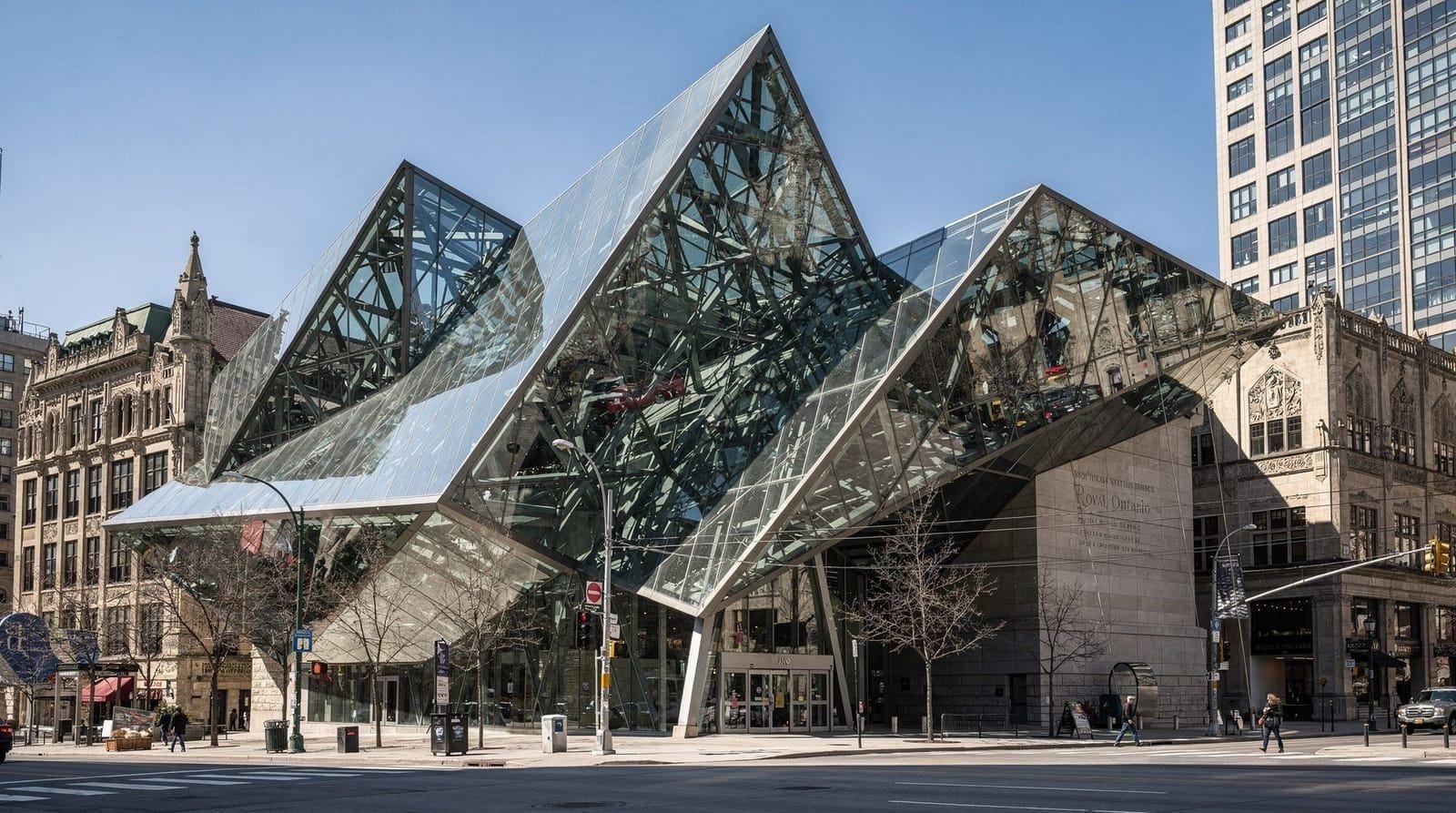
The Royal Ontario Museum (ROM), immediately south of the neighborhood on Bloor Street, is Canada’s largest museum, spanning natural history, world cultures, and Canadian heritage collections inside a building whose crystalline glass extension is as photographed as anything inside it. A standard Royal Ontario Museum admission ticket covers all permanent galleries and typically most rotating special exhibitions, and booking ahead avoids the ticket-counter line on busy weekends.
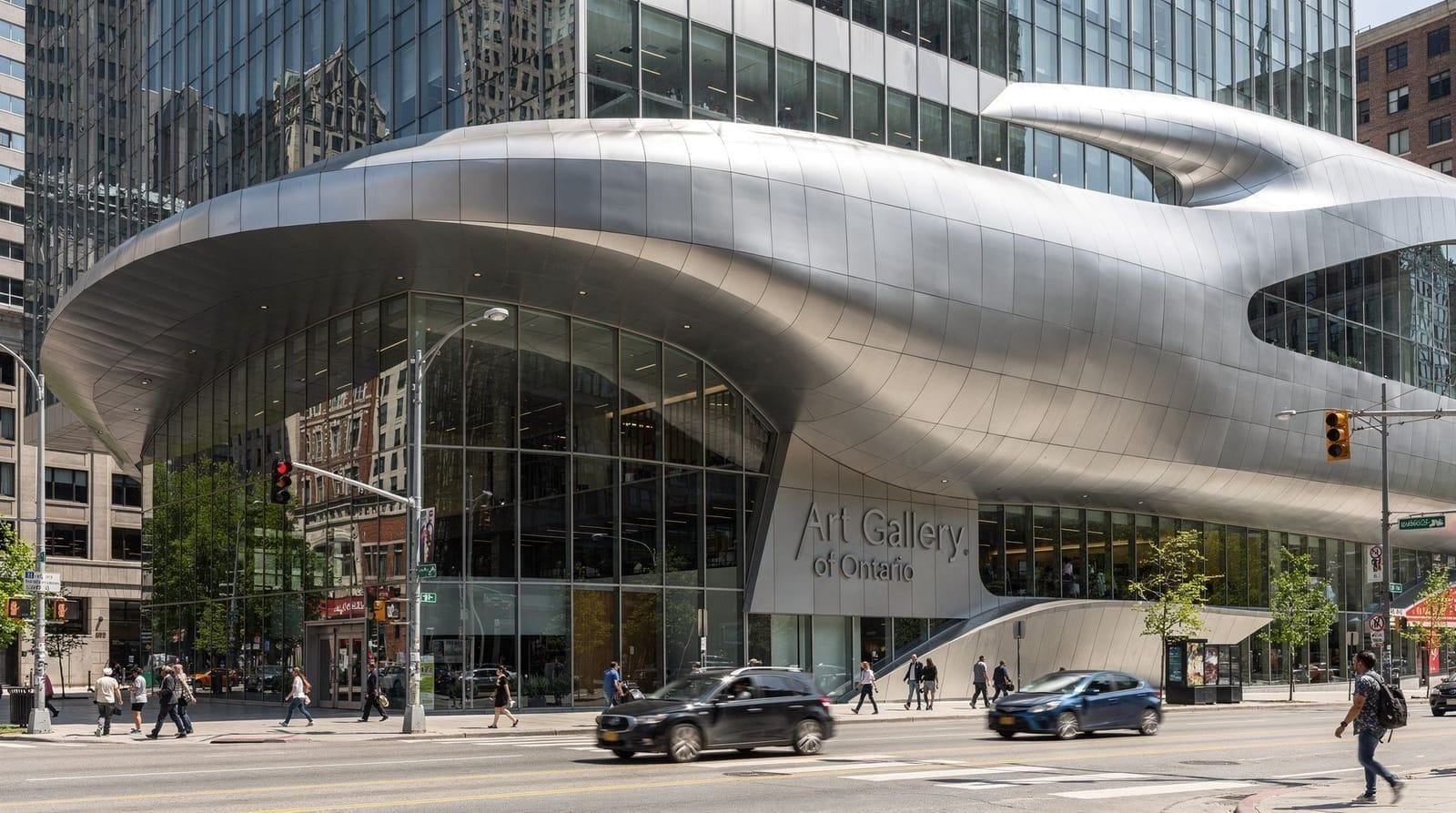
The Art Gallery of Ontario (AGO), a short walk southwest, holds one of the country’s major art collections, including the world’s largest public collection of Group of Seven paintings and a Frank Gehry-designed building redesign that’s worth seeing even if the art inside isn’t your focus — our Art Gallery of Ontario guide and Royal Ontario Museum guide cover both in depth, and our Toronto museums guide rounds up the rest of the city’s collections.
A smaller, easy-to-miss cultural stop sits directly across from the ROM: the Gardiner Museum, Canada’s only museum dedicated entirely to ceramic art, spanning historical porcelain and pottery collections through contemporary studio ceramics.
It’s a fraction of the size of the ROM or AGO, which makes it a realistic add-on rather than a full extra outing — most visits run 45 minutes to an hour, and its top-floor restaurant has a reputation among locals as one of the better lunch spots in the immediate area, with less of a wait than the museum’s more famous neighbors. It’s easy to walk past without noticing since the building doesn’t compete visually with the ROM’s crystal extension next door, but for anyone with an interest in decorative arts or design, it rewards the short detour.
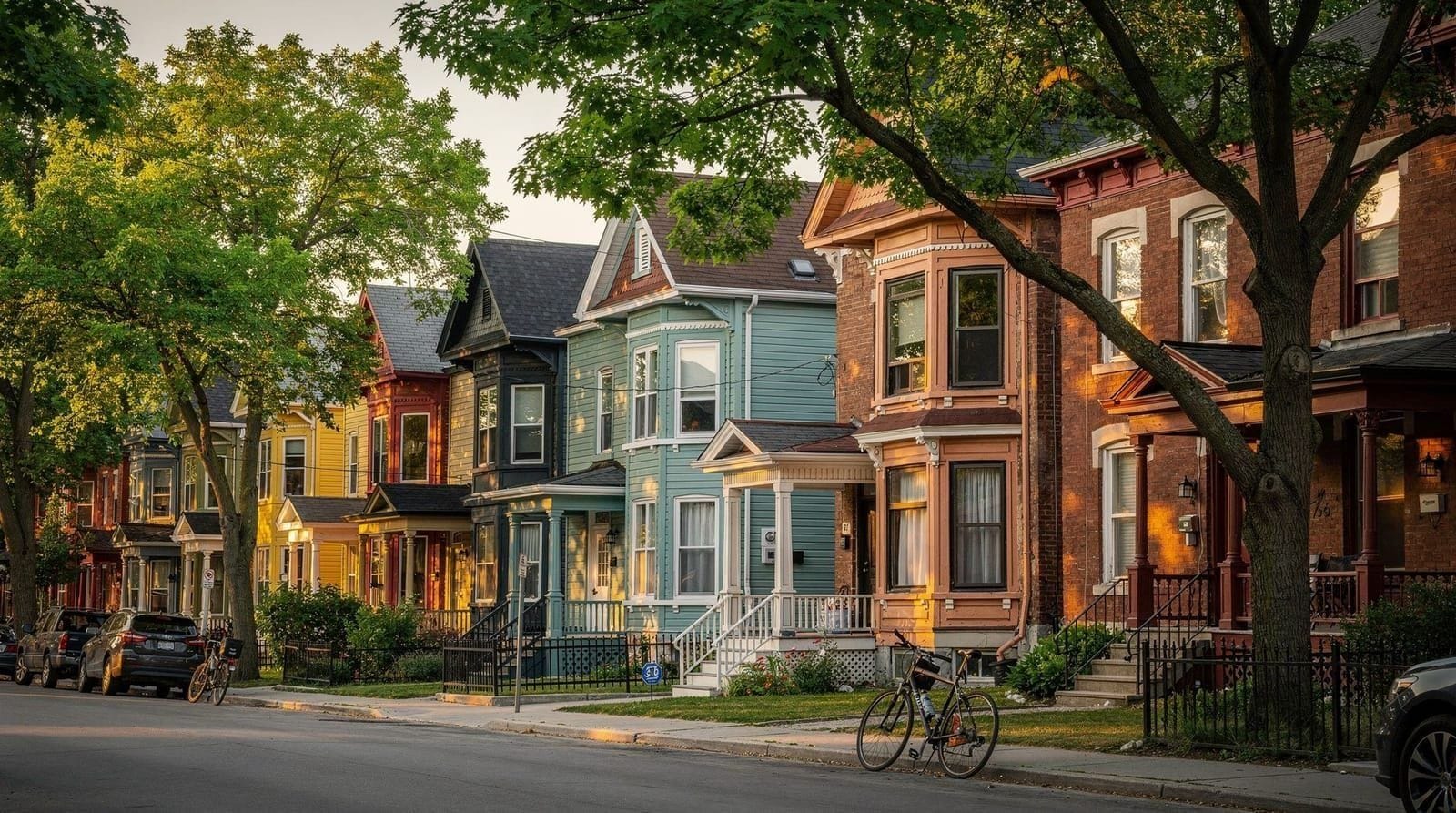
Hazelton Avenue, running through the heart of the neighborhood, is a designated heritage conservation district in its own right — a stretch of intact 19th-century worker’s cottages and Victorian rowhouses that predate Yorkville’s transformation into a shopping district and were protected from demolition specifically because of that historical value.
Walking Hazelton Avenue today, lined with contemporary art galleries and design showrooms occupying those same small heritage buildings, gives a better sense of what Yorkville looked like before redevelopment than the busier Bloor Street strip does, where most of the original building stock was replaced outright by flagship retail construction. It’s a useful five-minute detour off the main shopping streets if the neighborhood’s architecture interests you as much as its stores, and it’s one of the few stretches of Yorkville where the streetscape genuinely resembles what a 1960s folk musician would have walked past on the way to a coffeehouse gig.
Eating in Yorkville
Restaurant prices here run above the Toronto average, and that’s largely the point for many visitors — this is where the city’s higher-end tasting menus and expense-account power lunches happen. Sushi and contemporary fine dining are particularly well represented. If you want the neighborhood’s energy without the full-dinner price tag, a coffee or pastry from one of Yorkville’s cafés and a walk through the boutiques is a reasonable middle ground — expect $8-12 CAD ($6-9 USD) for a coffee and pastry, noticeably above the citywide average but far below a sit-down meal.
Getting there
Yorkville sits directly north of Bloor Street, bordered roughly by Avenue Road to the west and Yonge Street to the east. The Bay and Bloor-Yonge subway stations, both on Line 1 or the Line 1/2 interchange, put you within a five-minute walk of the neighborhood’s core. It’s also a comfortable 25-minute walk north from Union Station along Yonge Street or University Avenue if you want to see more of downtown along the way — our downtown Toronto walking guide covers that stretch. Street parking is limited and metered; the neighborhood’s hotels and Yorkville Village both operate paid underground lots.
Who should visit, and how much time to give it
Yorkville rewards visitors who are already planning an ROM or AGO trip and want to extend it into a walk through a genuinely different-feeling neighborhood, rather than travelers seeking Yorkville as a standalone destination. Budget an hour for a walk-through with window shopping, longer if you’re pairing it with either museum, which each deserve two to three hours on their own. It’s not a neighborhood that needs a full day unless shopping is specifically the goal.
For a sharp contrast, our guide to Kensington Market covers the closest thing Toronto has to Yorkville’s opposite — independent, unpolished, and multicultural rather than luxury and manicured. Many visitors do both neighborhoods in the same trip specifically to see the range. If you’re deciding where to stay for your whole visit, our best Toronto neighborhoods to stay guide weighs Yorkville’s five-star hotel cluster against more budget-friendly downtown and Kensington-adjacent options.
Seasonal notes
Yorkville hosts a heavy concentration of activity during TIFF, when several nearby hotels host industry events and the neighborhood’s restaurants see a spike in reservations — see our TIFF Toronto guide if your visit overlaps with the festival. Outside of that, the neighborhood doesn’t shift dramatically by season the way an outdoor-focused neighborhood would; its indoor retail and dining keep it comfortable year-round, though winter reduces the appeal of Yorkville Park’s outdoor seating.
Inside the 1960s folk scene
At its peak between about 1963 and 1968, Yorkville’s coffeehouse strip packed a remarkable concentration of future stars into a few blocks of Victorian rowhouses that rented cheaply because the neighborhood was, at the time, considered a run-down backwater rather than a destination. The Riverboat, on Yorkville Avenue, was the scene’s most important venue — a small basement club that hosted Joni Mitchell, Neil Young, and Gordon Lightfoot during their formative years, alongside touring American folk acts passing through on the same coffeehouse circuit. Other clubs along the same strip, including the Purple Onion, rounded out a scene dense enough that performers could work multiple sets a night without leaving a two-block radius.
The scene wasn’t purely musical. Yorkville in this era also became a magnet for a broader countercultural movement, drawing runaway teenagers, draft dodgers from the United States, and a loosely organized activist group called the Diggers who ran a free food and crash-pad network modeled on the San Francisco group of the same name. That mix of bohemian commerce and genuine social strain — overcrowding, drug use, and a growing homeless youth population — alarmed city officials, and tensions came to a head in August 1967 when police cleared a sit-in protest against a city proposal to close Yorkville Avenue to car traffic, an episode locally remembered as the Yorkville sit-in.
The scene collapsed almost as fast as it had formed. Rising rents through the late 1960s pushed out both the clubs and the community they served, and by the early 1970s most of the coffeehouses had closed or converted to other uses. Property values kept climbing through the 1970s and 80s as boutique retail moved in, and by the time Yorkville’s transformation into a luxury district was complete, almost nothing of the original folk-club infrastructure remained standing in its original form. The Riverboat’s building was eventually demolished; a small plaque and occasional heritage walking tours are now the most visible reminders that this quiet luxury strip was once ground zero for a defining chapter of Canadian music history.
Practical notes
- Cost: Walking and window shopping are free; actual purchases and dining run well above the Toronto average.
- Accessibility: Sidewalks and store entrances are generally modern and accessible, a contrast to some of Toronto’s older, narrower-streeted neighborhoods.
- Bathrooms: Available inside Yorkville Village and most cafés for paying customers, plus public facilities inside the ROM and AGO.
- Best time of day: Late morning through mid-afternoon for shopping and museum visits; evenings for the restaurant scene, which picks up noticeably after 7pm.
Yorkville is a neighborhood best understood as a complement to a museum day rather than a destination on its own — plan around the ROM or AGO, and let the Mink Mile fill the gaps.
A practical half-day pairing
The most efficient way to see Yorkville is to treat it as bookends around a museum visit rather than a separate trip. Start with the Royal Ontario Museum in the morning when it’s quieter, break for lunch or coffee in Yorkville around midday, then walk the Mink Mile and Hazelton Avenue in the early afternoon before energy fades.
If the Art Gallery of Ontario is more your priority than the ROM, it’s a short walk or streetcar ride southwest, so a Yorkville-then-AGO order works just as well if you’d rather browse first. Either way, budgeting the museum as the anchor and Yorkville as the connective tissue gets more out of both than treating them as two separate, fully planned outings.
Royal Ontario Museum guided history tourFrequently asked questions about Yorkville
Is Yorkville expensive to visit?
Shopping and dining there are genuinely high-end, but walking the neighborhood, visiting Yorkville Park, and window-shopping cost nothing. Budget travelers typically pair a walk through Yorkville with a museum ticket rather than a shopping trip.
How do you get to Yorkville?
The Bay or Bloor-Yonge subway stations on Line 2 and Line 1 both put you within a five-minute walk. It’s also a comfortable 25-minute walk north from Union Station if you’re combining it with a downtown route.
Is Yorkville worth visiting if I’m not shopping?
Yes — the Royal Ontario Museum and Art Gallery of Ontario are both within or bordering the neighborhood, and Yorkville Park’s giant Canadian Shield rock and public art are worth a look even without spending money on retail.
Why was Yorkville a hippie neighborhood in the 1960s?
Cheap Victorian rowhouse rents in the 1960s attracted a folk-music and counterculture scene, with performers including a young Joni Mitchell and Neil Young playing small coffeehouses. Rising property values pushed that scene out by the 1970s, and the neighborhood gradually redeveloped into today’s luxury retail district.
What’s the closest neighborhood to Yorkville for a contrast visit?
Kensington Market, about a 30-minute walk or short subway-plus-walk away, offers close to the opposite experience — independent vintage shops and multicultural food stalls instead of designer flagships. Many visitors do both in the same trip specifically for the contrast.
Is Yorkville safe at night?
Yes, it’s one of the more heavily patrolled, well-lit commercial districts in Toronto, popular for evening dining, and generally considered very safe after dark by local standards.
How much time should I set aside for Yorkville and the ROM together?
Budget half a day: two to three hours for the ROM’s permanent galleries, plus an hour for a Yorkville walk and lunch or coffee. Add the AGO on top only if you have a full day free, since covering all three properly in one outing is rushed.
Is Yorkville Park worth a stop even without shopping plans?
Yes — it’s free, quick to see (10-15 minutes), and the transplanted Canadian Shield boulder and themed garden rooms are a genuinely unusual piece of public landscape design worth a short detour even if boutiques aren’t your interest.
Top experiences
Bookable activities with verified prices and instant confirmation on GetYourGuide.