Guide to Kensington Market
Kensington Market 'Taste the World' Food Tour
What is Kensington Market known for?
Kensington Market is a National Historic Site of Canada known for its dense mix of independent vintage shops, multicultural food stalls, and street murals packed into a few walkable blocks west of Spadina Avenue. It has no chain stores and a car-free Pedestrian Sunday from May through October.
Why Kensington feels like nowhere else in Toronto
Most Toronto neighborhoods have a dominant identity — Yorkville is money, the Distillery District is Instagram, Chinatown is food. Kensington Market refuses to pick one. Walk three blocks and you’ll pass a Jamaican patty window, a Portuguese fishmonger holding on from the 1970s, a Mexican taqueria with a line out the door, a vintage store selling 90s band tees for $45, and a wall mural of a giant octopus. It’s dense, a little grubby in the most charming way, and it’s one of the only central Toronto neighborhoods with no chain stores at all — no Starbucks, no Shoppers Drug Mart on the core blocks, nothing that looks like a mall.
| Where | West of Spadina Avenue, south of College Street |
| Cost | Free to wander; $15–25 CAD per person for a grazing lunch |
| Time needed | 2–3 hours for the core streets, half a day with Chinatown |
| Getting there | 20 min walk from Union Station, or 10 min from St. Patrick/Spadina subway |
| Best time | Weekday mornings for quiet browsing; Pedestrian Sunday (May–Oct) for atmosphere |
Kensington grew out of Toronto’s Jewish garment district in the early 1900s, then absorbed waves of Portuguese, Caribbean, Chinese, and Latin American immigrants who each left a permanent mark on the storefronts. That layering is why the market reads as “authentic” rather than curated — it wasn’t designed as a tourist attraction, it just accumulated character over a century, and Parks Canada recognized it as a National Historic Site in 2006 for exactly that reason.
The three core streets
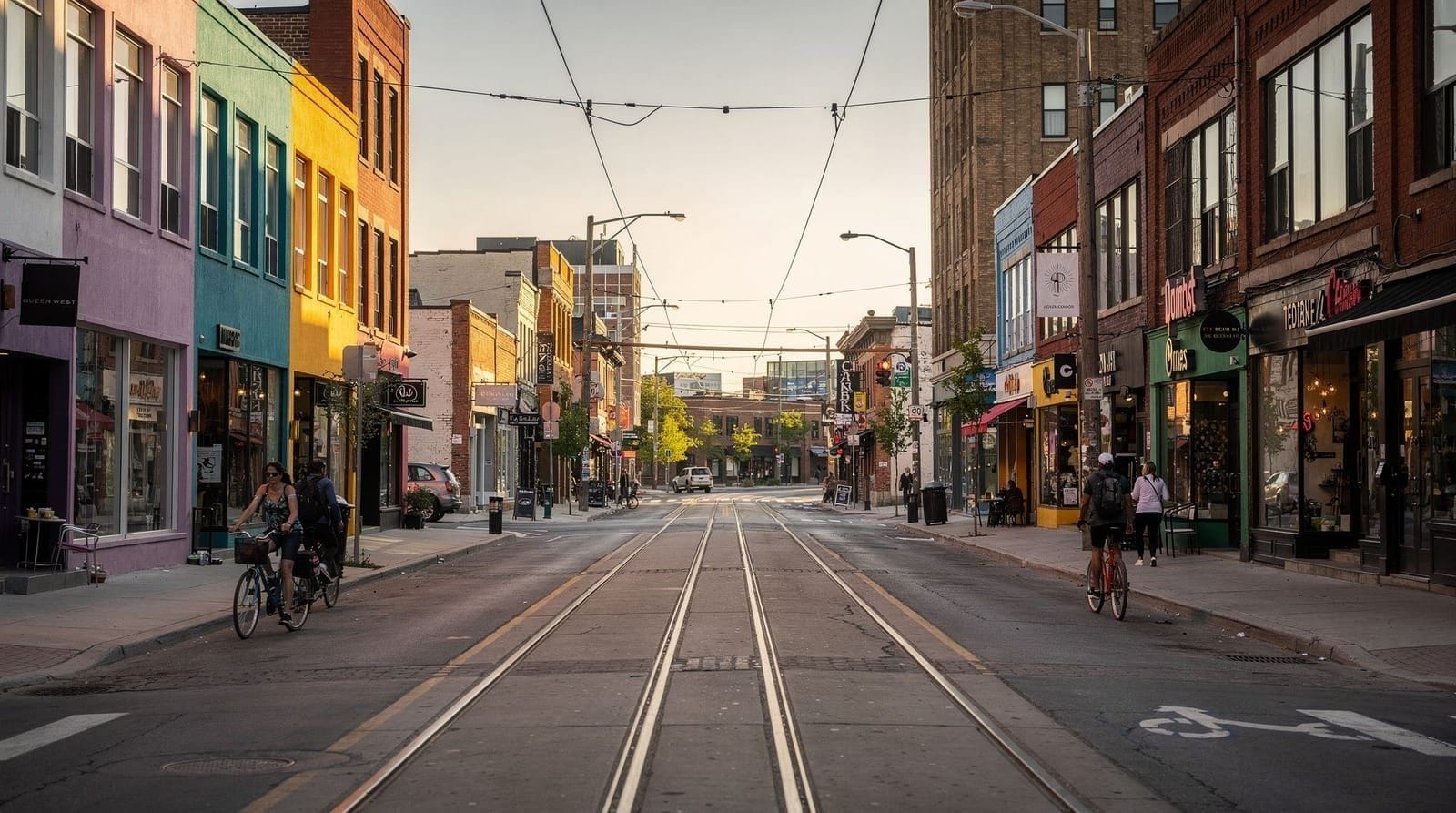
Kensington Avenue is the spine — narrow, brightly painted, packed with vintage clothing stores stacked two and three deep in old Victorian rowhouses. Courage My Love has been here since 1975 and remains the anchor for vintage denim and military jackets. Exile has curated 80s-90s pieces at slightly higher prices. If you’re hunting for a single statement item rather than browsing everything, ask the staff — most shops here know their own inventory cold.
Augusta Avenue runs the food scene. This is where you’ll find Blue Banana Market (a multi-vendor indie craft and clothing space inside an old building), the original Seven Lives Tacos (a tiny stand-up counter that’s been serving Baja-style fish tacos since 2010), and Ronnie’s Local 069, a laid-back deli-bar hybrid good for a beer and a sandwich after shopping.
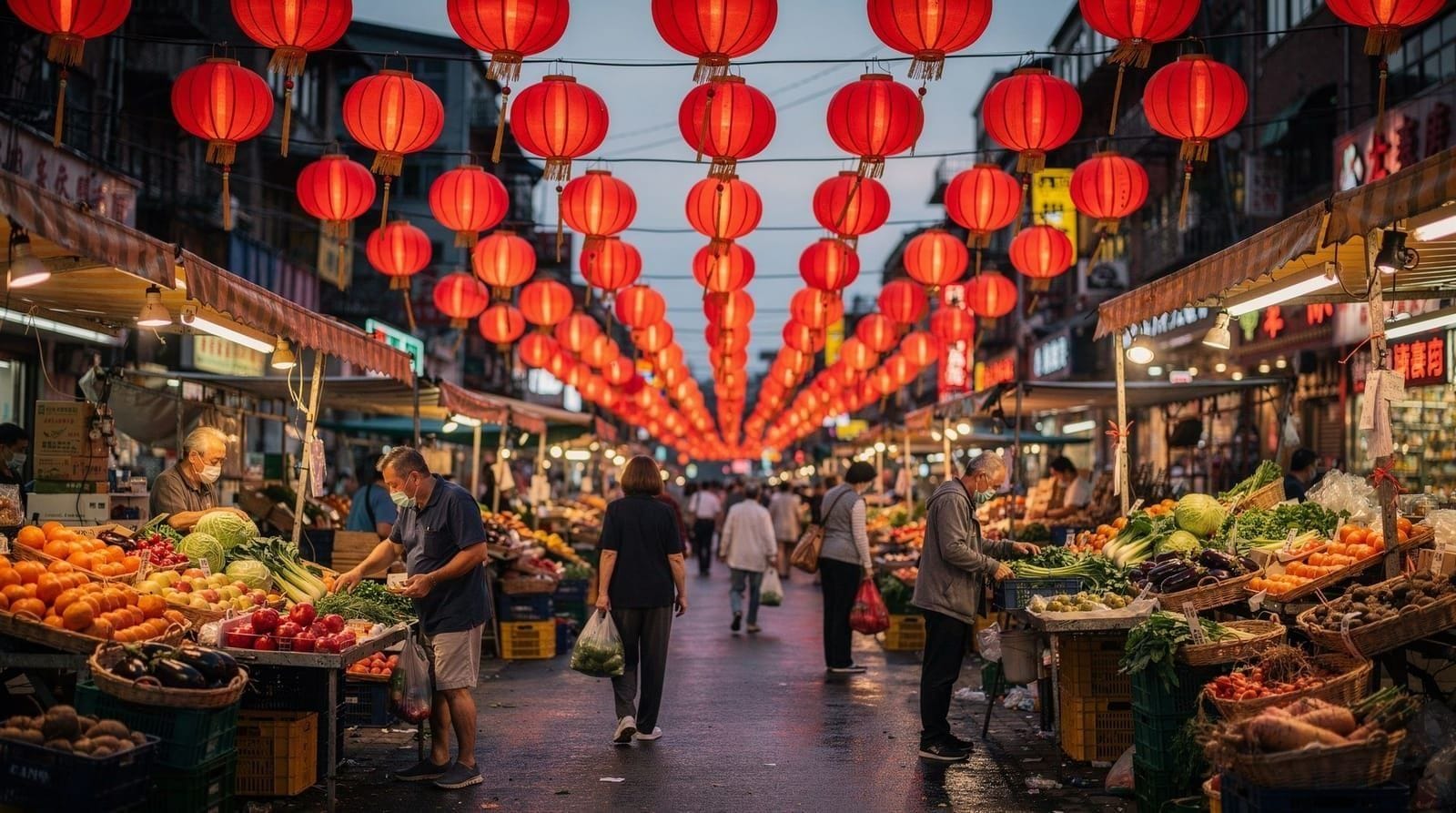
Baldwin Street is quieter and slightly more residential, with a produce-market feel — fruit stands spilling onto the sidewalk, a couple of long-running Portuguese bakeries, and Casa Acoreana, a decades-old shop selling coffee, dried fruit, nuts, and spices by weight out of burlap sacks. It smells like roasted coffee from the street.
What to eat
Kensington Market’s food scene is built for grazing, not sit-down dinners, though there are exceptions. Budget $15-25 CAD ($11-18 USD) per person if you’re doing the classic walk-and-graze approach across three or four stops. Our Kensington Market food guide goes deeper vendor by vendor if you want a more structured crawl.
- Patty stops: Jamaican beef and vegetable patties from the small counter windows on Baldwin and Augusta run $4-6 CAD each and are the fastest, cheapest bite in the market.
- Wanda’s Pie in the Sky: A neighborhood institution for baked goods — butter tarts and squares that locals have been buying since the 1990s.
- Rasta Pasta: Caribbean-Italian fusion (jerk chicken pasta is the signature dish) in a small, colorful space on Nassau Street.
- Grasslands: One of the better vegan restaurants in the city, if you want a proper sit-down meal rather than a snack crawl.
- Casa Acoreana: Buy dried mango, roasted almonds, or a bag of Portuguese coffee to take home — cheaper and better than most airport souvenir shops.
If you’d rather not guess where to start, the Kensington Market “Taste the World” food tour walks a small group through five or six vendors with a local guide who explains the neighborhood’s immigration history block by block — useful if you have limited time and want the context along with the food, rather than piecing it together yourself.
Shopping without wasting your afternoon
The vintage stores here are genuinely deep, but they’re also genuinely a lot to sort through — racks are dense and not always organized by size. If vintage isn’t your main goal, spend your time instead on the record shops (Rotate This and Kops Records are the two worth a look), the small independent bookstores, and the plant and flower stalls that spill onto Kensington Avenue on weekends.
Skip the novelty tourist-trap stalls selling maple-leaf keychains near the Spadina end — those aren’t local businesses, and you’ll find better souvenirs at St. Lawrence Market or the Distillery District’s craft shops. See our overpriced Toronto attractions guide for more on which souvenir traps to skip citywide.
Pedestrian Sunday — the day to actually plan around
On the last Sunday of every month from May through October, the city closes Kensington’s core streets to car traffic. What happens next is closer to a street festival than a shopping trip: buskers set up on corners, a samba band or DJ usually takes over an intersection, kids ride bikes down the middle of the road, and the whole neighborhood spills outdoors. If your Toronto trip dates are flexible at all, checking whether a Pedestrian Sunday falls during your visit is worth doing before you book — it’s a genuinely different, better version of the market than a regular Tuesday afternoon.
Getting there and getting around
Kensington sits just west of Spadina Avenue and south of College Street, close enough to walk from most downtown hotels. From Union Station it’s about 20 minutes on foot, or a short ride on the 510 Spadina streetcar to Kensington Avenue, then a five-minute walk. The St. Patrick and Spadina subway stations on Line 1 both put you within a 10-minute walk of the market’s edge.
There is street parking, but it’s scarce and metered, and most of the interior streets are one-way and narrow. If you’re driving into Toronto for the day, park near the Distillery District or Chinatown’s larger lots and walk in — trying to find parking directly inside Kensington on a weekend afternoon eats up more time than it saves.
Where Kensington fits into a longer Toronto visit
Kensington pairs naturally with a Chinatown walk, since the two neighborhoods share a border along Spadina Avenue and Baldwin Street — most visitors do both in the same afternoon. It’s also a reasonable contrast stop if you’ve already spent a morning in the more polished Distillery District or Yorkville, since it shows a very different, scrappier side of the city. If you’re building a full day around downtown neighborhoods, our downtown Toronto walking guide lays out a route that connects the Financial District core to Kensington and Chinatown without backtracking.
Travelers staying nearby should look at our guide to the best Toronto neighborhoods to stay, which weighs Kensington-adjacent Little Italy and Harbord Village against downtown hotel clusters. For a first-timer’s framing of the neighborhood from someone who lives a few blocks away, our local’s guide to Kensington Market on the blog covers the day-to-day rhythms — which mornings are quietest, which vendors are cash-only, and which shops rotate seasonally.
If your visit lines up with festival season, note that Kensington gets noticeably busier during Caribana weekend and TIFF, when downtown foot traffic spikes across the whole core — both are covered in our Caribana Toronto guide and TIFF Toronto guide.
How the market got its layered identity
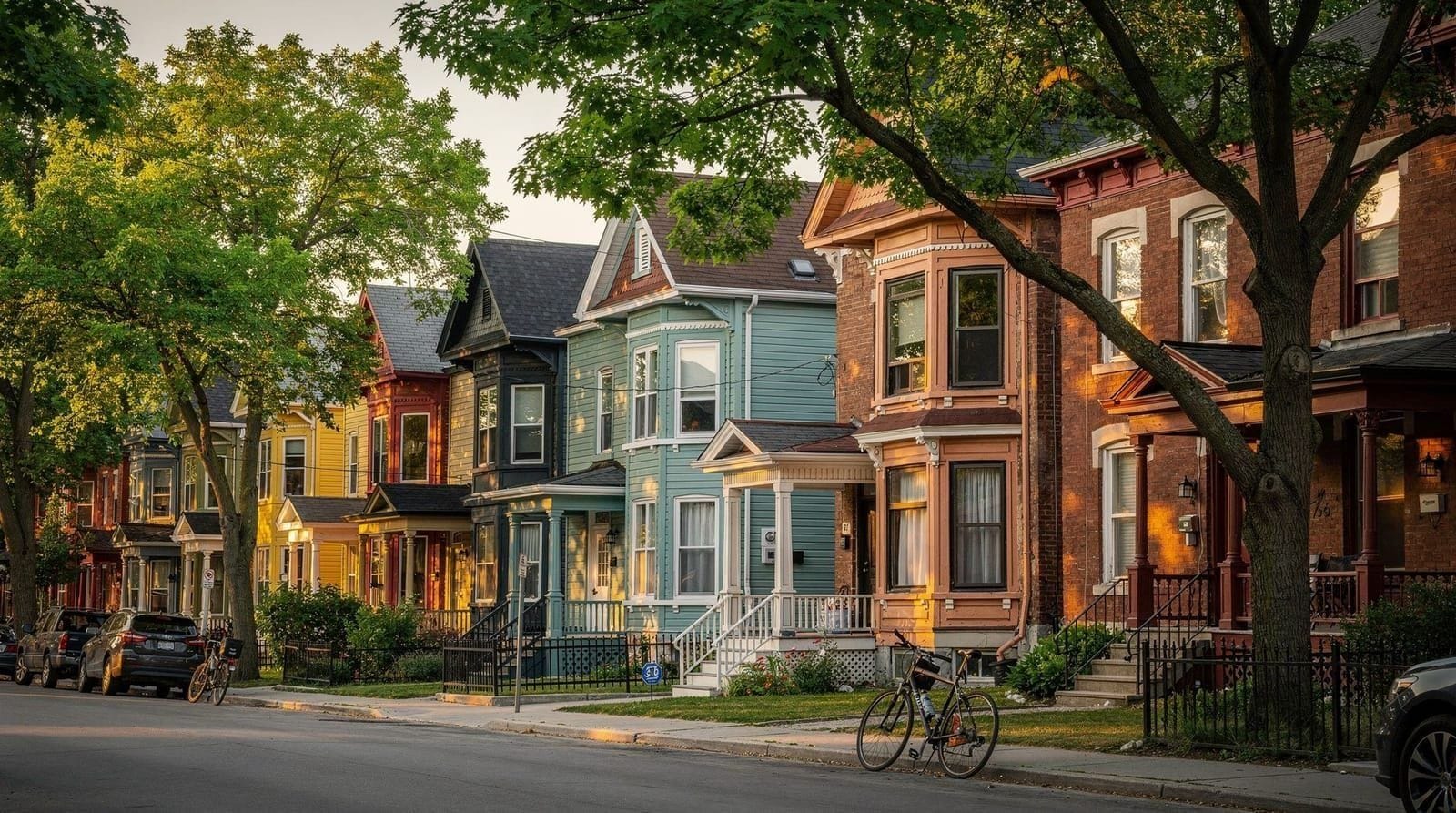
Kensington’s origins trace back to the late 1800s, when the area was a working-class residential neighborhood of narrow Victorian rowhouses. In the early 20th century, waves of Eastern European Jewish immigrants settled here, opening pushcart stalls along Kensington Avenue and Augusta Avenue that gradually formalized into the storefronts you see today — the area was known for decades as the “Jewish Market,” and several of the buildings still carry faint traces of Hebrew signage under newer paint.
After the Second World War, Portuguese immigrants arrived in large numbers, followed in subsequent decades by Caribbean, Chinese, Vietnamese, and Latin American communities, each opening businesses that layered onto rather than replaced what came before.
That accumulation, rather than any single planned redevelopment, is what gives Kensington its distinctive texture — a Jamaican patty window next to a Portuguese fish shop next to a decades-old Chinese bakery is not an intentional curatorial choice, it’s just what happens when a neighborhood absorbs a century of immigration without ever being fully redeveloped by a single developer. Parks Canada recognized this history formally in 2006, designating Kensington Market a National Historic Site specifically for its role as a continuously evolving immigrant reception neighborhood, one of a small number of Toronto sites to receive that designation for social rather than purely architectural significance.
The neighborhood has faced real gentrification pressure over the past two decades, with rising commercial rents pushing out some of the longest-running family businesses even as the market’s popularity with visitors has grown. Locals and longtime vendors have organized informally to resist the more aggressive redevelopment proposals that have occasionally surfaced, and the market’s council has pushed for zoning protections to preserve its low-rise, independent-business character against condo development pressure spreading in from nearby Chinatown and the University of Toronto area.
It’s a tension worth being aware of if you’re the kind of visitor who cares whether your tourism dollars support forty-year-old family businesses or newer, higher-rent tenants — most of what’s described in this guide falls into the former category, but it’s not guaranteed to stay that way indefinitely.
Practical notes before you go
- Hours: Most shops open around 10-11am and close by 6-7pm; restaurants and bars run later, especially on weekends. Sunday mornings before 11am are the quietest time to see the market without crowds.
- Weather: Many storefronts are open-air or have their doors permanently propped, so winter visits are colder than a typical indoor shopping trip — dress accordingly between November and March.
- Bathrooms: Limited public facilities; most cafés reserve them for paying customers, which is standard practice across downtown Toronto.
- Accessibility: Sidewalks are narrow and uneven in places, and several shops have a step at the entrance — it’s a harder market to navigate for wheelchair users than more modern retail districts like Yorkville.
Kensington Market rewards slow wandering more than a checklist. Skip the plan, follow the smell of whatever’s cooking, and budget an extra 30 minutes beyond whatever you think you’ll need — everyone underestimates how long this neighborhood takes.
A simple half-day route if you don’t want to overthink it
Start on Baldwin Street around 10:30am while it’s quietest, picking up coffee at Casa Acoreana and browsing the produce stalls before the sidewalks fill up. Cut over to Augusta Avenue for lunch — a patty or a Seven Lives taco eaten standing up is the most Kensington way to do it — then work your way onto Kensington Avenue for an hour of vintage browsing once the shops are properly open. Finish with a coffee or a beer at Ronnie’s Local 069, or continue straight into Chinatown if you’ve still got energy. This whole loop takes roughly three hours at an unhurried pace, and it deliberately front-loads the quieter streets before the market fills up around midday.
Markets and events beyond Pedestrian Sunday
Pedestrian Sunday is the best-known recurring event, but it’s not the only one. Kensington also hosts occasional evening art walks and pop-up vendor markets on side streets, particularly in the warmer months, where local designers and small-batch food makers set up stalls alongside the permanent shops.
These aren’t as reliably scheduled as Pedestrian Sunday, so check community listings or the neighborhood’s social channels closer to your visit if you want to catch one specifically rather than stumbling onto it by chance. Winter brings a quieter, more low-key rhythm overall — fewer street performers, shorter shop hours in some cases, but the indoor food spots and Casa Acoreana keep the market functioning as more than a fair-weather destination.
Kensington Market and Chinatown 2-hour guided walkFrequently asked questions about Kensington Market
Is Kensington Market safe to walk around?
Yes, during the day and evening it’s one of the most heavily walked neighborhoods in Toronto. Like anywhere in a big city, keep an eye on your bag in the crowded produce aisles on Baldwin Street and Kensington Avenue, and the same common sense applies late at night as it would in any nightlife strip.
Do I need cash in Kensington Market?
Most shops and restaurants take cards now, but a handful of the smaller produce stalls, the empanada window, and some vintage sellers are cash-only or charge a card surcharge under $10. Carry $20-40 CAD just in case, and expect a few vendors to only accept exact change during their busiest lunch-hour stretch.
How long should I spend in Kensington Market?
Two to three hours covers the core streets — Kensington Avenue, Augusta Avenue, and Baldwin Street — with time to eat. Food-tour visitors typically budget half a day when combining it with adjacent Chinatown, and vintage shoppers who actually dig through the racks rather than browse quickly should add another hour on top of that.
Is Kensington Market walkable from downtown Toronto?
Yes. It’s about a 20-minute walk from Union Station, or a 10-minute walk from the St. Patrick or Spadina subway stations. The 510 Spadina and 506 Carlton streetcars both stop within a few blocks, and neither route requires a transfer from most downtown hotel clusters.
What is Pedestrian Sunday?
On the last Sunday of each month from May to October, Kensington Market closes its core streets to cars. Buskers, DJs, and impromptu dance circles take over the road, and it’s the single best day to visit if your trip dates line up with it — expect noticeably heavier foot traffic than a regular weekend, though, so arrive earlier if crowds aren’t your preference.
Is Kensington Market the same as Chinatown?
No, but they border each other and blend seamlessly along Spadina Avenue and Baldwin Street. Kensington is the smaller, more residential market district with vintage shops and a multicultural food mix; Chinatown runs along Spadina and Dundas Street West with a denser, more commercially focused Cantonese and Vietnamese food scene.
Is Kensington Market good for kids?
It’s manageable with older kids who can handle crowded, narrow sidewalks and a lot of walking, but it’s not particularly stroller-friendly — the produce stalls and vintage racks spill onto tight walkways. A weekday morning visit is easier than a busy Pedestrian Sunday if you’re bringing young children.
Can I do Kensington Market on a rainy day?
Yes, though it’s a different experience — many of the outdoor produce and flower stalls scale back, but the shops, cafés, and restaurants stay open, and covered awnings along Kensington Avenue offer some shelter. It’s less pleasant than a sunny afternoon but still worth doing if it’s the only day you have.
Top experiences
Bookable activities with verified prices and instant confirmation on GetYourGuide.