Niagara Icewine Festival guide
What is the Niagara Icewine Festival?
An annual winter festival held across weekends in January at wineries throughout Niagara-on-the-Lake and the broader Niagara wine region, celebrating icewine — a sweet dessert wine made from grapes frozen naturally on the vine, which Canada, and Niagara specifically, produces at a scale few other wine regions can match.
| When | weekends throughout January |
| Where | Niagara-on-the-Lake and wineries across the wider Niagara wine region |
| Cost | opening-weekend outdoor programming largely free; individual tastings modest per-person fee |
| Getting there | ~1.5 hrs from Toronto by car; a car is close to essential |
| Book ahead | yes, especially for opening weekend tastings |
Canada’s signature wine, celebrated at its source
Icewine is Canada’s most distinctive wine export, and the Niagara Icewine Festival is the region’s annual showcase for it — a series of weekends each January when wineries throughout Niagara-on-the-Lake and the surrounding Niagara wine region open their doors specifically to pour and celebrate this unusual, intensely sweet dessert wine.
For visitors who associate wine festivals exclusively with summer, the festival’s deliberate winter timing is the whole point: icewine can only be made from grapes harvested after a hard freeze, so celebrating it in the depths of Ontario’s winter, rather than during the region’s more obvious summer wine-touring season, makes a certain sense once you understand the wine itself.
What actually makes icewine different
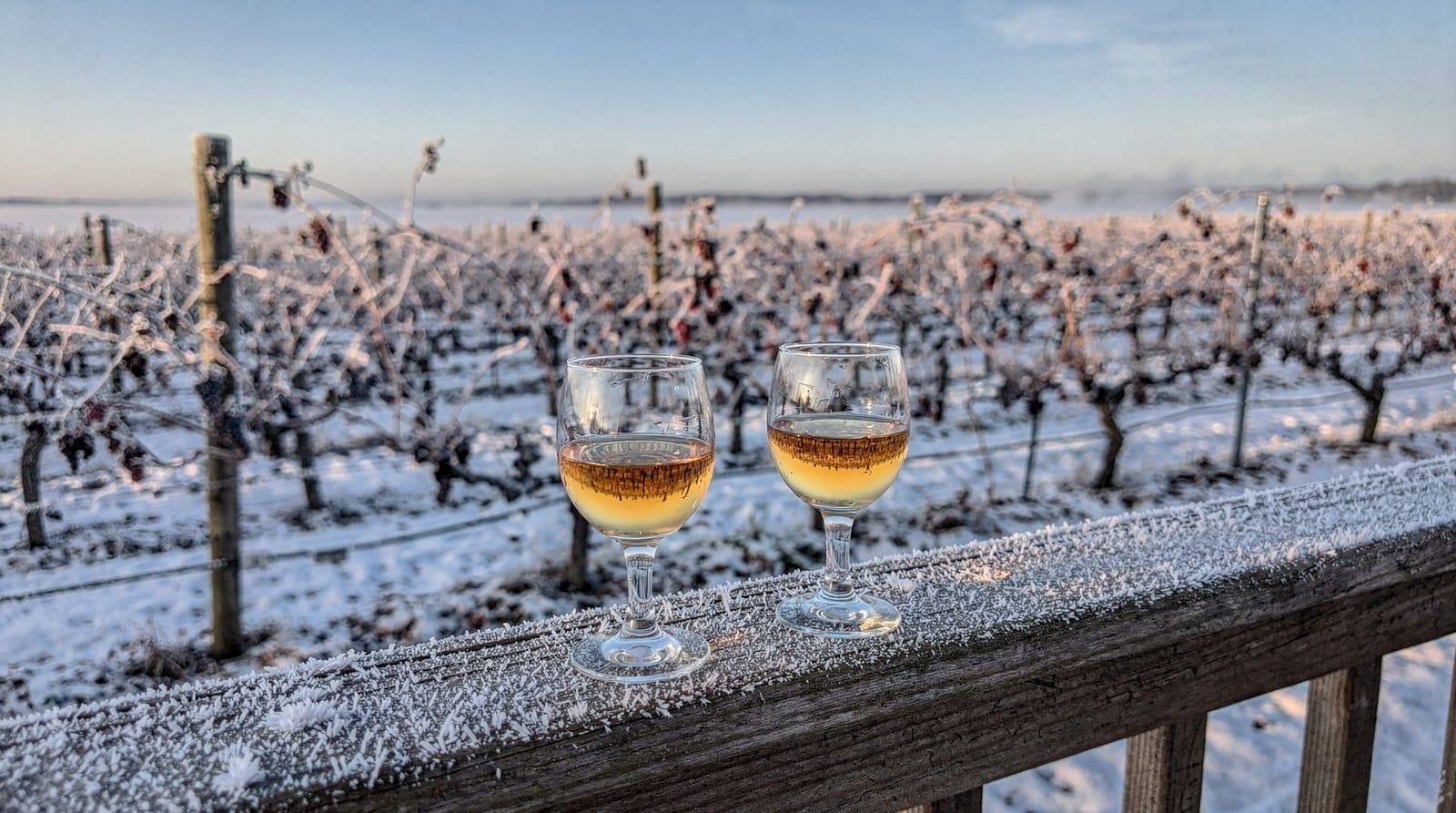
Regular wine grapes are harvested in early-to-mid fall, at peak ripeness. Icewine grapes are deliberately left on the vine for months longer, through the fall and into early winter, netted to protect them from birds, until temperatures drop reliably to -8°C or colder — at which point they’re hand-picked, still frozen solid, often in the middle of the night when temperatures are at their lowest.
The freezing process concentrates the sugars and acids inside each grape, and when pressed while still frozen, only a small amount of intensely concentrated juice comes out, since most of the water content stays behind as ice. The result is a small-yield, sweet, high-acid dessert wine with a flavor profile — often described as tasting of stone fruit, honey, and apricot — genuinely distinct from a standard dessert or fortified wine.
Why Niagara specifically
Very few wine regions in the world can reliably produce icewine on a commercial scale, a theme our best wineries in Niagara-on-the-Lake guide explores further — it requires a climate cold enough for consistent hard freezes, but not so harsh that vines can’t survive the winter at all. Niagara’s position, tempered by Lake Ontario’s moderating lake-effect climate even as temperatures drop well below freezing inland, threads that needle reliably enough that Canada has become the world’s largest icewine producer, with Niagara as its primary region. Germany and Austria produce icewine (known there as Eiswein) as well, but at smaller volumes and less consistently given less reliable freeze patterns.
What the festival actually looks like
The festival spans several weekends in January, opening with a larger kickoff event in Niagara-on-the-Lake’s historic old town — outdoor programming with ice sculptures, mulled wine, food vendors, and a festival atmosphere despite the cold, alongside indoor tastings at participating businesses throughout the town. Beyond the opening weekend, individual wineries throughout the broader Niagara region run their own icewine-focused tasting events and flights on subsequent festival weekends, giving visitors a reason to return across multiple trips rather than trying to see everything in one day.
Because the region’s wineries are spread along the Niagara Parkway and surrounding wine route, a car is close to essential for visiting more than one or two in a single day — see our Niagara wine country guide for the broader lay of the land if you’re less familiar with the region’s geography.
Dressing and planning for a winter wine trip
This is the one Niagara festival where cold-weather planning genuinely matters as much as the wine itself. Outdoor opening-weekend events in Niagara-on-the-Lake happen in near-freezing or below-freezing temperatures, and standing outside for an ice sculpture display or an outdoor tasting requires real winter layers — this isn’t a festival where a light jacket will do. Indoor winery tasting rooms offer warmer breaks between outdoor stops, and most visitors plan their day as a rotation between the two rather than staying outside continuously.
Getting there from Toronto
Niagara-on-the-Lake sits roughly 1.5 hours from Toronto by car in good driving conditions via the QEW, though January weather introduces more variability than a summer trip would — checking road conditions and leaving extra buffer time is worth doing before setting out. Public transit options to the wine region itself are limited in winter, making a car trip, or a organized winery-tour transportation option, the more practical approach for most visitors compared to summer, when GO Transit and other options see more frequent service to the broader Niagara area.
Booking tastings
Many wineries welcome walk-in visitors during festival weekends, but the most popular producers, and specific icewine tasting flights in particular, can sell out on the festival’s opening weekend especially — booking specific tastings ahead of time, where a winery offers that option, removes the risk of showing up to a sold-out room. Later festival weekends in January tend to be somewhat less pressured than the opening weekend.
Buying icewine to take home
Icewine is typically bottled in 200ml bottles rather than the standard 750ml table-wine bottle, reflecting how little juice each frozen grape actually yields — expect to pay noticeably more per bottle than a comparable table wine as a result, since the smaller bottle represents proportionally far more fruit and labor. Our wine country weekend planning guide covers logistics for a longer Niagara stay beyond the festival itself. It travels reasonably well if you’re flying home, though checking your airline’s liquid and alcohol allowances for checked baggage is worth doing before committing to buying several bottles.
Pairing it with the rest of a Niagara visit
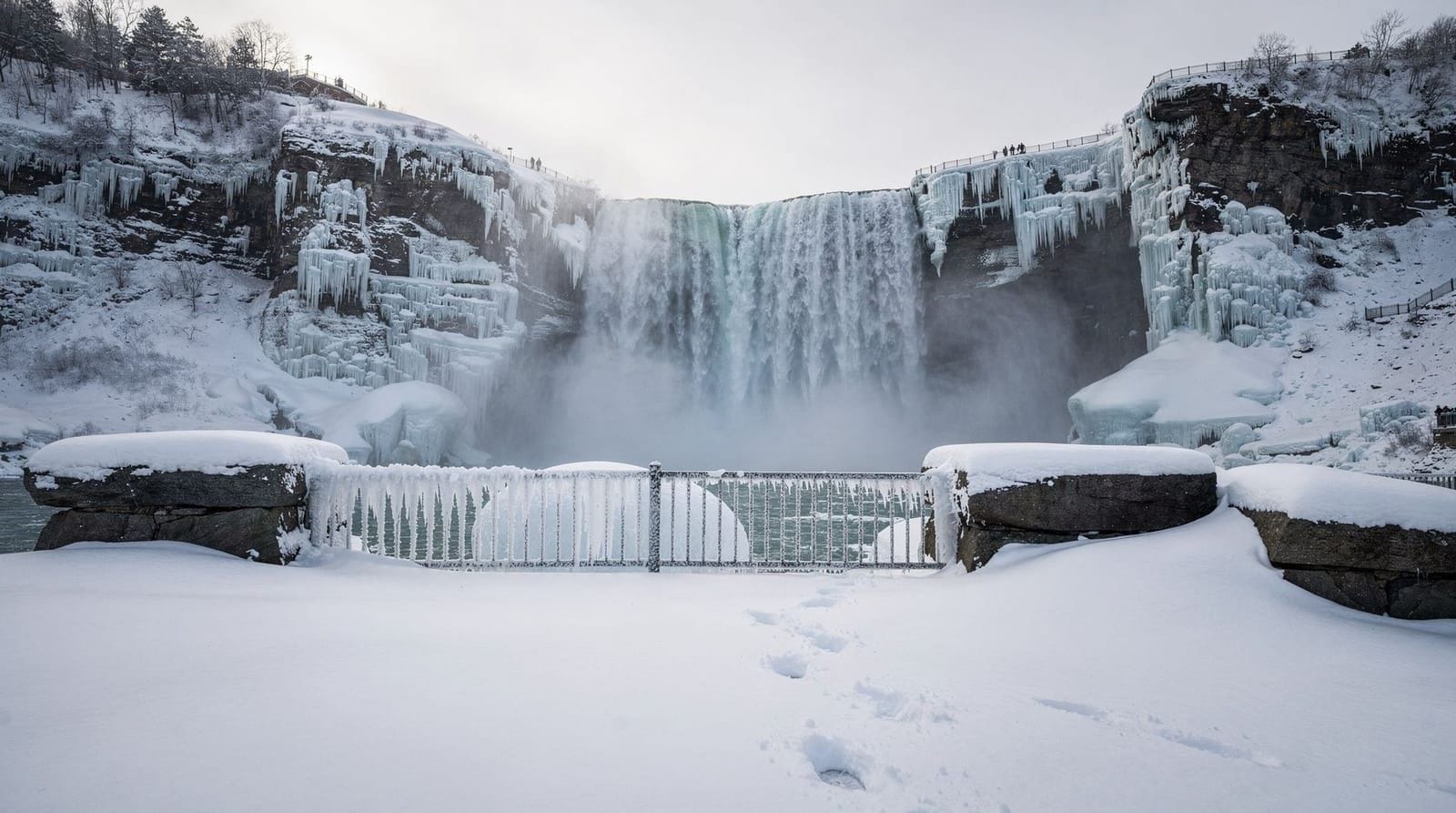
The Icewine Festival is a strong reason to visit Niagara-on-the-Lake outside its busier summer wine-touring season, when the town is quieter and hotel rates typically run lower than peak summer. Our icewine Niagara guide goes deeper into the wine itself and which producers are particularly known for it, while our Niagara Falls in winter guide covers what to expect if you’re combining the wine festival with a stop at the falls themselves — note that some falls-area attractions, including Journey Behind the Falls and Hornblower boat tours, close for the winter season, so plan accordingly if seeing the falls up close is also on your list.
The science of pressing frozen grapes, and how Ontario’s industry began
Icewine as a category didn’t originate in Canada — the technique traces back to Germany, where Eiswein was reportedly discovered by accident in 1794 in Franconia, when an early hard frost hit before growers had finished their harvest. Rather than lose the crop entirely, winemakers pressed the frozen grapes anyway, and found the resulting juice, though minimal in volume, produced an unusually sweet, concentrated wine. The technique remained a niche, weather-dependent specialty in Germany and Austria for the next two centuries, made only in years when conditions cooperated.
Ontario’s modern icewine industry has a much more recent, and more deliberate, origin. Inniskillin, a Niagara-on-the-Lake winery founded in the mid-1970s, is widely credited as the first Canadian producer to commit to icewine as a regular, planned product rather than an occasional accident of weather, beginning in the 1980s. Early attempts were rough — an early vintage’s fruit was lost entirely to birds before netting protocols were refined, a reminder of how exposed icewine grapes are during the months they hang on the vine waiting for a hard freeze.
The turning point for Canadian icewine’s international reputation came in 1991, when an Inniskillin icewine won the Grand Prix d’Honneur at Vinexpo, the major international wine trade fair held in Bordeaux, a genuinely significant result that put Niagara icewine on the radar of serious wine buyers and critics worldwide almost overnight, and helped establish Canada’s now-dominant position as the world’s largest icewine producer.
Ontario’s wine regulator, the Vintners Quality Alliance (VQA), sets strict rules for what can legally be labeled icewine in the province: grapes must be left on the vine and harvested naturally, at a minimum temperature threshold around -8°C, with no artificial freezing permitted at any stage. That natural-freeze requirement is what makes the harvest itself such an unusual process — pickers often work in the middle of the night or in the early morning hours, whenever the temperature has actually dropped low enough and stayed there, since grapes that begin to thaw before pressing lose the concentration effect that makes icewine what it is.
Pressing typically happens immediately after picking, often outdoors or in an unheated space, specifically so the fruit stays frozen through the process — pressing frozen grapes yields only a small trickle of intensely concentrated juice, since most of the water content in each grape remains behind as ice crystals rather than passing through the press.
Fermentation afterward is slow, sometimes taking weeks or months longer than a standard table wine, because the extremely high sugar concentration makes it harder for yeast to work efficiently. The entire process, from the netting that protects grapes through autumn to the final bottling, is more labor-intensive per bottle than almost any other wine style, which is reflected directly in the smaller bottle sizes and higher prices icewine commands at retail.
Practical notes
- Cost: Individual winery tastings typically run a moderate per-person fee, often waived with a bottle purchase; the festival’s outdoor opening-weekend programming in Niagara-on-the-Lake’s old town is largely free to attend.
- Driving conditions: Winter weather on the QEW can add real time to the Toronto-Niagara drive — build in buffer time rather than cutting it close.
- Reservations: Book ahead for specific winery tastings during the festival’s opening weekend in particular.
- What to wear: Genuine winter layers for outdoor programming; the region’s cold is not to be underestimated even by Canadian winter standards.
The Icewine Festival is one of the few times of year Niagara’s wine region feels genuinely quiet and local rather than summer-crowded, which is exactly why serious wine visitors plan a trip specifically around it rather than treating Niagara as a warm-weather-only destination.
Icewine Festival vs a summer wine day
| Icewine Festival (January) | Summer wine day (Jun–Oct) | |
|---|---|---|
| Crowds | quiet, local feel | busiest of the year |
| Hotel rates | typically lower | peak pricing |
| What’s poured | icewine specifically | full range: reds, whites, sparkling |
| Outdoor programming | ice sculptures, opening weekend only | none |
| Driving conditions | can be slower, check before leaving | generally straightforward |
Frequently asked questions about the Niagara Icewine Festival
What makes icewine different from regular wine?
Icewine grapes are left on the vine well past the normal harvest and picked only once they’ve frozen solid, typically at temperatures of -8°C or colder. Freezing concentrates the sugars and acids in the grape, producing a small yield of intensely sweet, concentrated dessert wine unlike a table wine made from grapes picked at normal ripeness.
Why is Niagara known for icewine?
Niagara’s climate — cold enough for reliable winter freezes, but moderated by Lake Ontario’s lake-effect warming enough to keep grapevines viable — makes it one of the few wine regions in the world that can produce icewine consistently and at real commercial scale, and Canada as a whole is the world’s largest icewine producer. That combination of reliability and scale is rare enough globally that few other regions compete directly with Niagara on volume.
Is the Niagara Icewine Festival outdoors?
Much of the festival’s programming, including opening weekend events in Niagara-on-the-Lake’s old town, takes place outdoors in near-freezing temperatures, with ice sculptures, mulled wine, and food vendors alongside the tastings. Individual winery tasting rooms and events are indoors, so the day typically mixes both, and most visitors plan a rotation between the two rather than staying outside the whole time.
How do I get to Niagara-on-the-Lake for the Icewine Festival?
The drive from Toronto takes about 1.5 hours in good conditions, though winter driving on the QEW can be slower and more variable — checking road conditions before a January trip matters more than at other times of year. A car is close to essential for visiting multiple wineries along the Niagara wine route in a single day, since winter transit options to the region are limited.
Do you need to book tastings in advance?
Many wineries offer walk-in tastings during festival weekends, but the most popular producers and any specific icewine-focused tasting flights can sell out, particularly on opening weekend — booking ahead where possible is the safer approach, especially if there’s a specific winery on your must-visit list.
Is icewine expensive?
Yes, relative to table wine — icewine is typically sold in smaller 200ml bottles rather than standard 750ml bottles, reflecting the tiny yield per vine, and prices per bottle run well above a comparable table wine as a result. It’s meant to be sipped in small quantities as a dessert pairing rather than consumed like a regular glass of wine.