Niagara Falls in winter guide
Niagara Falls, Canada: Winter Wonder Tour
Is Niagara Falls worth visiting in winter?
Yes, but with real limitations — the falls themselves are dramatic when partially frozen and rimmed with ice, and crowds and prices drop well below summer levels. Journey Behind the Falls and Hornblower boat cruises both close from November through April, which removes two of the region's signature experiences, so a winter visit suits sightseeing and value over the full activity roster.
A genuinely different version of the falls, not a diminished one
Niagara Falls in winter isn’t simply a colder, quieter version of the summer experience — the extreme cold builds up ice formations along the gorge walls, the mist off the falls freezes onto nearby railings and trees, and the water itself takes on a different character against the white and ice-blue landscape than the summer view most visitors expect. It’s a legitimately worthwhile sight in its own right, not a consolation prize for missing summer. What it isn’t is a complete version of the Niagara activity roster — two of the region’s signature experiences close entirely for the season, and that trade-off is worth understanding honestly before planning a winter visit.
| Temperature | roughly -10 to -20°C |
| What’s closed | Journey Behind the Falls and Hornblower boat cruises, Nov–Apr |
| What’s open | Skylon Tower, main viewing areas, Winter Festival of Lights |
| Hotel rates | often 40%+ below summer peak |
| Getting there | ~1.5 hrs via QEW; GO Transit also runs through winter |
What actually closes, and why it matters
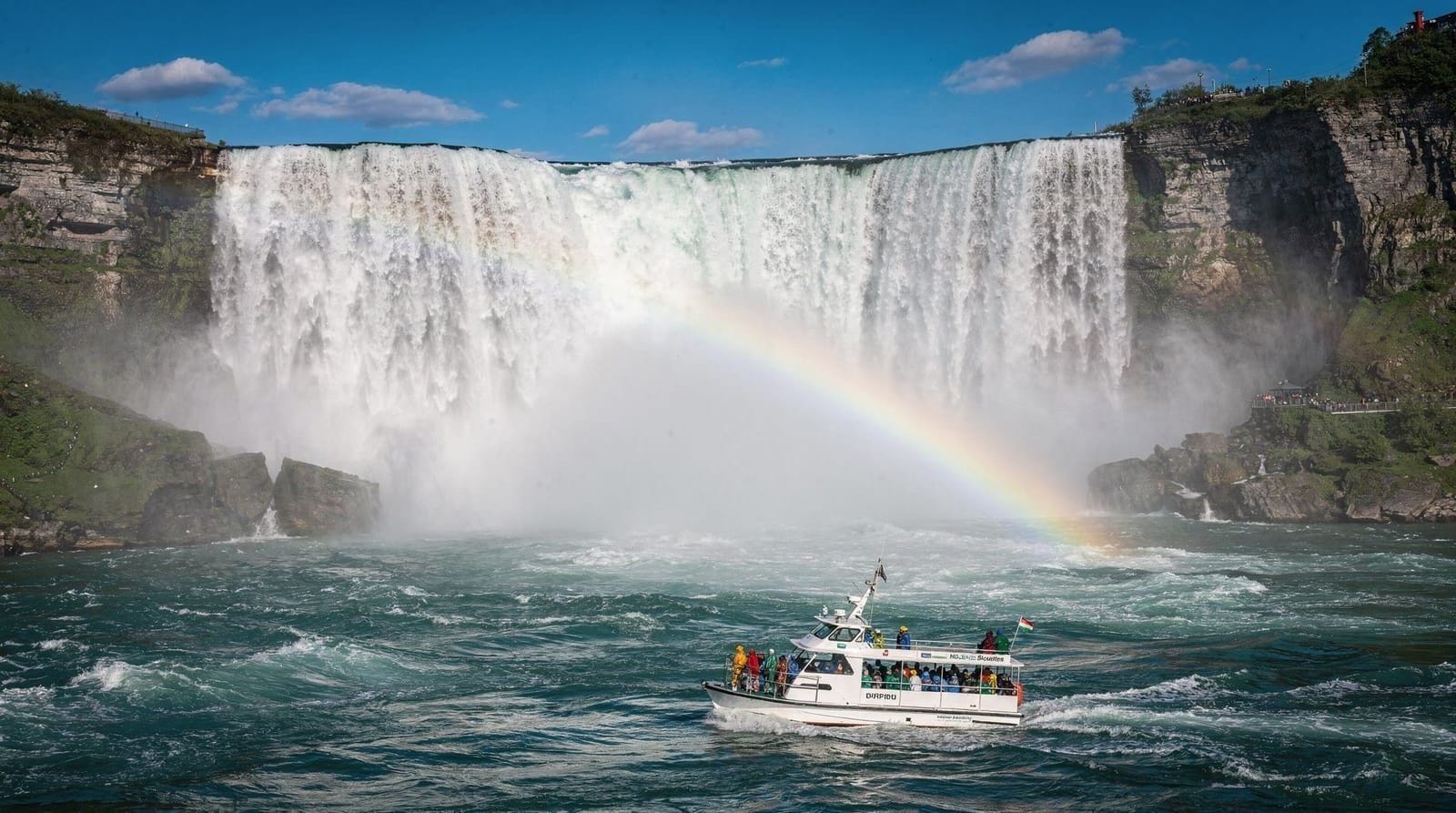
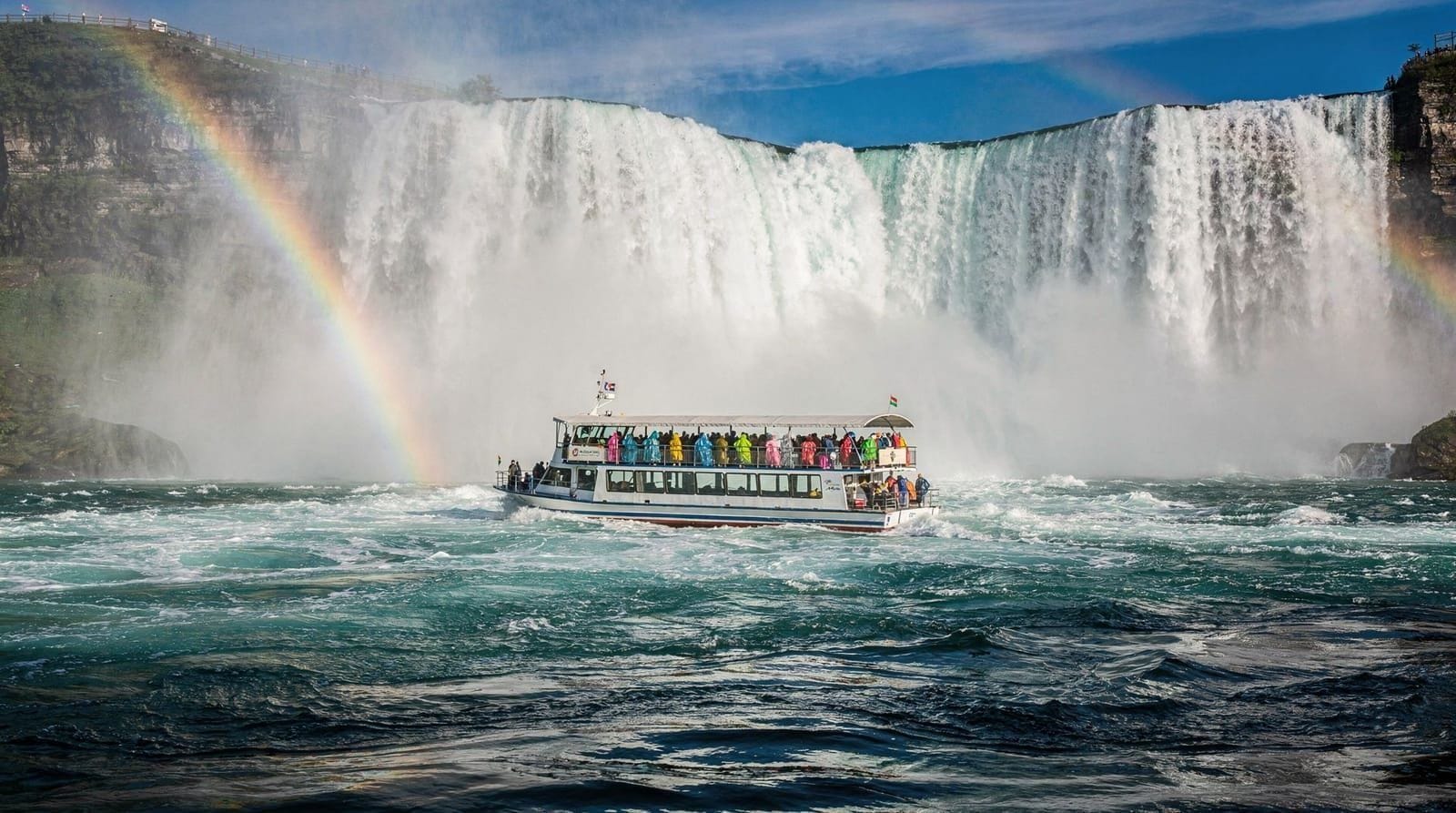
Journey Behind the Falls, which takes visitors through tunnels behind the curtain of water via an observation deck, closes from November through April, as does the Hornblower Niagara Cruises boat tour that brings visitors close to the base of the falls. Both close primarily due to ice buildup and safety concerns around the observation decks and boat docks rather than a simple lack of winter demand — the conditions genuinely make these specific experiences unsafe to operate.
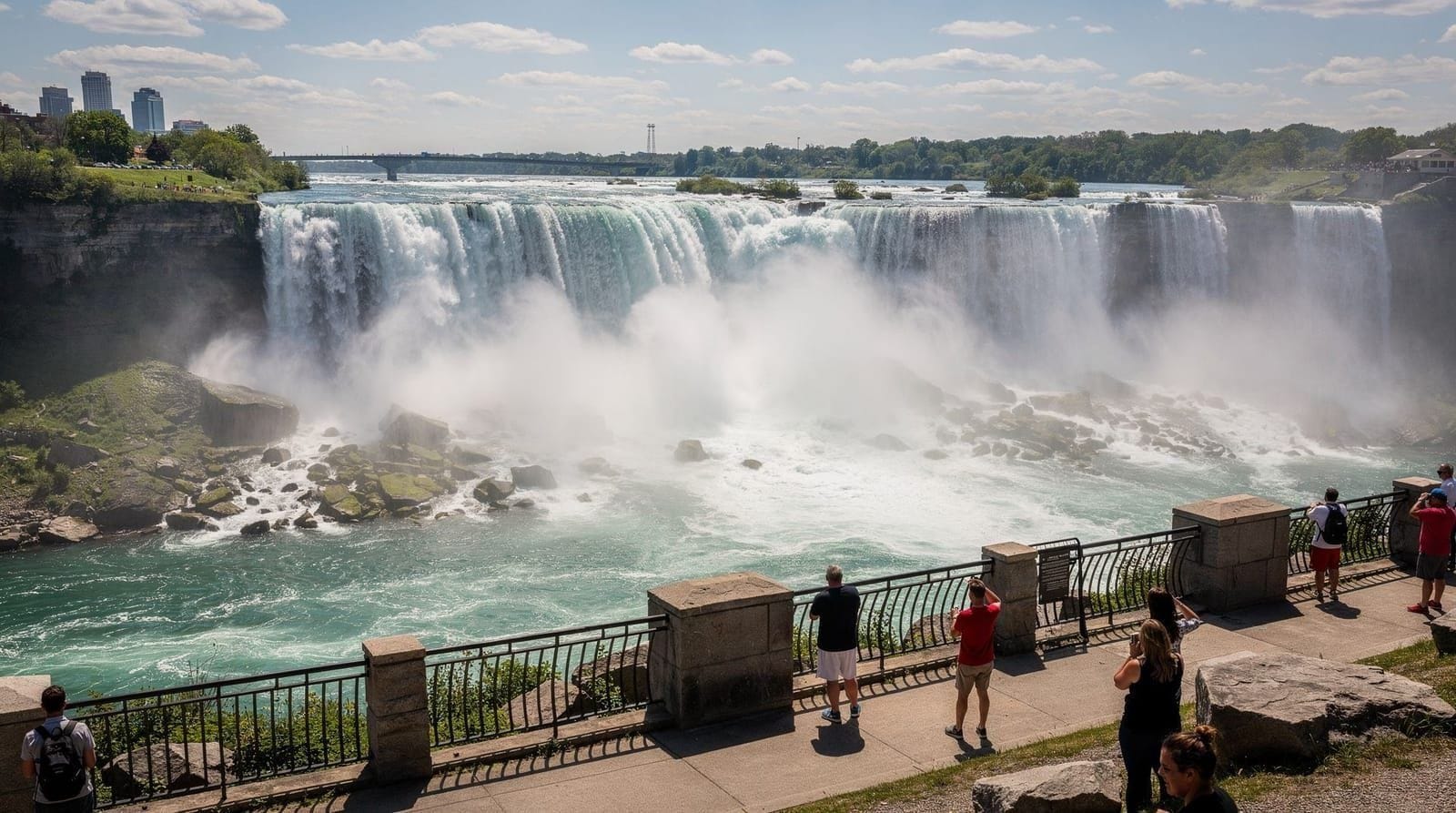
Several smaller seasonal attractions along Clifton Hill, the tourist strip near the falls, also reduce hours or close entirely for the winter months. What remains open year-round includes the falls themselves and their main viewing areas, the Skylon Tower with its observation deck and revolving restaurant, most hotels and restaurants in the area, and the Niagara Parks Winter Festival of Lights, which runs through the season and illuminates the parkway and falls area after dark.
For a full comparison of which specific attractions close and how the Canadian and American sides of the falls handle winter differently, see Hornblower vs Journey Behind the Falls and Niagara Falls: Canada vs USA side.
What the falls actually look like in winter
Extended cold spells build dramatic ice formations along the edges of the falls and on the rocks and railings below, sometimes described locally as an ice bridge or an ice boom effect, though the main body of water at the center of the falls keeps flowing even during the coldest stretches — it doesn’t freeze solid.
The mist that constantly rises off the falls freezes onto nearby trees, lampposts, and railings, coating the immediate viewing areas in a layer of ice that’s striking to see but also genuinely slippery, worth factoring into footwear choices. The overall effect — white ice against the dark rushing water, especially when caught in low winter light or under the Winter Festival of Lights illumination after dark — is different enough from the summer view that many repeat visitors specifically plan a winter trip to see it.
For visitors who’d rather not navigate winter driving conditions or aren’t sure what’s actually open on a given day, the Niagara Falls: Winter Wonder tour builds a day around the season’s open attractions and viewpoints from Toronto, removing the guesswork around closures and road conditions.
Cold, wind, and mist: dressing for a winter falls visit
Niagara’s winter temperatures track close to Toronto’s, generally in the -10 to -20°C range, but the immediate viewing areas around the falls add their own factor — spray and mist off the falls, combined with wind funneling through the gorge, can make the platforms and railings along the falls feel colder than the ambient temperature suggests.
A proper insulated winter coat, waterproof boots with real tread for icy walkways, and gloves are worth treating as non-negotiable rather than optional for anyone planning to spend real time at the main viewing areas rather than ducking in and out of a car or bus. Shorter, well-bundled viewing stops work fine for most visitors; extended time outdoors in the coldest stretches of January and February requires more serious cold-weather preparation.
The value case for a winter visit
Winter is the clearest value season for a Niagara Falls trip. Hotel rates in Niagara Falls, Ontario drop substantially compared to summer peak, commonly by 40 percent or more for comparable rooms, since the region’s tourism economy leans heavily seasonal and operators compete hard for the thinner winter demand.
Restaurants along Clifton Hill and in the broader Niagara Falls area see noticeably thinner crowds, and the attractions that do remain open — the Skylon Tower, the main falls viewing areas, the Winter Festival of Lights — operate without the lines and crowd management that define a summer weekend. For a budget-focused visitor prioritizing the sight of the falls itself over the full roster of paid activities, winter delivers a genuinely strong value proposition.
Getting there from Toronto in winter
The drive from Toronto to Niagara Falls covers roughly 130 kilometres and typically takes about 1.5 hours via the QEW, a route that stays workable through most winter conditions on major highways, though snow squalls off Lake Ontario can occasionally slow travel and require extra caution, particularly in the stretch approaching Niagara.
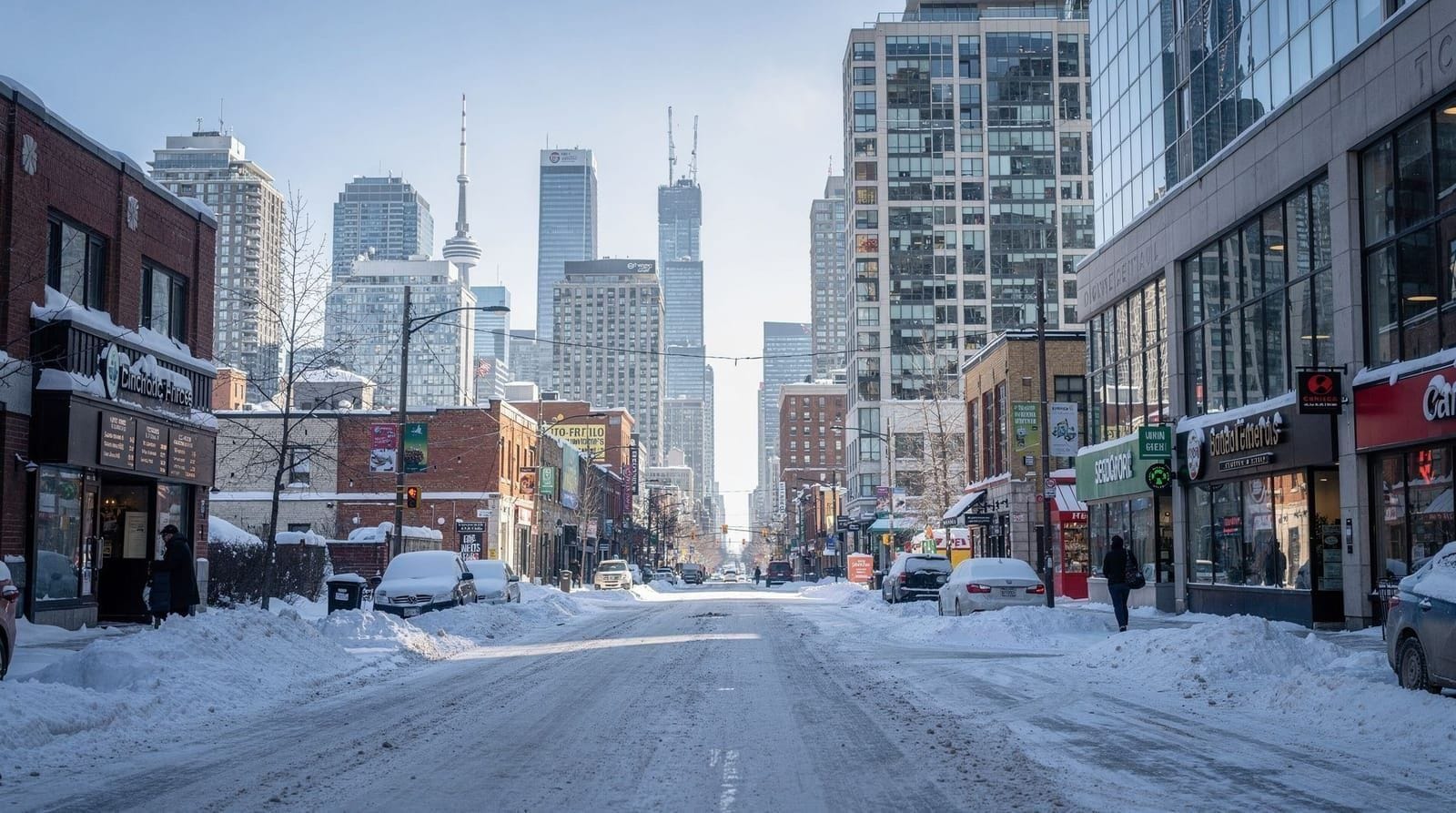
GO Transit also runs service to the region through winter, making a car-free day trip a realistic option even in the coldest months for visitors who’d rather not drive on potentially icy roads. For a full breakdown of driving versus transit options and typical trip timing regardless of season, see the Niagara Falls day trip from Toronto guide. And for how the rest of the city handles the same cold months, see the Toronto in winter guide.
What a realistic winter day trip covers
A winter day trip naturally narrows around what’s actually open — the main falls viewing areas along the parkway, the Skylon Tower’s observation deck, a meal at one of the area’s year-round restaurants, and the Winter Festival of Lights display if timed for an after-dark visit. Without Journey Behind the Falls or the Hornblower cruise as anchor activities, a winter itinerary runs shorter and less activity-dense than a summer one, which suits a half-day or full-day sightseeing-focused trip better than a visit built around checking off every major attraction.
Weekday versus weekend crowd levels in winter
Even in the off-season, weekends draw noticeably more visitors than weekdays to the falls’ main viewing areas and the Skylon Tower, particularly around the December holiday stretch and any weekend the Winter Festival of Lights is running. A weekday winter visit offers close to a private viewing experience at some of the main lookout points, a stark contrast to the summer crowds that define peak-season Niagara, and it’s one of the more understated advantages of visiting during the region’s quietest season.
Wine country and the Niagara-on-the-Lake side in winter
Niagara-on-the-Lake and the surrounding wine country stay open through winter, and several wineries run ice wine-focused events and tastings specifically during the coldest months, since ice wine grapes are traditionally harvested after the first hard frost. This gives a winter Niagara trip a genuine reason to extend beyond the falls themselves into the wine country side of the region, an angle that doesn’t carry the same seasonal closure problems as the falls-adjacent attractions do.
Ice wine season in detail
Niagara’s ice wine season is genuinely a winter phenomenon rather than a marketing angle attached to the cold — ice wine grapes are left on the vine well past the normal harvest and picked only after a hard frost, typically in the coldest overnight hours of December or January, when the frozen grapes concentrate their sugars.
Several Niagara-on-the-Lake wineries run tastings and even organize harvest-viewing events tied to this window, giving winter visitors a reason to explore the wine country side of the region that summer visitors, focused on the falls and the boat tours, often skip entirely. A flight of ice wine tastings typically runs a modest per-person fee at most wineries, considerably less than a full wine-country tour package, and works well as a half-day add-on to a falls-focused trip.
Indoor alternatives when the cold gets extreme
On the coldest days, particularly in January and February when temperatures can drop toward the bottom of the -10 to -20°C range, indoor alternatives become worth building into the day. The Skylon Tower’s observation deck and revolving restaurant offer a warm vantage point over the falls without extended outdoor exposure, and the Fallsview Casino Resort area has indoor dining and entertainment options a short walk from the main viewing areas. Structuring a winter Niagara day around short, deliberate outdoor viewing stops bookended by these indoor options tends to produce a more comfortable visit than trying to spend an extended stretch directly at the outdoor railings.
Photographing the falls in winter
The ice formations along the falls’ edges and the frozen mist on nearby trees and railings photograph best in the lower-angle light of morning or late afternoon, when the ice catches more texture and colour than under flat midday light. The Winter Festival of Lights display adds a genuinely different subject after dark, with coloured lighting on the falls and surrounding parkway creating a scene that doesn’t exist during any other season. Bringing a lens cloth and keeping camera gear inside a jacket between shots helps manage the condensation that can build up when moving repeatedly between a warm car or building and the cold, misty viewing areas.
The American side in winter
The American side of Niagara Falls, across the border in New York State, sees a similarly reduced winter roster, with several of its own seasonal attractions closing for the same weather-related safety reasons as the Canadian side. Crossing between the two sides in winter is workable but adds a border-crossing consideration on top of the cold-weather logistics, and most visitors doing a Toronto-based day trip stick to the Canadian side alone rather than attempting both in a single winter day given the added time and complexity. For a fuller comparison of what each side offers regardless of season, see the Niagara Falls Canada vs USA side guide.
Winter month by month
| Month | Temperature | Crowds | What’s notable |
|---|---|---|---|
| November | around freezing, variable | thin | last weeks of Journey Behind the Falls/Hornblower before closure |
| December | -5 to -15°C | busy around the holidays | Winter Festival of Lights begins, ice wine harvest starts |
| January | -10 to -20°C, coldest | thinnest of the season | best ice formations, Niagara Icewine Festival in Niagara-on-the-Lake |
| February | -10 to -20°C | thin on weekdays | deepest ice, Winter Festival of Lights still running |
| March | milder, more variable | picking up | ice recedes, attractions begin prepping to reopen |
Is a winter Niagara trip worth it?
Frequently asked questions about Niagara Falls in winter
Is the Winter Festival of Lights worth planning a trip around?
It’s a legitimate reason to visit after dark specifically, illuminating the falls, the parkway, and several nearby parks with light displays through the winter season. It pairs well with a daytime falls viewing and adds a distinct evening activity to an otherwise shorter winter itinerary.
Will I be disappointed if I’ve already seen Journey Behind the Falls on a previous summer trip?
Not necessarily — the winter view of the falls themselves, with ice formations and frozen mist along the gorge, is different enough from the summer experience that many repeat visitors find it worthwhile even without the tunnel tour. It’s a different kind of visit rather than a lesser version of the same one.
How early does it get dark in Niagara Falls in winter?
Similar to Toronto, sunset falls around 5 p.m. through most of December and January, which shortens the practical daytime sightseeing window but also opens up earlier access to the after-dark Winter Festival of Lights display without a particularly late night required.
Is Niagara-on-the-Lake worth visiting in winter if the falls’ main attractions are limited?
Yes — the wine country side of the region stays fully operational through winter and several wineries specifically program ice wine tastings and events during the coldest months, giving a winter Niagara trip a genuine second anchor beyond the falls themselves.
Do I need a car to see Niagara Falls in winter, or does transit work?
GO Transit service runs through the winter months and connects Toronto to the Niagara region, making a car-free visit workable even when road conditions aren’t ideal. A car adds flexibility for reaching Niagara-on-the-Lake and wine country stops that aren’t as well served by transit.
Top experiences
Bookable activities with verified prices and instant confirmation on GetYourGuide.