Toronto FC game guide
How do you go to a Toronto FC game?
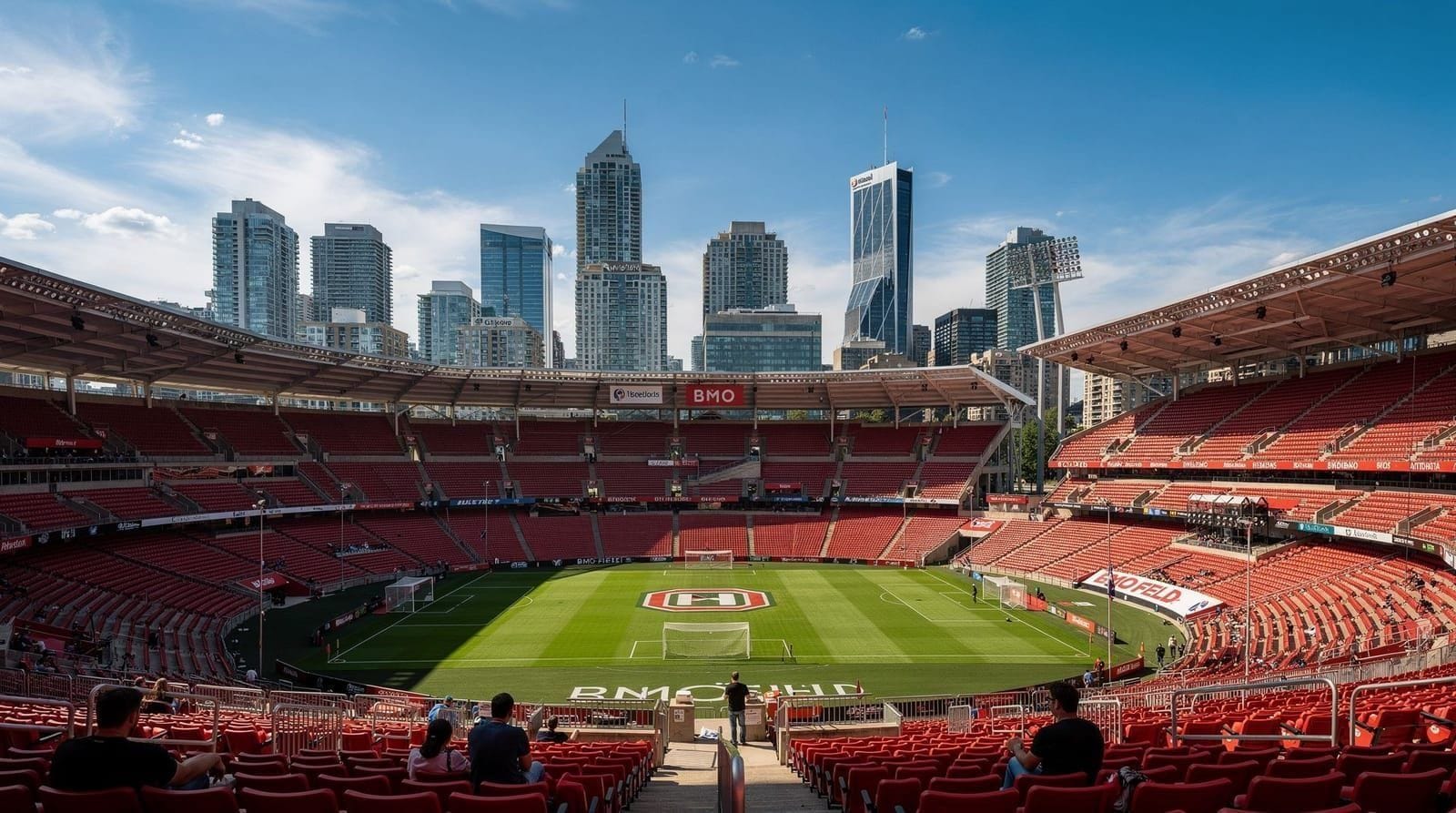
Toronto FC home games are played at BMO Field, on the Exhibition Place grounds west of downtown, reachable by streetcar or a short drive. Tickets are generally the most affordable of Toronto's major pro sports options, with seats often available from around 25 to 40 CAD for standard MLS regular-season games.
The city’s most affordable major pro sports ticket
Toronto FC occupies a different niche in the city’s sports landscape than the Blue Jays, Raptors, or Maple Leafs — a Major League Soccer club with a smaller but genuinely passionate following, playing in a soccer-specific stadium built for the sport rather than repurposed from another use. For visitors interested in seeing live professional sports without the premium pricing that defines Leafs or even Raptors tickets, a Toronto FC game is often the most accessible and affordable option on the city’s major sports calendar.
The club has been playing since 2007 and, while it hasn’t matched the Raptors’ championship success, did win the MLS Cup along with the Canadian Championship and Supporters’ Shield in a standout 2017 season — a high point still referenced by the club’s supporters’ groups, whose organized chanting and flag displays give BMO Field’s atmosphere a different, more European-inflected energy than Toronto’s other major venues.
| Where | BMO Field, Exhibition Place, west of downtown |
| Cost | Standard seats around 25-40 CAD; supporters’ sections similar |
| Getting there | 509/511 streetcar directly to Exhibition Place |
| Season | MLS regular season roughly March-October |
| Best for | Budget-conscious visitors wanting a major-league atmosphere |
How Toronto FC compares to Toronto’s other major teams
| Toronto FC | Blue Jays | Raptors | Maple Leafs | |
|---|---|---|---|---|
| Typical ticket | ~25-40 CAD | Wide range, mid-priced | Higher than MLB/MLS | Highest in the city |
| Season | March-October | April-September/October | October-June | October-June |
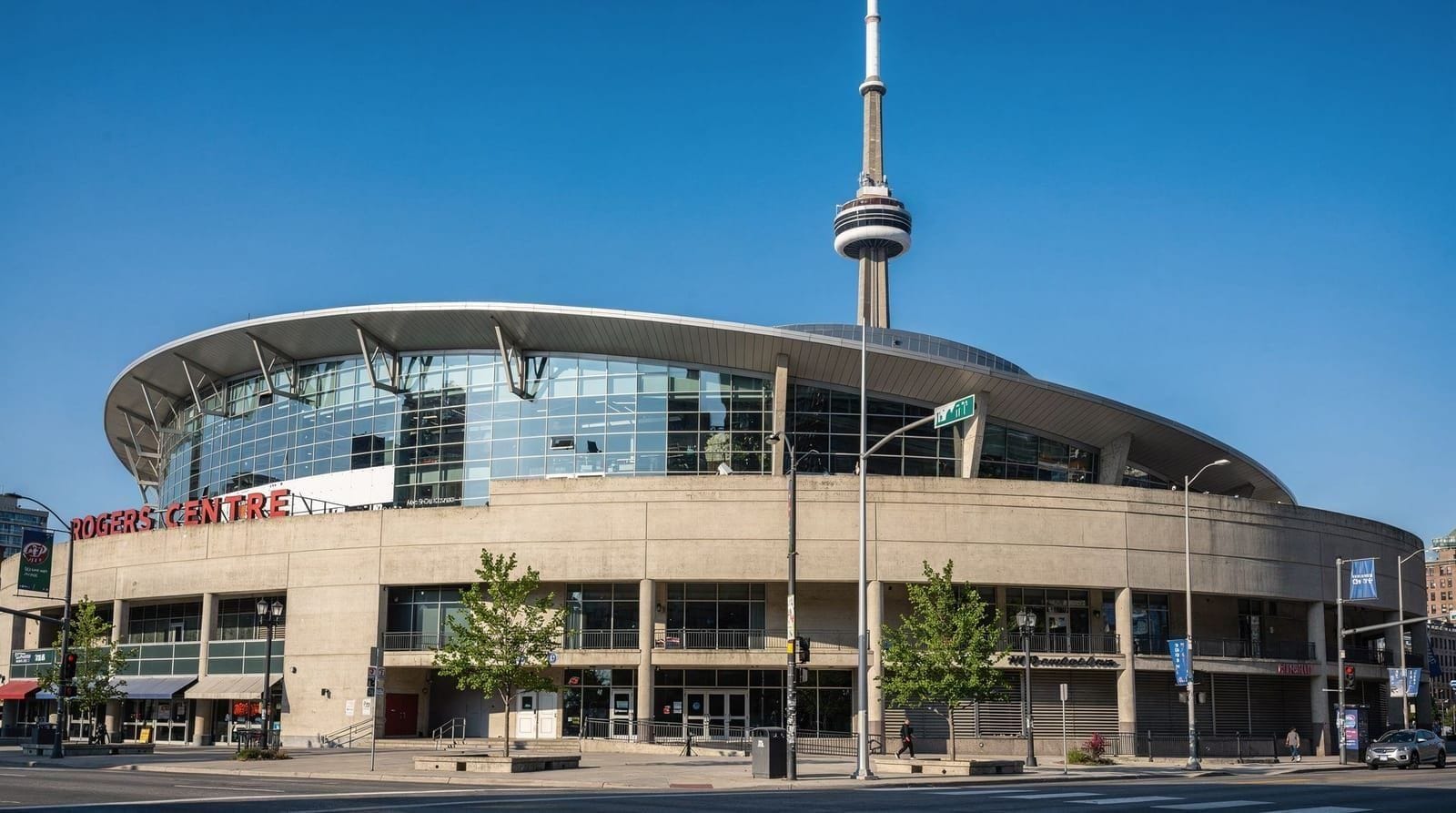
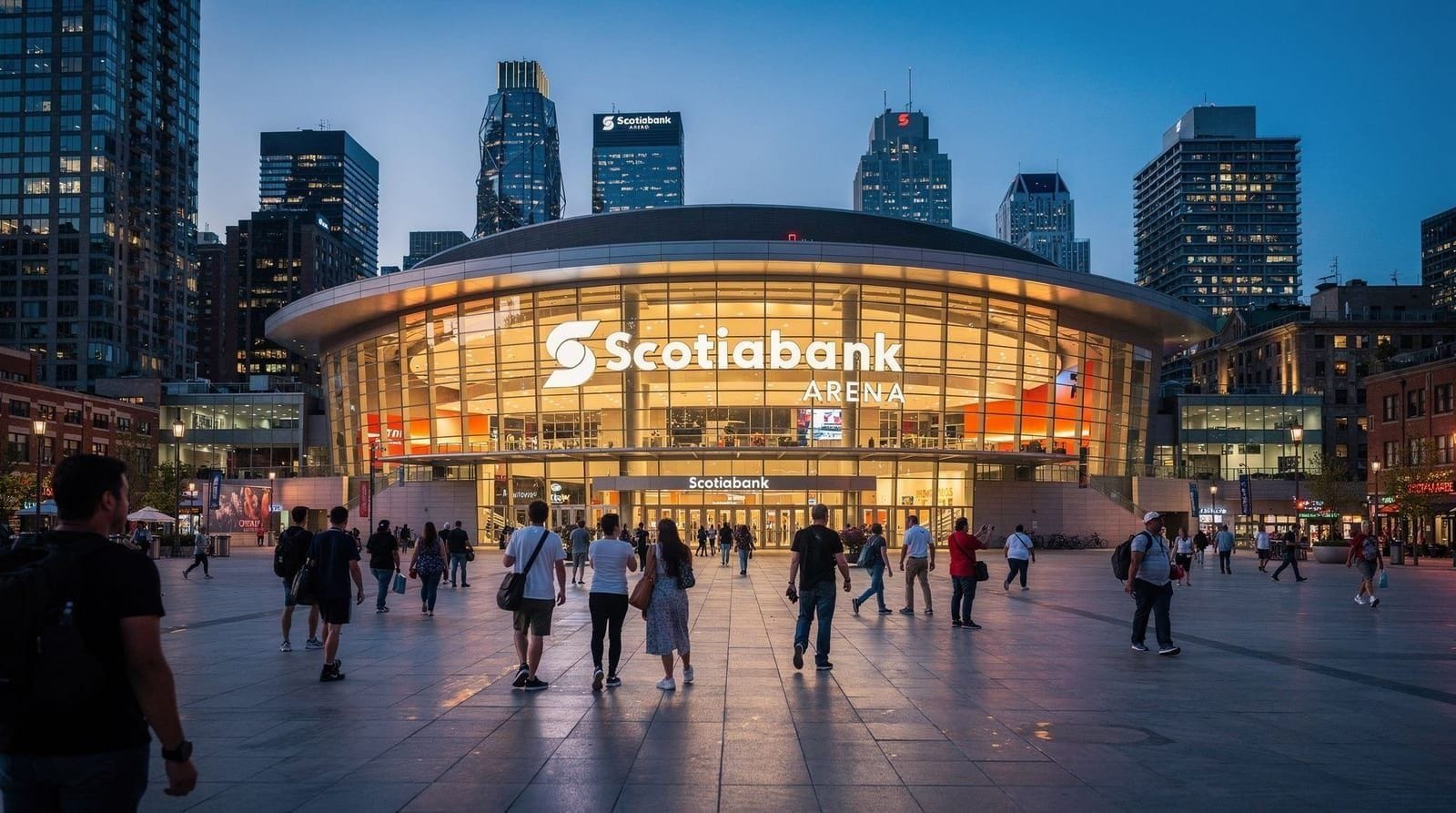
| Venue | BMO Field (open-air) | Rogers Centre (roofed) | Scotiabank Arena | Scotiabank Arena |
| Atmosphere | Supporters’-section, chant-driven | Family-casual | High-energy, sold-out often | Passionate, priciest |
BMO Field and getting there
BMO Field sits on the Exhibition Place grounds, along the lakeshore west of downtown Toronto — home to the annual Canadian National Exhibition and a cluster of event venues, giving the area a fairground-adjacent feel distinct from the more corporate downtown core where the city’s other major stadiums sit. It opened in 2007 as the first soccer-specific stadium built for a Major League Soccer club, designed with sightlines and atmosphere specifically in mind for the sport, rather than adapted from a multi-purpose facility.
Getting there is straightforward by transit — the 509 and 511 streetcar routes run directly to Exhibition Place from downtown, making this genuinely the easiest way to arrive without dealing with event-day parking and traffic around the grounds. Driving is possible, with on-site parking available at Exhibition Place, though it fills up and carries premium event pricing on game days.
Buying tickets and where to sit
Toronto FC tickets are generally available through the club’s official ticketing platform and various resale marketplaces, with pricing that stands out as noticeably more accessible than the city’s other major professional teams. Standard regular-season seats often start around 25 to 40 CAD, a fraction of comparable Maple Leafs or premium Raptors pricing, making this a strong option for budget-conscious visitors who still want a genuine major-league sports experience.
The supporters’ sections, typically located behind one of the goals, hold the club’s most vocal fan groups and deliver the most intense atmosphere in the stadium — a great choice if you want the full live-soccer energy, though it’s a standing, singing, flag-waving environment rather than a quiet seated experience. More conventional seating along the sidelines offers a calmer vantage point with strong sightlines across the pitch, given BMO Field’s compact, soccer-specific design.
What a game night looks like
Gates typically open about an hour to 90 minutes before kickoff, and the areas immediately surrounding BMO Field within Exhibition Place often have some pre-game activity, food trucks and vendors in particular, adding to the atmosphere before you enter. Inside, the supporters’ groups drive much of the in-game energy with organized chants and displays throughout the match — a noticeably different, more participatory atmosphere than the more passive fan culture typical of North American stadium sports.
Rivalry matches and what to prioritize
If MLS rivalry culture interests you, matches against other Canadian MLS clubs — the Canadian Championship, an annual tournament among Canada’s MLS teams — tend to draw the most heightened atmosphere, alongside any late-season matches with playoff implications. For a first-time visitor without strong existing soccer allegiances, though, any regular-season game offers a genuine, affordable taste of the club’s supporters’ culture and BMO Field’s soccer-specific design.
The 2017 treble season and what it means to supporters
Toronto FC’s 2017 season remains the standard by which the club measures itself — winning MLS Cup, the Canadian Championship, and the Supporters’ Shield (awarded to the team with the best regular-season record) all in the same year, a genuine treble that few MLS clubs before or since have matched.
That team, built around Designated Players Sebastián Giovinco, Michael Bradley, and Jozy Altidore, is still referenced constantly by the club’s supporters’ groups, and jerseys and memorabilia from that era remain popular purchases at the team store. Understanding this history adds context to the intensity of the supporters’ sections even during a less successful season — there’s a genuine standard of success this fan base has seen the club reach, which shapes expectations in a way that differs from a franchise without that recent high point.
How Toronto FC’s supporters’ culture developed
The organized supporters’ groups behind BMO Field’s atmosphere — chanting, flag displays, coordinated songs throughout the match — developed deliberately over the club’s history, drawing inspiration from European and South American soccer supporter culture rather than the more passive, entertainment-driven fan experience typical of North American sports. This wasn’t accidental; MLS clubs generally, and Toronto FC specifically, have worked to cultivate this kind of supporter culture as a differentiator from the country’s other major sports leagues, and BMO Field’s design, with dedicated supporters’ sections built into the stadium’s original plan, reflects that intent architecturally as well as culturally.
BMO Field’s role beyond Toronto FC
Beyond hosting Toronto FC, BMO Field has served as a venue for a range of other events over the years, including Canadian national soccer team matches, concerts, and other major sporting events, reflecting its flexible, soccer-optimized but not exclusively single-purpose design. Its selection and subsequent expansion as a FIFA World Cup 2026 host venue builds on this history of hosting significant events beyond the MLS regular season, part of why the stadium’s infrastructure was considered a viable foundation for the scale of temporary expansion the tournament required.
Food and drink at BMO Field
Concession offerings include standard stadium fare alongside some options reflecting the broader Exhibition Place setting, which hosts a range of events throughout the year with its own established food vendor ecosystem. Prices run at typical stadium markup, generally comparable to or slightly below Rogers Centre and Scotiabank Arena given BMO Field’s smaller overall scale.
Combining with other Exhibition Place or lakeshore attractions
Exhibition Place hosts a range of events and attractions throughout the year beyond Toronto FC games, and the surrounding lakeshore path offers a pleasant walk if you arrive with extra time before kickoff. The area sits within reasonable transit distance of downtown attractions, making it feasible to combine a BMO Field visit with a broader day exploring the harbourfront or downtown core.
How Toronto FC fits into Canada’s growing soccer landscape
Toronto FC was Major League Soccer’s first Canadian club when it joined the league in 2007, part of a broader expansion of professional soccer’s footprint in Canada that has continued in the years since, including the eventual launch of the Canadian Premier League, a separate domestic soccer league below MLS in the country’s soccer pyramid.
This growth reflects soccer’s steadily increasing popularity in Canada, driven partly by the country’s diverse immigrant communities with strong existing soccer traditions and partly by the national team’s rising competitiveness on the international stage. Attending a Toronto FC game offers a window into this broader growth story, a sport still building its North American infrastructure and fan culture in real time, distinct from the more established, decades-deep traditions surrounding the Blue Jays, Raptors, or Maple Leafs.
Watching without a ticket
For visitors who can’t make it to BMO Field, Toronto FC games are broadcast on Canadian sports networks, and select downtown bars, particularly those with a strong soccer-watching culture, show matches with a genuinely engaged crowd. This tends to be a smaller, more soccer-specific crowd than you’d find for a Blue Jays or Raptors broadcast, reflecting the club’s smaller but notably passionate fan base relative to the city’s more mainstream professional sports followings.
Practical tips for first-time attendees
Check the current weather forecast before heading out, since BMO Field is an open-air stadium without a roof, unlike Rogers Centre — dress accordingly for an evening game, particularly in the cooler shoulder-season months of March, April, and October. Arrive with enough time to navigate the streetcar route if traveling by transit, since service can be busier than usual on game days. Mobile ticketing is standard, so ensure your ticket is accessible on your phone before arrival.
Weather and the outdoor stadium experience
Because BMO Field has no roof, the in-game experience varies considerably by season in a way that doesn’t apply to Rogers Centre or Scotiabank Arena. Early-season matches in March and April can bring genuinely cold, sometimes wet conditions more reminiscent of a late-winter evening than typical soccer weather, while the height of summer offers a warm, comfortable outdoor evening well suited to the sport. Late-season October matches split the difference, often delivering some of the most pleasant, crisp evening conditions of the year for anyone who prefers cooler weather over summer heat.
The Designated Player system and why it matters for MLS
MLS operates under a unique roster construction system compared to most global soccer leagues, including a salary cap with exceptions for a limited number of “Designated Players” whose high salaries fall outside the cap — a rule that has allowed Toronto FC and other MLS clubs to sign internationally recognized stars alongside a broader roster of more modestly paid domestic and international players. Understanding this system helps explain why an MLS roster can look different in quality and experience level from a typical top-tier European club, and why a single marquee signing can meaningfully shift a club’s competitiveness and local excitement in a way that’s specific to how MLS structures its rosters.
A good pick for visitors traveling with kids
Toronto FC games tend to offer a more relaxed, family-friendly atmosphere outside the dedicated supporters’ sections than some of the city’s other major sports events, combined with the lowest ticket prices among the four major pro teams, making it a genuinely practical choice for visiting families looking for an affordable evening of live professional sports. Seating away from the supporters’ sections behind the goals offers a calmer environment better suited to younger children, while still delivering the atmosphere and energy that makes attending live soccer worthwhile.
Comparing your options across the four major teams
If your trip has room for only one pro sports game, the choice usually comes down to budget and timing. A Toronto FC game is the cheapest way in; the Blue Jays game guide covers Rogers Centre’s roofed, family-friendly baseball experience; the Raptors game guide and the Maple Leafs game guide both cover Scotiabank Arena, where tickets run considerably higher, especially for the Leafs. Checking which teams are actually in season during your visit matters more than picking a favorite on paper — MLS, MLB, and the NBA/NHL seasons only overlap for part of the year.
Combining a game with the rest of the waterfront
Exhibition Place sits within a reasonable walk or short transit ride of the harbourfront, making it feasible to spend an afternoon along the lakeshore before an evening kickoff rather than treating the game as a standalone outing. If your visit happens to overlap the FIFA World Cup 2026 matches hosted in Toronto, note that BMO Field’s expanded World Cup configuration is a temporary setup separate from the regular Toronto FC season described here.
Frequently asked questions about attending a Toronto FC game
Is Toronto FC cheaper to watch than the Blue Jays, Raptors, or Maple Leafs?
Generally yes — Toronto FC tickets tend to be the most accessible of the city’s major professional sports options, particularly for standard regular-season games against non-rivalry opponents, making it a strong choice for budget-conscious sports fans.
What’s the atmosphere like at a Toronto FC game?
The supporters’ sections bring a distinctly participatory, chant-driven atmosphere closer to European soccer culture than the more passive fan environment typical of North American stadium sports, giving BMO Field a genuinely different energy than Rogers Centre or Scotiabank Arena.
Is BMO Field covered or open-air?
BMO Field is an open-air stadium without a retractable roof, so weather is a factor for any game you attend — check the forecast and dress accordingly, particularly for early and late-season matches when temperatures can be cooler.
How do I get to BMO Field without a car?
The 509 and 511 streetcar routes run directly to Exhibition Place from downtown Toronto, making transit the easiest and most reliable way to reach BMO Field without needing to navigate event-day parking.
Is Toronto FC connected to the FIFA World Cup matches hosted in Toronto?
No, though they share a stadium — BMO Field, Toronto FC’s home venue, was expanded and used to host FIFA World Cup 2026 matches, but Toronto FC itself is a separate Major League Soccer club unrelated to the international tournament.
Which Toronto team is cheapest to see live?
Toronto FC, generally. Standard regular-season seats often start around 25 to 40 CAD, noticeably below typical Blue Jays, Raptors, or especially Maple Leafs pricing, making it the most accessible major-league option for a budget-conscious visitor.