TTC transit guide
How do I pay for the TTC in Toronto?
Tap a PRESTO card, a contactless credit or debit card, or your phone's tap-to-pay at any subway turnstile, streetcar reader, or bus fare box. A single ride costs $3.35 CAD, with unlimited transfers within two hours, and a day pass runs $13.50 CAD if you're taking more than four rides.
Toronto’s transit system is genuinely easy to use once you understand the basics
The TTC (Toronto Transit Commission) runs the city’s subway, streetcar, and bus network, and it’s one of the more visitor-friendly transit systems in North America once you get past the initial unfamiliarity — contactless payment works everywhere, transfers between subway, streetcar, and bus are free within a two-hour window, and the core downtown network covers most of what visitors actually want to see. This guide covers what you need to know to use it confidently from your first ride.
| Single fare | $3.35 CAD, unlimited transfers within 2 hours |
| Day pass | $13.50 CAD, pays off after ~4 rides |
| Payment | PRESTO, contactless card, or phone tap |
| Key lines | Line 1 (Yonge-University), Line 2 (Bloor-Danforth) |
| Overnight | Blue Night Network buses, ~1:30am-6am |
How to pay: PRESTO, contactless cards, and phone tap
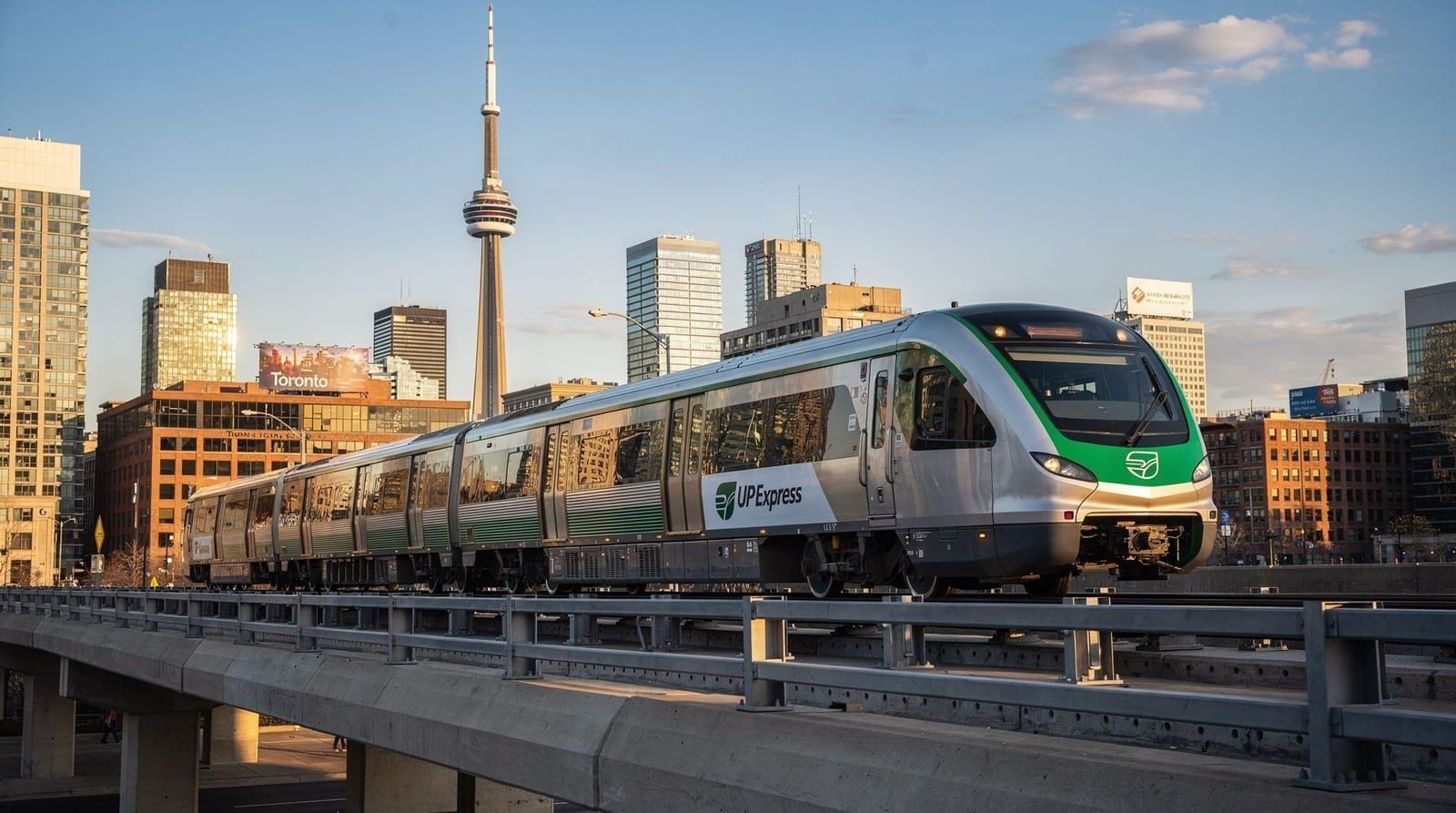
You have three practical payment options, and none require advance setup or an app download. PRESTO card: a reloadable transit card available from machines at any subway station or at the airport’s UP Express stations, PRESTO offers the standard fare and works across TTC, GO Transit, and UP Express, making it the best option if you’re combining city transit with a day trip or airport transfer during your stay.
Contactless credit or debit card: simply tap the same reader used for PRESTO at subway turnstiles, streetcar doors, or bus fare boxes — no card purchase or setup needed, and the fare charges directly to your card. Phone or smartwatch tap-to-pay: works identically to a contactless card if your phone has Apple Pay, Google Pay, or similar set up.
For most short-stay visitors, tapping a contactless card or phone directly is the simplest option — you skip the PRESTO card purchase and top-up process entirely. A physical PRESTO card becomes worth getting only if you’re staying long enough that carrying a dedicated transit card feels more convenient than always reaching for your bank card, or if you want the option of loading a day pass onto it in advance.
Fares and passes
A single ride costs $3.35 CAD, and — critically — this includes unlimited transfers within two hours of your first tap, meaning you can ride the subway, switch to a streetcar, and switch again to a bus, all on a single fare, as long as your full journey completes within that window. This transfer window resets with each new tap, so a same-direction return trip later in the day requires a new fare.
A day pass costs $13.50 CAD and covers unlimited rides for the calendar day — it pays for itself after roughly four single rides, making it worth buying if you’re planning to move around the city more than a couple of times in a day (typical for most sightseeing days combining a morning neighborhood and an afternoon attraction). Day passes can be loaded onto a PRESTO card at station machines; contactless bank card and phone tap payments don’t currently support the day-pass option, so if you want the flat-rate day pass specifically, you’ll need a physical PRESTO card.
The subway network: what visitors actually need
The TTC subway has four lines, but two matter most for a typical Toronto visit. Line 1 (Yonge-University), the U-shaped line running through downtown, past Union Station, up past the Eaton Centre area, and continuing to Yorkville (Museum station, for the ROM) and beyond to midtown, covers most of what visitors actually want to reach.
Line 2 (Bloor-Danforth) runs east-west, crossing Line 1 at Bloor-Yonge station and St. George station, useful for reaching Kensington Market and Chinatown (via Spadina or St. George stations) or the Distillery District area (via streetcar connection from Line 2’s eastern stations). Lines 3 and 4 serve outer suburban areas and are rarely relevant to a downtown-focused visit.
Subway trains run every 3-5 minutes during peak hours and every 5-10 minutes off-peak — genuinely frequent enough that checking a schedule in advance is rarely necessary; just head to the platform.
Streetcars: Toronto’s distinctive above-ground network
Toronto is one of the few North American cities with an extensive streetcar network still in active daily use, and several routes are genuinely useful for visitors rather than just a historical curiosity. The 504 King streetcar runs through the Entertainment District and past the Distillery District area.
The 501 Queen streetcar runs the length of Queen Street, passing near Queen West and continuing toward The Beaches in the east end. Streetcars board at the same fare as subway and bus (tap your card at the reader near the door), and — a genuine quirk worth knowing — some streetcar stops have raised platforms requiring you to tap before boarding, while others let you tap onboard; the signage at each stop makes clear which applies.
Buses: filling the gaps
The bus network covers areas the subway and streetcar lines don’t reach directly, and for most downtown-focused visitors, buses matter less than subway and streetcar — though a few routes are genuinely useful, including connections to High Park and some of the outer neighborhoods like Scarborough Bluffs, which sit beyond convenient walking distance from the nearest subway station.
PRESTO card: where to buy and load one
PRESTO cards and top-up machines are available at every subway station entrance, typically near the fare gates, and also at the airport’s UP Express stations. The card itself costs a small one-time fee, refundable in some circumstances, and can be loaded with either a stored cash balance (deducted per ride) or a day pass. If you’re not planning to use GO Transit for a day trip and only need city transit, a contactless bank card or phone tap genuinely covers everything you need without the extra step of buying and loading a physical card.
Accessibility on the TTC
Most, though not all, TTC subway stations are equipped with elevators, and the TTC publishes current elevator outage information on its website and app — worth checking before you travel if step-free access is essential to your trip, since outages do happen and aren’t always immediately obvious until you arrive at a station. Streetcars on newer low-floor vehicles offer level boarding at platform stops; older-style streetcars and some bus routes require boarding steps. Buses are generally equipped with kneeling functions and ramps for wheelchair access.
Safety and etiquette
The TTC is generally safe to use at most hours, including evenings, though standard city-transit precautions apply — stay aware of your surroundings on quieter late-night routes, and keep bags and phones secured, particularly in busier downtown stations during rush hour. Priority seating near the front of subway cars and buses is reserved for seniors, pregnant travelers, and people with mobility needs — offering your seat if asked, or proactively if you notice someone who needs it, is standard local etiquette.
Overnight service: the Blue Night Network
Regular subway service stops around 1:30am and resumes around 6am, but the Blue Night Network of dedicated overnight bus routes runs along most major corridors throughout the night, including routes that roughly parallel the closed subway lines. Fares and transfer rules are identical to daytime service. If you’re out late — a Distillery District bar, a downtown show, or a late arrival — checking whether your route has Blue Night coverage before you head out saves you from an unplanned taxi if you’d assumed the subway would still be running.
Using the TTC app for real-time information
The TTC’s official app (and several well-regarded third-party apps built on the same open transit data) shows real-time vehicle locations and estimated arrival times for subway, streetcar, and bus routes, genuinely useful for streetcars and buses in particular, since their above-ground routes are more subject to traffic delays than the subway’s dedicated tunnels. Downloading it before your trip, or simply checking Google Maps’ built-in transit directions (which pull from the same TTC data), removes most of the guesswork from a first-time visitor’s transit planning.
Bikes, luggage, and strollers on the TTC
Folding bikes are permitted on the TTC at all times; full-size bikes are permitted on subway trains outside of the busiest weekday rush-hour windows, with specific restrictions posted on the TTC’s website. Strollers and standard luggage are permitted without restriction on subway, streetcar, and bus, though rush-hour crowding on Line 1 through the downtown core can make maneuvering a large suitcase or double stroller genuinely awkward — if you’re arriving downtown with airport luggage during weekday rush hour, a taxi or UP Express (see the Pearson Airport to downtown guide) may be more comfortable than a crowded subway transfer.
TTC vs. driving and parking downtown
For visitors deciding whether to rent a car for a Toronto-only stay (as opposed to day trips requiring a car), the TTC is almost always the better choice within the city itself — downtown parking runs $20-40 CAD per day at most paid lots, traffic on downtown streets is often slower than the subway for the same trip, and Toronto’s grid of one-way streets and construction zones adds genuine friction for unfamiliar drivers. Save the rental car decision for when you’re actually leaving the city for a day trip or regional excursion; see the renting a car in Ontario guide for when a car genuinely becomes worth it.
Combining TTC with other transit for day trips
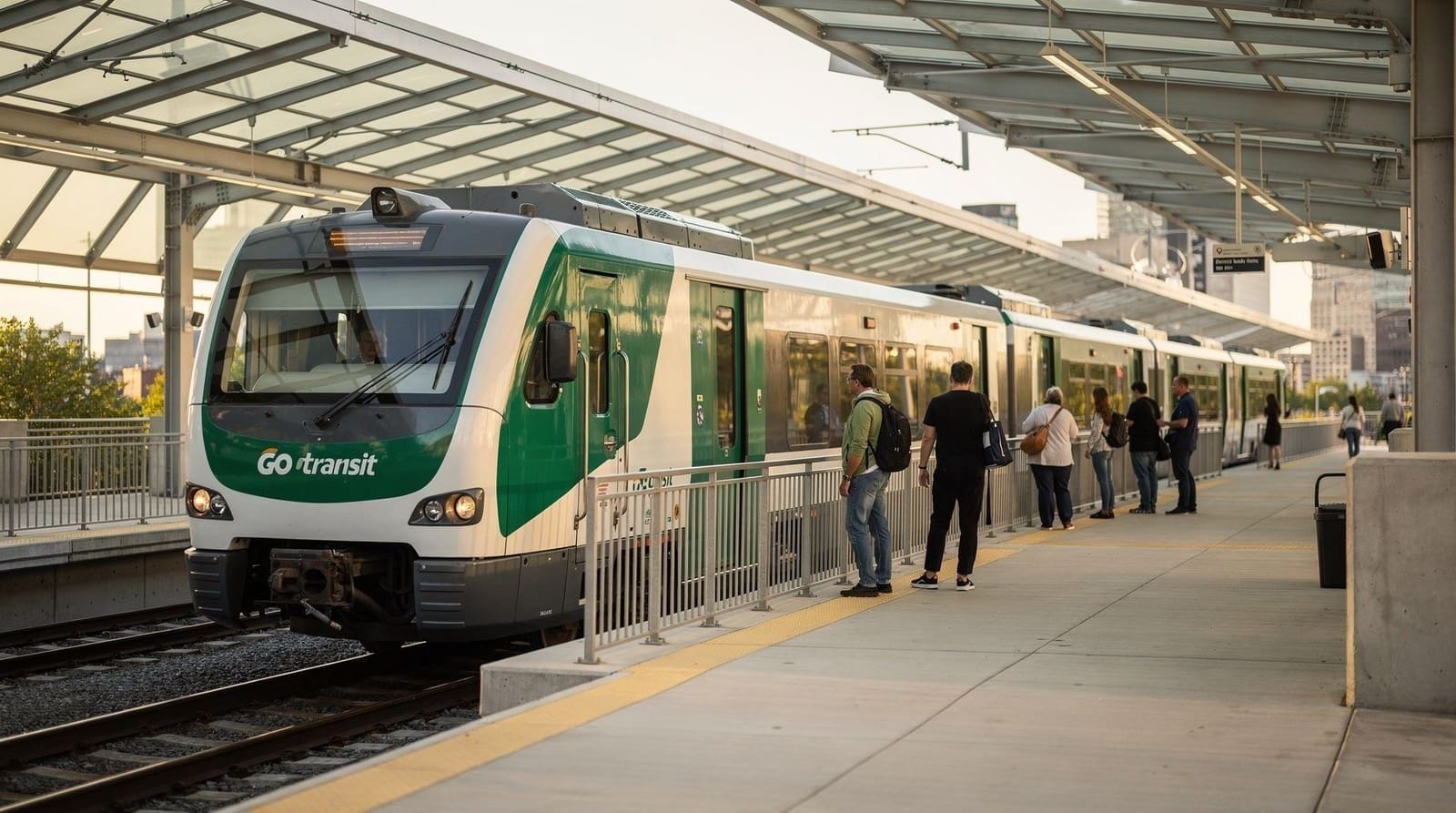
If your Toronto stay includes day trips beyond the city, TTC fares and passes don’t cover GO Transit or VIA Rail — those are separate systems with their own fare structure, though a loaded PRESTO card works across both TTC and GO Transit, simplifying payment even though the fares themselves are calculated separately. See the GO Transit guide for how city transit connects to regional day trips like Niagara Falls or Hamilton.
Getting to Toronto Islands, Distillery District, and other visitor hotspots
The TTC gets you close to nearly every major sight, though the last stretch sometimes means a short walk or a separate connection. The Distillery District is reached via the 504 King streetcar plus a short walk; the Toronto Islands ferry terminal is a short walk from Union Station, itself served by Line 1; and Queen West sits directly along the 501 Queen streetcar route. Scarborough Bluffs and the Toronto Zoo, both well outside the downtown core, require a longer subway-plus-bus combination — budgeting close to an hour each way for either is realistic.
Common first-time visitor mistakes on the TTC
A few small missteps trip up first-time riders more than anything genuinely complicated about the system itself. Tapping in again for a same-direction return trip within the two-hour transfer window creates a duplicate charge — the transfer only covers a continuous journey, not a round trip. Boarding a streetcar at a raised platform stop without tapping first is another common one, since some stops require pre-boarding tap and others don’t; checking the stop’s signage before boarding avoids a fare-inspection issue. Assuming every subway station has an elevator is a third — always check current elevator status if step-free access matters for your trip.
Frequently asked questions about the TTC
How much does a single TTC ride cost?
$3.35 CAD, including unlimited transfers between subway, streetcar, and bus within two hours of your first tap.
Is a TTC day pass worth buying?
Yes, if you’re taking more than four rides in a single day — the $13.50 CAD day pass pays for itself at that point and is loaded onto a physical PRESTO card at station machines.
Can I use my phone or credit card to pay for TTC instead of buying a PRESTO card?
Yes — tapping a contactless credit or debit card, or your phone’s tap-to-pay, works identically to a PRESTO card at subway turnstiles, streetcar readers, and bus fare boxes, without needing to buy or load a separate card.
Which TTC subway line is most useful for visitors?
Line 1 (Yonge-University), which passes through downtown, Union Station, and up toward Yorkville and midtown, covers most attractions visitors want to reach. Line 2 (Bloor-Danforth) is useful for reaching Kensington Market and Chinatown.
Is the TTC safe to use at night?
Generally yes, with standard city-transit precautions — stay aware on quieter late-night routes and keep valuables secured, particularly during busier rush-hour periods in central stations.
Does the TTC connect directly to Pearson Airport?
Not directly by subway — the dedicated UP Express train connects Pearson to Union Station, where you can transfer to the TTC subway. See the Pearson Airport to downtown guide for the full airport transfer breakdown.
Do I need to tap again when transferring between subway, streetcar, and bus?
No, as long as your full journey completes within two hours of your first tap — tap once at the start and ride subway, streetcar, and bus on the same fare. Tapping again for what looks like a new leg of the same continuous trip can trigger a duplicate charge, so only tap fresh for a genuinely new trip later in the day.