Toronto Islands day trip guide
Toronto Island Night Walk with Ferry Ride
How do you get to the Toronto Islands?
By ferry from the Jack Layton Ferry Terminal at the foot of Bay Street, a 10 to 15 minute crossing to one of three docks — Centre Island, Ward's Island, or Hanlan's Point. Round-trip adult tickets run around 10 to 12 CAD, and no car access exists — the islands are car-free.
The closest thing to a beach vacation without leaving the city
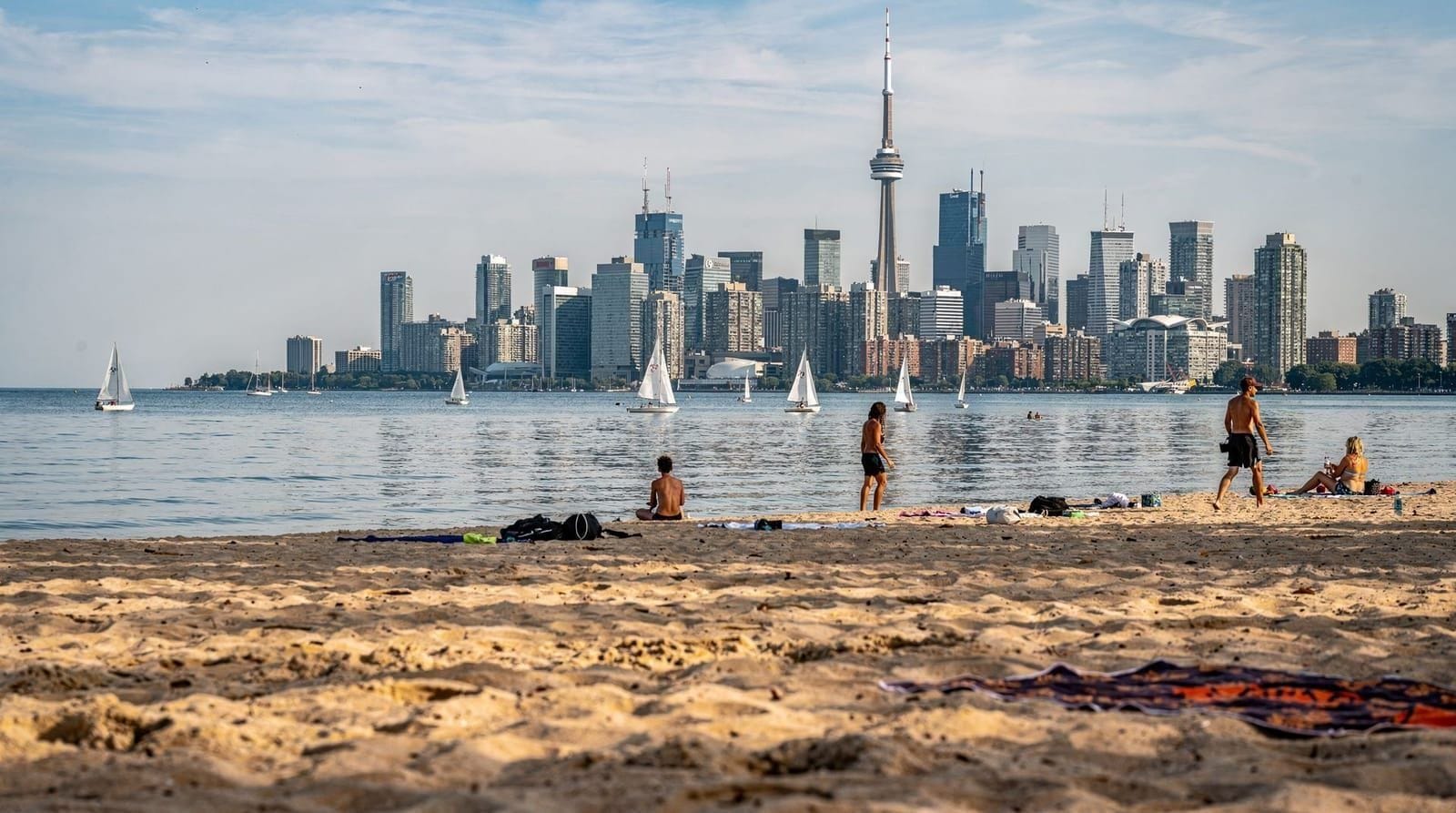
The Toronto Islands sit less than 2 km offshore from downtown, a chain of small car-free islands that somehow manage to feel like a genuine escape despite the CN Tower and downtown skyline remaining visible across the water the entire time. For a city with a reputation as landlocked and concrete-heavy, the Islands are Toronto’s rebuttal — sandy beaches, quiet tree-lined paths, an amusement park, and views back at the skyline that are consistently among the best photo spots in the city.
| Where | Jack Layton Ferry Terminal, foot of Bay Street |
| Cost | Ferry ~10-12 CAD round-trip; full day with extras ~40-90 CAD |
| Time needed | Half-day (3-4 hrs) to full day (4-6 hrs) |
| Getting there | Ferry only — no car access, islands are car-free |
| Best time | June-early September for full facilities; book ahead on summer weekends |
Which dock to choose
| Centre Island | Ward’s Island | Hanlan’s Point | |
|---|---|---|---|
| Best for | Families, first-timers | A quieter walk and swim | Beach (clothing-optional), lighthouse |
| Facilities | Fullest — Centreville, rentals, food | Limited, more residential | Limited, quieter |
| Crowds | Busiest of the three | Noticeably quieter | Quieter, different crowd |
| Ferry route | Shortest, busiest | Moderate | Slightly longer |
Technically an archipelago of over a dozen small islands connected by bridges and paths, the areas most visitors experience break down into three zones, each served by its own ferry dock: Centre Island, the most developed and family-oriented; Ward’s Island, quieter and more residential, home to one of the few genuine cottage communities within Toronto’s city limits; and Hanlan’s Point, home to the islands’ clothing-optional beach and a somewhat different, generally adult crowd.
Getting there: the ferry is the only way
Access to the Toronto Islands is exclusively by ferry, departing from the Jack Layton Ferry Terminal at the foot of Bay Street, just south of the Westin Harbour Castle hotel and a short walk from Union Station. Three separate ferry routes run to the three main docks, each taking 10 to 15 minutes depending on which island you’re headed to. Round-trip adult tickets run around 10 to 12 CAD, with reduced pricing for seniors and children.
In peak summer, particularly weekends, ferry lines can back up significantly — booking a specific departure time online in advance is worth doing rather than showing up and hoping for a quick boarding, especially for the Centre Island route, which carries the heaviest traffic. If you want a different angle on the crossing itself, the Toronto Island night walk with ferry ride combines the crossing with an evening walking tour, a good option if you’d rather explore with some structure and narration than navigate the islands independently.
Centre Island: the family-friendly anchor
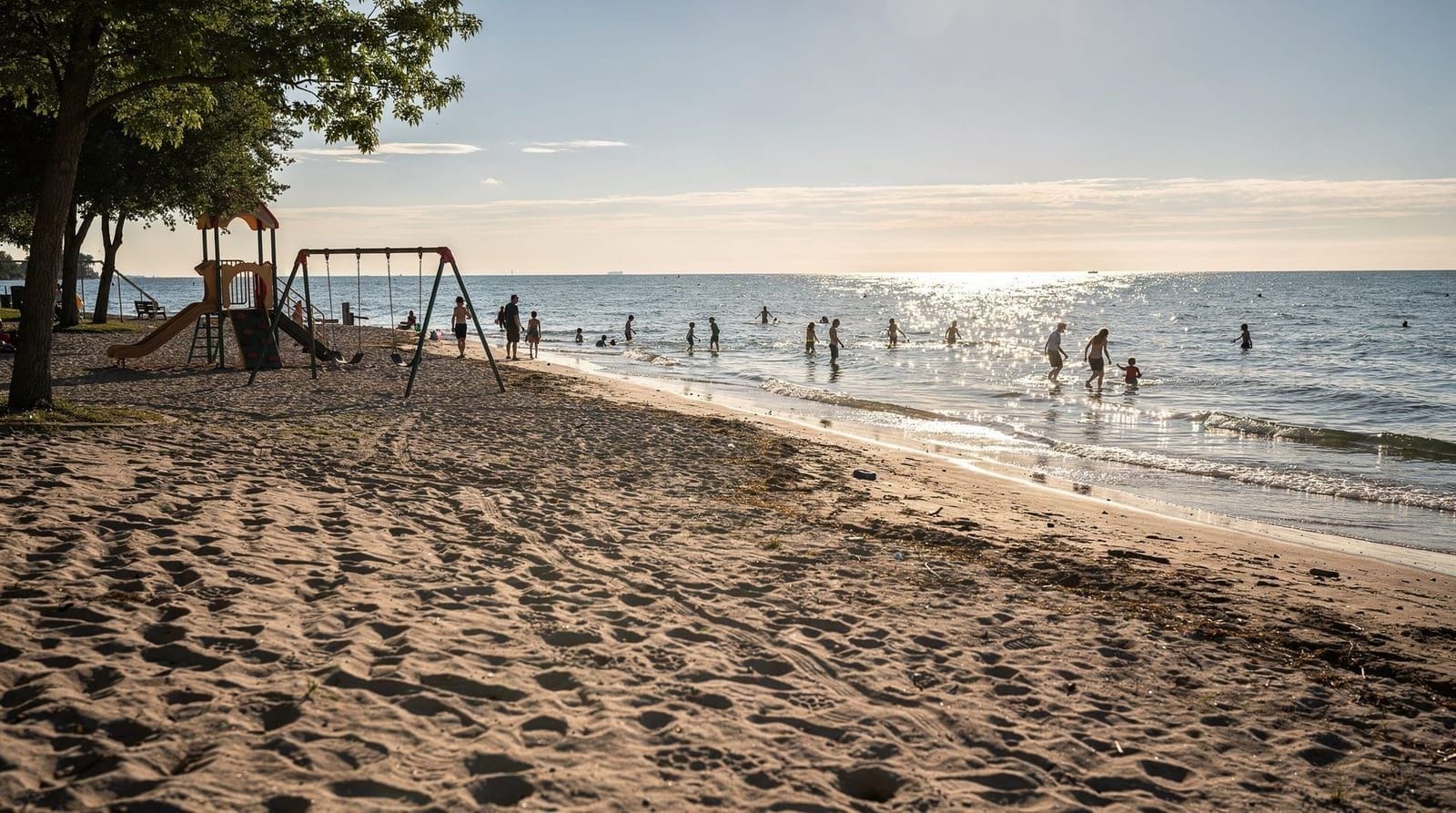
Centre Island is where most first-time visitors land, and it has the fullest range of facilities of the three main docks. Centreville Amusement Park, a small, old-fashioned amusement park with rides geared toward younger kids — a carousel, a small Ferris wheel, a log flume — has been a Toronto institution for generations and remains the islands’ single biggest draw for families. Beyond the amusement park, Centre Island has the widest, most developed beach area, bike rental kiosks, and the best concentration of snack bars and cafés among the three docks.
Centre Island Beach itself is supervised by lifeguards in peak season and offers a genuinely pleasant swimming spot with the skyline as a backdrop, a combination that doesn’t exist quite like this anywhere else in the city.
Ward’s Island: quieter and more residential
Ward’s Island has a distinctly different character from Centre Island — a genuine, small residential community of cottage-style homes, some dating back over a century, coexists with public parkland and a beach that’s noticeably less crowded than Centre Island’s, even at the height of summer. It suits visitors looking for a quieter walk, a swim without the amusement-park bustle, or simply a different pace than the rest of the islands offer. A boardwalk connects Ward’s Island to the other island sections, making it easy to combine a Ward’s Island start with a walk toward Centre Island later in the day.
Hanlan’s Point: the beach and the lighthouse
Hanlan’s Point, at the western end of the island chain, is best known for its clothing-optional beach, one of the few officially sanctioned in Canada, and draws a correspondingly different, generally adult crowd than the family-oriented Centre Island. Beyond the beach, Hanlan’s Point Lighthouse, one of the oldest surviving lighthouses on the Great Lakes (dating to 1808), is a modest but historically notable landmark, and the area around it is generally quieter and less developed than the other two docks.
Getting around once you’re there
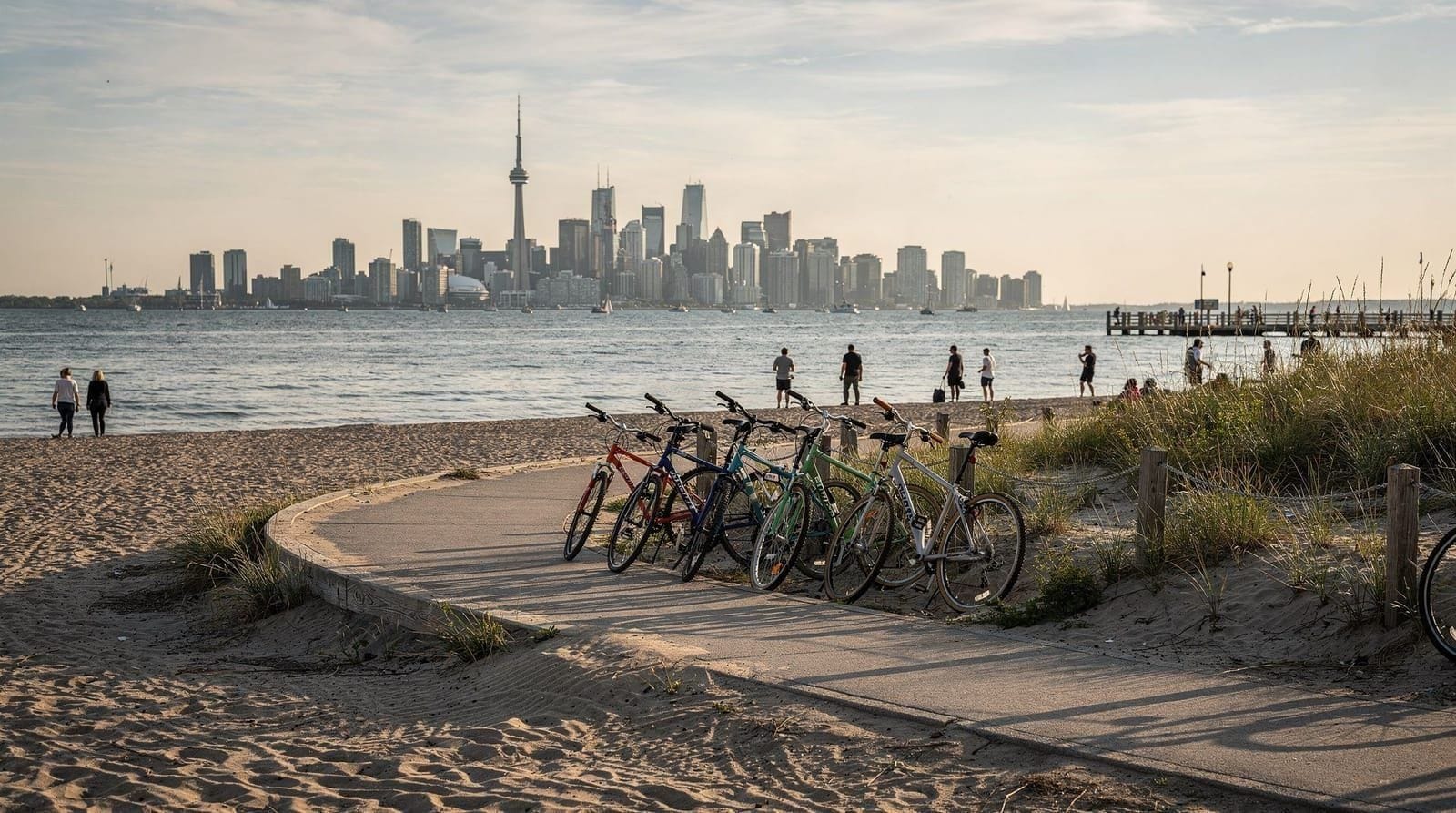
Bicycles are the most efficient way to cover ground across all three island areas in a single visit — rental kiosks operate near the main docks in season, and a network of paved paths connects the islands with minimal car traffic to worry about (since there essentially is none). Walking is entirely feasible if you’re focused on just one dock area, but covering all three in a single day is considerably easier by bike, given the total distance involved.
The islands’ curious origin as a peninsula
What’s now an archipelago was, until a major storm in 1858, actually a peninsula connected to the mainland, part of a long sandbar shaped by lake currents rather than a naturally separate chain of islands. That storm cut a permanent channel through the sandbar, creating the Eastern Gap and effectively turning the peninsula into islands overnight — a piece of geological history that explains why the islands sit so close to shore and so directly aligned with the mainland shoreline, unlike a more typical offshore archipelago formed by entirely separate geological processes.
The islands have been actively shaped by human intervention since, including land reclamation projects through the early 20th century that created some of the connecting paths and expanded certain areas, meaning the current island layout is a mix of natural sandbar remnants and deliberate landscaping.
The skyline view that photographers specifically seek out
Centre Island’s western shoreline, along with certain points on the boardwalk connecting toward Hanlan’s Point, offers one of the most reproduced skyline photography angles of Toronto — the full downtown skyline, CN Tower included, framed across open water rather than from a street-level vantage point. This view has become a recognizable enough image that it appears regularly in Toronto tourism marketing, and photographers specifically time visits around sunset, when the skyline’s lights begin to show against a darkening sky while enough daylight remains to still see detail in the buildings themselves — a narrow window, generally 20 to 30 minutes, worth planning around if photography is a priority for your visit.
A realistic one-day itinerary
Arrive via the Centre Island ferry by late morning, allowing time for Centreville Amusement Park if traveling with kids, then rent bikes and ride toward Ward’s Island for a quieter afternoon walk and swim, before either continuing to Hanlan’s Point or looping back toward Centre Island for the return ferry. This covers the full range of what the islands offer in a single day without feeling rushed, roughly 4 to 6 hours depending on how much time is spent at the beach and amusement park.
A shorter half-day visit — picking just Centre Island for families or Ward’s Island for a quieter option — works equally well and is a reasonable choice if the islands are one stop among several in a broader Toronto day rather than the day’s sole focus.
Where to eat
Options on the islands are more limited than downtown Toronto, with a handful of seasonal snack bars and cafés clustered mainly around Centre Island, plus one or two more substantial sit-down restaurants. Many visitors pack a picnic instead, taking advantage of the extensive grassy park areas and picnic tables scattered across all three island zones — this is genuinely the more popular approach among locals, and grocery stores near the ferry terminal on the mainland side make it easy to pick up supplies before boarding.
Seasonal notes
Summer (June through early September) is unquestionably the peak season, when the beaches, Centreville Amusement Park, and bike rentals are all in full operation, and also when ferry lines are longest. Spring and fall offer a quieter, cooler version of the islands — the beaches aren’t swimmable but the walking paths and skyline views remain just as good, and ferry crowds thin out substantially. Winter ferry service continues on a reduced schedule, and the islands take on a stark, near-empty character that has its own appeal for a short, cold walk, though most facilities (Centreville, rentals, food vendors) close for the season.
Budget for a day trip
The ferry itself is the main cost — round-trip tickets run around 10 to 12 CAD per adult. Centreville Amusement Park charges either per-ride tickets or an all-day pass, generally in the 30 to 45 CAD range for the all-day option, worth it if visiting specifically for the rides. Bike rentals run roughly 10 to 15 CAD per hour or a flat day rate closer to 35 to 45 CAD. A full day with ferry, bike rental, and food lands somewhere between 40 and 90 CAD per person depending on how many paid activities you add.
The ongoing debate over Billy Bishop Airport
Part of the islands’ western section is occupied by Billy Bishop Toronto City Airport, a small regional airport that has been the subject of recurring civic debate over the years regarding noise, expansion proposals, and its compatibility with the islands’ recreational character. For a day visitor, the airport is mostly relevant as a landmark near the Hanlan’s Point area and as an occasional source of aircraft noise on that side of the islands, worth knowing about if you’re specifically seeking out the quietest possible spot for a picnic or a swim, since Centre Island and Ward’s Island sit further from the flight path and tend to be noticeably quieter.
More on the islands and how they fit a wider trip
For a broader look at the islands across every season, see the guide to Toronto Islands and things to do on Toronto Islands.
Traveling with kids specifically, our best beaches for families in Toronto guide compares Centre Island’s beach to the city’s other family-friendly options, and the family day trips from Toronto guide places the islands alongside other regional options if you’re weighing a full day away from downtown against a shorter half-day. Our Toronto Islands: a hidden gem post covers a more personal, off-the-checklist take on why locals keep coming back.
Practical notes before you go
Book ferry tickets online in advance for summer weekends to avoid long dock lines. Bring sunscreen and water — shade is limited on the more open beach and park areas, particularly at Hanlan’s Point and Centre Island’s main beach. If cycling, stick to the paved paths, since some sections of the islands include residential areas where cyclists are asked to slow down. The islands are entirely flat and generally accessible, making this one of the more mobility-friendly day trips in the region.
Accessibility across the three docks
Mobility considerations vary somewhat across the islands’ different areas — the main paved paths connecting the docks and Centre Island’s core areas are generally flat and wheelchair accessible, while some of the smaller footpaths on Ward’s Island and around Hanlan’s Point are narrower and less consistently paved. The ferries themselves accommodate wheelchairs and mobility devices, and Centre Island’s amusement park and beach areas are generally the most accessibility-friendly of the three main zones, worth prioritizing if mobility is a consideration for your group.
Frequently asked questions about a Toronto Islands day trip
How long does the ferry ride to the Toronto Islands take?
Each ferry crossing runs 10 to 15 minutes depending on the destination dock, with Centre Island generally the shortest and busiest route and Hanlan’s Point typically taking slightly longer.
Do I need to book ferry tickets in advance?
It’s not required but strongly recommended for summer weekends, when same-day walk-up lines can mean waiting an hour or more for a departure slot. Online booking lets you select a specific departure time.
Are the Toronto Islands good for a family day trip?
Yes, particularly Centre Island, which is purpose-built for family visits with Centreville Amusement Park, a supervised beach, and the widest range of food options among the three docks.
Can you camp overnight on the Toronto Islands?
No, overnight camping isn’t permitted on the public areas of the islands. Ward’s Island includes a residential community, but visitor access is strictly for day use, with the last ferry typically departing in the evening depending on the season.
What’s the best dock to choose if I only have time for one?
Centre Island is the best all-around choice for most visitors, offering the widest mix of activities, food options, and beach access. Choose Ward’s Island instead if a quieter, less crowded experience is the priority.
Are the Toronto Islands a good half-day add-on to a family trip?
Yes — see the family day trips from Toronto guide and best beaches for families in Toronto for how a half-day at Centre Island compares to other family-friendly options around the city.
Top experiences
Bookable activities with verified prices and instant confirmation on GetYourGuide.