Toronto in 3 days
Toronto Highlights Walking Tour with Tower Entry
Why three days is the right amount of time
Toronto rewards a slower pace than most North American cities its size. Two days is enough to see the CN Tower and eat a peameal bacon sandwich, but not enough to actually feel the city’s neighborhoods, which is where Toronto is genuinely good. Three days gets you downtown’s landmarks, a proper afternoon in the Distillery District, an evening in Kensington Market, and a half-day out on the Toronto Islands — all without racing between stops.
Everything on this route is reachable on foot or by TTC (the transit system), so there’s no need to rent a car; in fact, driving downtown mostly adds parking headaches you don’t need. Expect to spend roughly $150–210 CAD per person per day at a mid-range pace: a $150–250/night hotel or well-located Airbnb, $50–70 on food, $20–30 on transit and incidentals, and $30–60 on paid attractions if you do one or two.
| Where | Downtown, Distillery District, Kensington Market, Toronto Islands |
| Cost | around $150–210 CAD/person/day |
| Getting there | on foot and TTC — no car needed |
| Best time | May–September for patios and full ferry schedule |
| Booking | book CN Tower and Islands tours a few days ahead in summer |
Base yourself somewhere central — the King West/Entertainment District, St. Lawrence Market area, or Yorkville all put you within a 20-minute walk or short subway ride of everything below. The Fairmont Royal York and the King Edward Hotel are classic downtown choices in the $280–450/night range, both a short walk from Union Station and the UP Express train if you’re arriving from Pearson. The Broadview Hotel and the Drake Hotel sit closer to the Distillery District and Queen West for something with more character in the $220–350/night range, and put you within walking distance of Kensington Market as well.
Budget travelers do well at the SoHo-adjacent HI Toronto hostel, which runs private rooms as well as dorms, or one of the extended-stay properties near Union Station that often undercut hotel pricing for stays of three nights or more. Yorkville, north of downtown near the Royal Ontario Museum, is a quieter, more upscale alternative if you don’t mind a slightly longer walk or a short subway ride to reach the Distillery District and Islands.
A note on tipping and currency
Tipping in Toronto restaurants runs 15–20% of the pre-tax bill, generally added as a prompt on the payment terminal rather than left to guesswork — 18% is a reasonable default if the prompt doesn’t offer a clear standard option. Canadian dollars (CAD) are the only currency accepted at most businesses; contactless credit and debit cards are widely accepted everywhere on this itinerary, including TTC fares, so carrying much cash isn’t necessary beyond the odd small vendor. The currency and tipping in Toronto guide has the fuller breakdown if you want specifics for different service types.
Getting your bearings before Day 1
Toronto’s downtown grid is easier to navigate than it first looks: Yonge Street runs north-south as the city’s rough dividing line, and the subway’s two main lines (Line 1, a U-shape connecting downtown to midtown, and Line 2, running east-west along Bloor Street) cover almost everywhere you’ll need to go.
If you land at Pearson Airport, the UP Express train reaches Union Station in 28 minutes for $12.35 CAD one-way — considerably faster and more predictable than a taxi or rideshare during rush hour, when the drive can stretch past an hour. Billy Bishop Airport, Toronto’s smaller downtown airport used mostly for short-haul flights, is a 10-minute ferry-plus-walk from the Entertainment District if your flight happens to route through there instead.
Day 1: Downtown, the CN Tower and the harbourfront
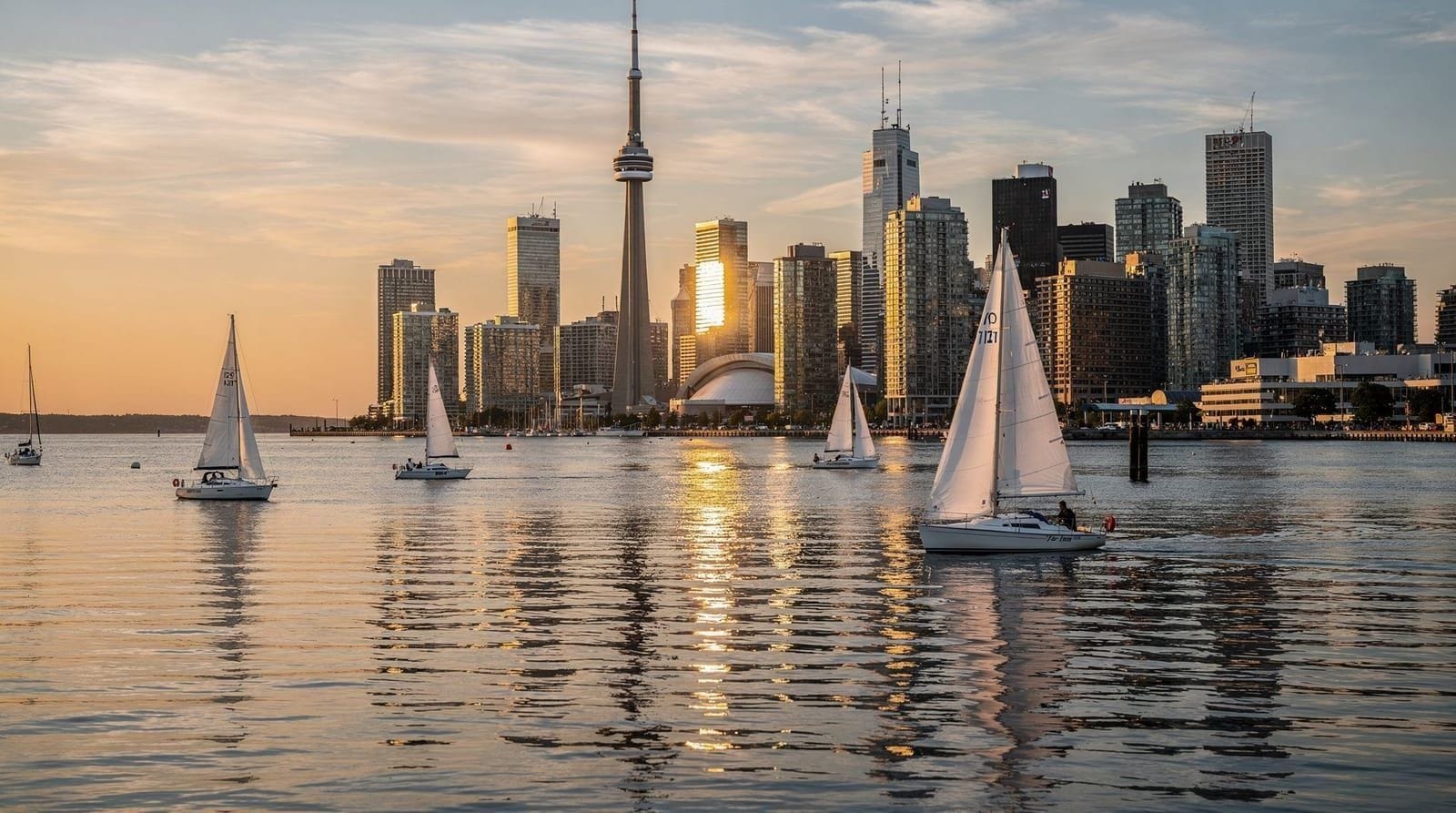
Start at downtown Toronto, which is compact enough to cover most of it on foot in a day. If you’re staying near Union Station, the morning is a good time to tackle the Toronto Highlights Walking Tour with Tower Entry, which combines an orientation walk with skip-the-line CN Tower access — useful on your first morning since it saves you from wasting an afternoon in the ticket queue. If you’d rather explore independently, the downtown Toronto walking guide lays out a self-guided route past Union Station, the Financial District’s PATH-connected towers, and Nathan Phillips Square.
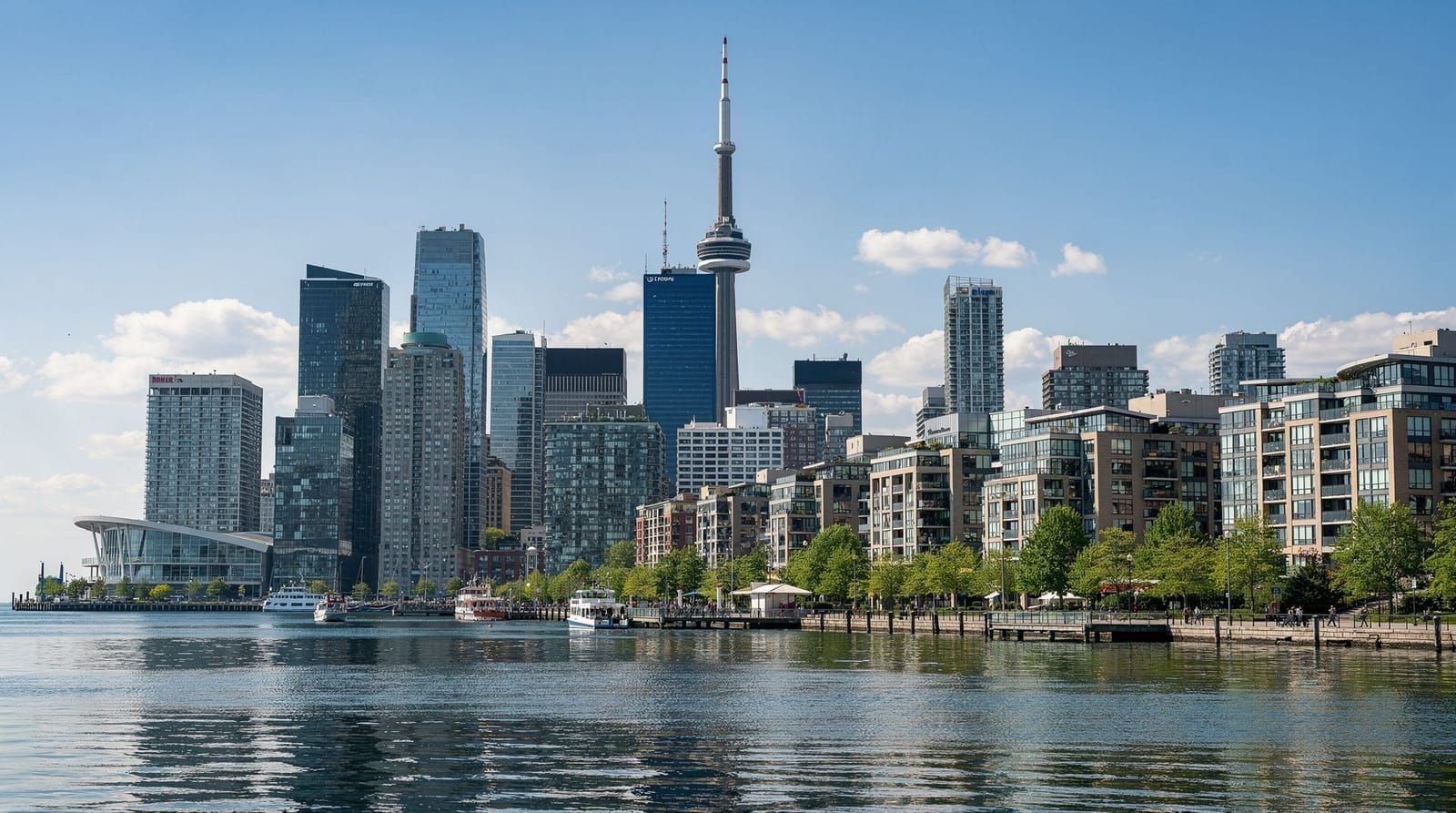
By early afternoon, walk (or take the 509/510 streetcar) down to the Harbourfront for lake views and, if the weather’s good, a coffee at one of the waterfront patios near Queens Quay. This is also where the ferry terminal for the Toronto Islands sits, worth noting for Day 3. For dinner, St. Lawrence Market’s food stalls close by early evening, so if you want a market meal, go earlier; otherwise, King Street West has dense restaurant coverage — Byblos for Levantine small plates or Terroni for wood-fired pizza are reliable, no-reservation-needed options in the $30–45/person range excluding drinks.
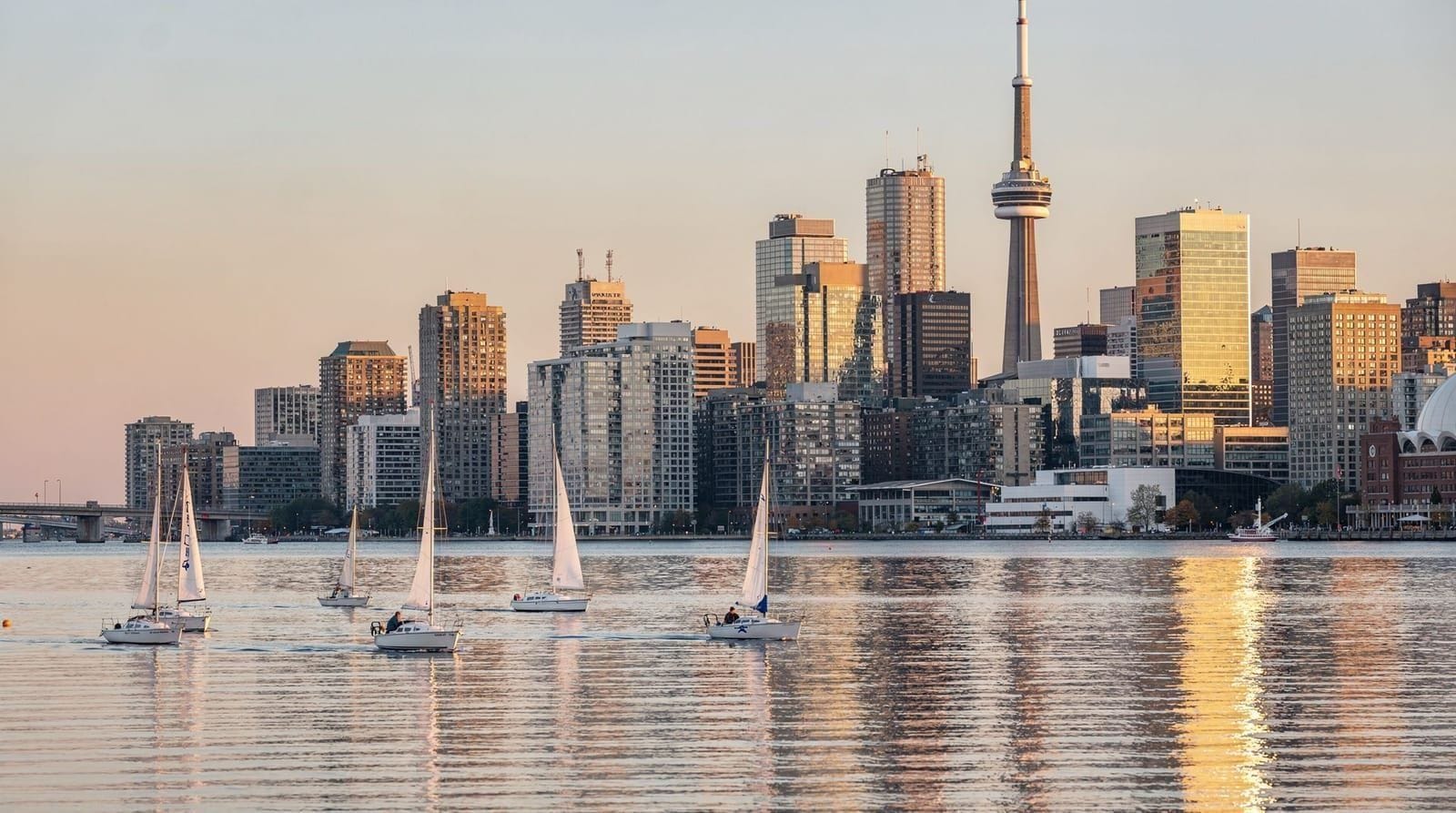
If it’s a clear evening, consider the Premium Night Driving Tour with CN Tower Entry instead of the daytime version — the skyline lit up after dark is arguably the better version of the CN Tower experience, and crowds thin out substantially after 8pm.
Day 2: Distillery District, St. Lawrence Market and Kensington Market
Morning belongs to food: St. Lawrence Market opens at 8am (closed Sundays and Mondays — check before you plan around it) and is worth arriving early, before the tour groups. Carousel Bakery’s peameal bacon sandwich is the market’s signature order, and the lower level has a genuinely good cheese and produce selection if you want picnic supplies. The St. Lawrence Market food guide has vendor-by-vendor detail if you want to plan stops rather than wander.
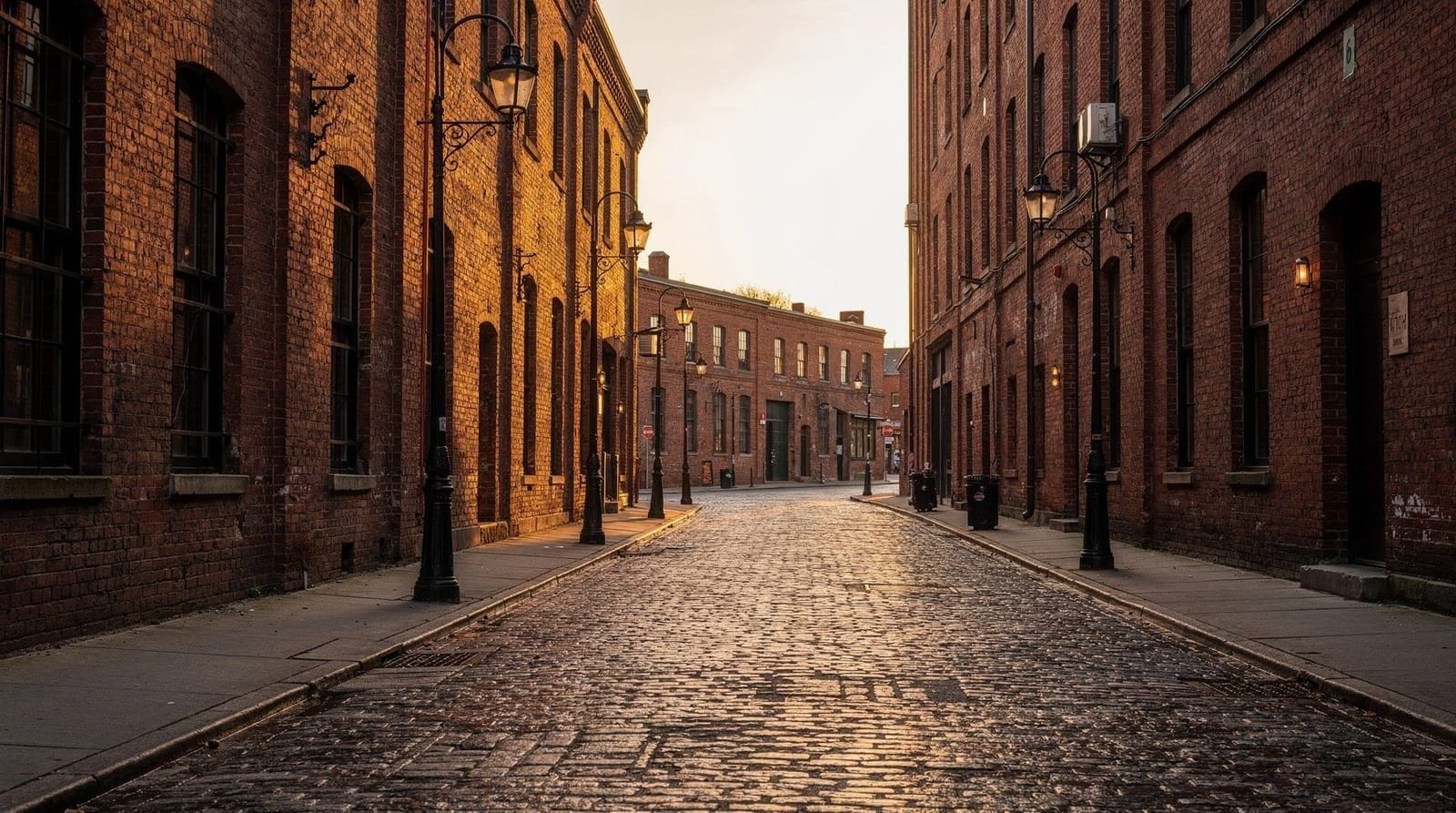
From the market, it’s a 12-minute walk to the Distillery District, a pedestrian-only cobblestone quarter of converted Victorian-era distillery buildings now filled with galleries, boutiques and cafés. The Distillery District Historic Walking Tour covers the site’s 19th-century industrial history in about 90 minutes if you want context beyond just browsing shops. The guide to the Distillery District has restaurant and shop recommendations for the neighborhood.
In the afternoon, cross the city (subway to Spadina or St. Patrick station, then a 10–15 minute walk, or a direct streetcar) to Kensington Market, Toronto’s most eclectic neighborhood — vintage shops, Latin American, Caribbean and Asian grocers, and street art layered across every wall. It connects directly into Chinatown along Spadina Avenue, so you can treat the two as one extended wander; the Chinatown Toronto food guide is worth a look if you want dim sum or barbecue recommendations for this stretch specifically.
The guide to Kensington Market covers the vintage-shopping and food-stall highlights in more depth. Dinner in this pocket of the city is genuinely strong and inexpensive — Seven Lives for Baja-style fish tacos, or any of the small Vietnamese and Salvadoran spots along Augusta Avenue, mostly $12–20/person.
Kensington Market gets noticeably livelier on weekends, when Pedestrian Sundays (closing the core streets to car traffic on the last Sunday of the month, May through October) turn the neighborhood into an impromptu street festival with buskers and food vendors spilling into the road. If your Day 2 happens to land on one, it’s worth building extra time into the afternoon — the neighborhood’s usual pace slows down considerably once the crowds fill in. If you’d rather have a calmer visit, arrive earlier in the day before the lunch rush; by early evening on a Saturday, the narrow streets around Baldwin and Augusta can get genuinely crowded.
Day 3: Toronto Islands
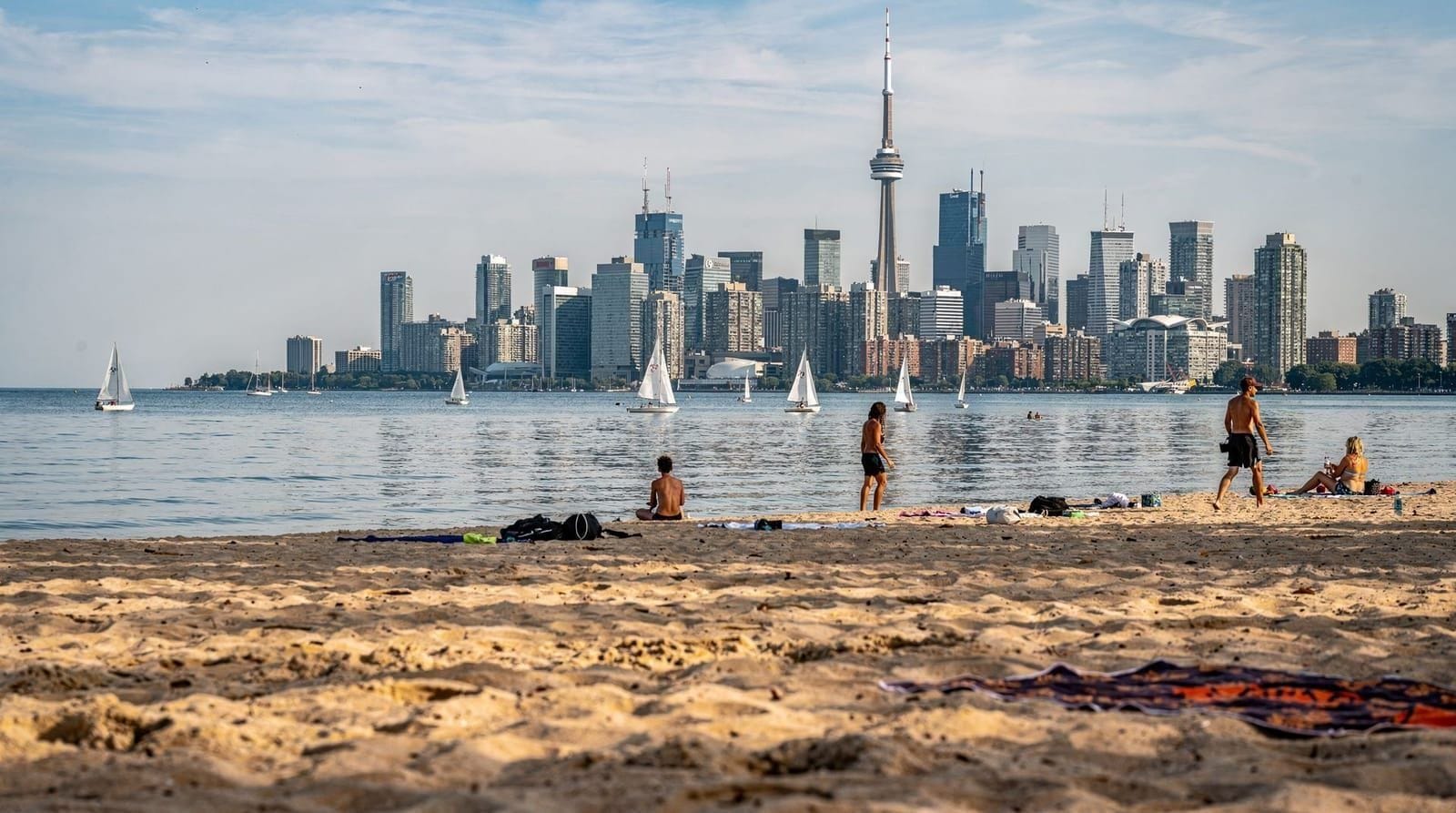
Spend your last day at the Toronto Islands, a car-free archipelago a 15-minute ferry ride from the mainland ($10.07 CAD round-trip for adults, ferries run from the Jack Layton Ferry Terminal on Queens Quay). Go early — by mid-morning on a warm summer weekend, ferry queues can run 45 minutes to an hour. If you’d rather skip the line entirely, the Toronto Islands Morning or Twilight Bike Tour includes guided transport and covers Ward’s Island, Centre Island and Hanlan’s Point in about 3.5 hours, which is a reasonable way to see all three islands without renting a bike yourself and figuring out the layout.
If boats interest you more than islands themselves, the Guided Harbour and Islands Sightseeing Cruise gives you the same skyline views from the water without setting foot on the islands at all — a good option if it’s a short-on-time afternoon or the weather turns. Centre Island has a small amusement park (Centreville) that’s genuinely aimed at younger kids, while Ward’s Island has the more residential, cottage-like feel with quieter beaches.
Bring cash or a card for the small concession stands; there isn’t much food infrastructure once you’re out there beyond a handful of snack bars. Plan to catch a ferry back by early evening — the last ferries typically run around 10 or 11pm in summer but considerably earlier (around 6:30–7:30pm) in shoulder season, so check the current schedule before you go. For more detail on planning around ferry times and island layout, see the guide to Toronto Islands and the dedicated things to do on Toronto Islands guide.
Comparing this to the 2-day weekend version
| This 3-day itinerary | Toronto weekend escape (2 days) | |
|---|---|---|
| Toronto Islands | Included as a half-day | Dropped |
| Pace | Unhurried, one neighborhood focus per day | Tighter, landmark-focused |
| Best for | First-time visitors with 3+ days | Short weekend trips, layovers |
| Extending to Niagara | Add a 4th day | Add a 3rd–4th day |
The extra day here goes almost entirely to the Toronto Islands, which the 2-day version cuts first when time is tight. If you only have two days, the Toronto weekend escape reallocates that half-day back into more time downtown and in the Distillery District instead, which is the more defensible trade if the Islands don’t specifically interest you.
Getting around without a car
Toronto’s TTC (subway, streetcar and bus network) covers this entire itinerary. A single fare is $3.35 CAD with tap payment (PRESTO card or contactless credit/debit), and a day pass runs $13.50 CAD, worth it if you’re making more than four trips in a day. Uber and Lyft are widely available and reasonably priced for downtown hops ($8–15 CAD for most trips covered here). Walking is realistic for most of Day 1 and Day 2 since the neighborhoods sit close together; the Islands trip on Day 3 is the one segment that requires the ferry specifically. The TTC transit guide has more detail on fares and passes if you’re trying to work out the cheapest way to cover more than a handful of trips.
What to do if it rains
Toronto’s PATH system — an extensive underground network of tunnels connecting downtown office towers, shopping and Union Station — is the honest answer to a rainy Day 1, letting you cover much of the Financial District without ever stepping outside. The Royal Ontario Museum and Art Gallery of Ontario are both strong indoor swaps for a rain-affected Day 2 afternoon if Kensington Market’s outdoor wandering loses its appeal in a downpour.
Day 3’s Toronto Islands are the least rain-friendly stop on this itinerary — the ferries run regardless of weather, but there’s minimal indoor shelter once you’re out there, so swap this day for an indoor one if the forecast looks genuinely bad and save the Islands for a clearer day within your trip if your schedule allows.
Where to eat beyond what’s listed above
This itinerary’s meal suggestions lean toward reliable, no-reservation options rather than a definitive “best of Toronto” list, since a first-time visitor’s priority is usually not spending an evening waiting for a table. That said, a few worth knowing about if you have flexibility: St. Lawrence Market’s Carousel Bakery gets a genuine line by midday, so arrive at or just after opening if you want the peameal bacon sandwich without a wait. In the Distillery District, Balzac’s Coffee’s original location is a reliable, quick stop if you need a caffeine break between galleries.
If you want one genuinely special meal across the three days, Canoe, on the 54th floor of the TD Bank Tower downtown, offers Canadian fine dining with skyline views and is worth booking well ahead — reservations here often fill two to three weeks out for weekend evenings. The Toronto food tours guide and best brunch spots in Toronto guide both have more options organized by neighborhood and price point.
Solo travelers and this itinerary
This route works well solo without any adjustment — Toronto’s neighborhoods are walkable and generally comfortable for solo exploration during the day, and the casual, no-reservation-needed restaurants listed above suit a solo diner as easily as a couple. The one piece worth a second thought is the Toronto Islands bike tour, which runs as a small group activity and is a genuinely good way to meet other travelers if that appeals, versus renting a bike independently for a quieter, self-paced version of the same day.
Evening safety downtown is generally good by North American city standards; the safety tips for Toronto guide and is Toronto safe for tourists blog post both go deeper if you want a fuller picture before you travel.
If you have more time
If you can stretch this to a long weekend, the natural add-on is Niagara Falls, roughly 1.5 hours away — see the Toronto + Niagara Falls in 4 days itinerary for how to combine both without rushing either. For a shorter version of just the city portion, the Toronto weekend escape compresses this into two days by dropping the Islands.
Frequently asked questions about this Toronto itinerary
Is 3 days enough to see Toronto?
Yes, for a first visit. Three days covers downtown’s landmarks, one strong neighborhood day (Distillery District, St. Lawrence Market, Kensington Market), and the Toronto Islands without feeling rushed. You won’t get to everything — Casa Loma, the Royal Ontario Museum and a day trip to Niagara are the most common things left off a 3-day trip.
Do I need a car for this itinerary?
No. Everything in this itinerary is accessible by TTC, ferry or on foot. A car is only useful if you’re planning to extend the trip to Niagara Falls, Muskoka or another out-of-town destination afterward.
What’s the best order to do this in?
The order above (downtown/CN Tower, then Distillery/St. Lawrence/Kensington, then Islands) works well because it front-loads the landmark you’ll want photos of early, groups the walkable neighborhoods together, and saves the weather-dependent Islands day for whenever the forecast looks best — swap Day 2 and Day 3 if a sunny day falls earlier in your trip.
How much should I budget for 3 days in Toronto?
At a mid-range pace, budget roughly $450–630 CAD per person for three days, excluding flights — that’s accommodation, food, transit and one or two paid attractions. Budget travelers using hostels and skipping paid tours can do it closer to $240–360 CAD; luxury travel with 4-star hotels and private tours pushes past $750 CAD per person.
Is the CN Tower worth the cost?
It’s genuinely divisive among locals — see the honest verdict on whether the CN Tower is worth it for a full breakdown, but the short version is that the view is legitimately good on a clear day, and it’s most worth it paired with a walking tour like the one above rather than as a standalone $43+ CAD ticket.
Can I do the Toronto Islands if it’s raining?
The ferries run rain or shine, but there isn’t much indoor shelter once you’re out there beyond Centreville’s small buildings. If the forecast looks bad, swap this for an indoor day — the Royal Ontario Museum or Art Gallery of Ontario — and save the Islands for a clearer day if your schedule allows it.
What’s the best time of year for this itinerary?
May through September gives you the widest range of open patios, ferry schedules and daylight hours, with June through August being the busiest and hottest. September into early October is a strong shoulder-season pick — fewer crowds, comfortable temperatures, and the Toronto Islands’ ferries still on their full summer schedule.
Should I book anything before I arrive?
Book the CN Tower access and the Toronto Islands bike tour a few days ahead if your trip falls between June and August, since both can sell out specific time slots on weekends. Restaurants generally don’t require advance booking for the casual spots listed in this itinerary, though a specific splurge dinner like Canoe is worth reserving well before you land.
Top experiences
Bookable activities with verified prices and instant confirmation on GetYourGuide.