Cabbagetown
Guide to Cabbagetown, Toronto's Victorian-home neighbourhood: Riverdale Farm, the annual heritage house tour, and its edge along Regent Park.
Quick facts
- Best base for
- Victorian architecture, a quiet residential walk
- Nearest transit
- 506 Carlton streetcar, 65 Parliament bus
- Named for
- Irish immigrants who grew cabbages in their front yards
- Claim to fame
- Largest continuous stretch of Victorian housing in North America
The name, and why it stuck despite the stigma
Cabbagetown’s name originated as a slight — 19th-century Irish immigrants who settled the area were poor enough that they reportedly grew cabbages in their front yards rather than ornamental gardens, and wealthier Torontonians used the name derisively. The neighbourhood spent decades as a working-class, at times genuinely rough district before a wave of restoration and gentrification beginning in the 1970s and 80s turned its Victorian rowhouses into some of the most sought-after real estate in the city’s east end.
Rather than erase the name once property values rose, residents reclaimed it, and Cabbagetown now markets itself with the same label that was once an insult — including an annual heritage house tour that leans directly into the area’s Victorian architectural identity.
| Where | East of downtown, along Parliament Street |
| Cost | Free to walk; Riverdale Farm is free admission |
| Time needed | A half-day, or a full day paired with the Distillery District |
| Getting there | 506 Carlton streetcar or 65 Parliament bus |
| Best time | September for the heritage house tour; spring/summer for gardens |
The largest continuous stretch of Victorian housing in North America
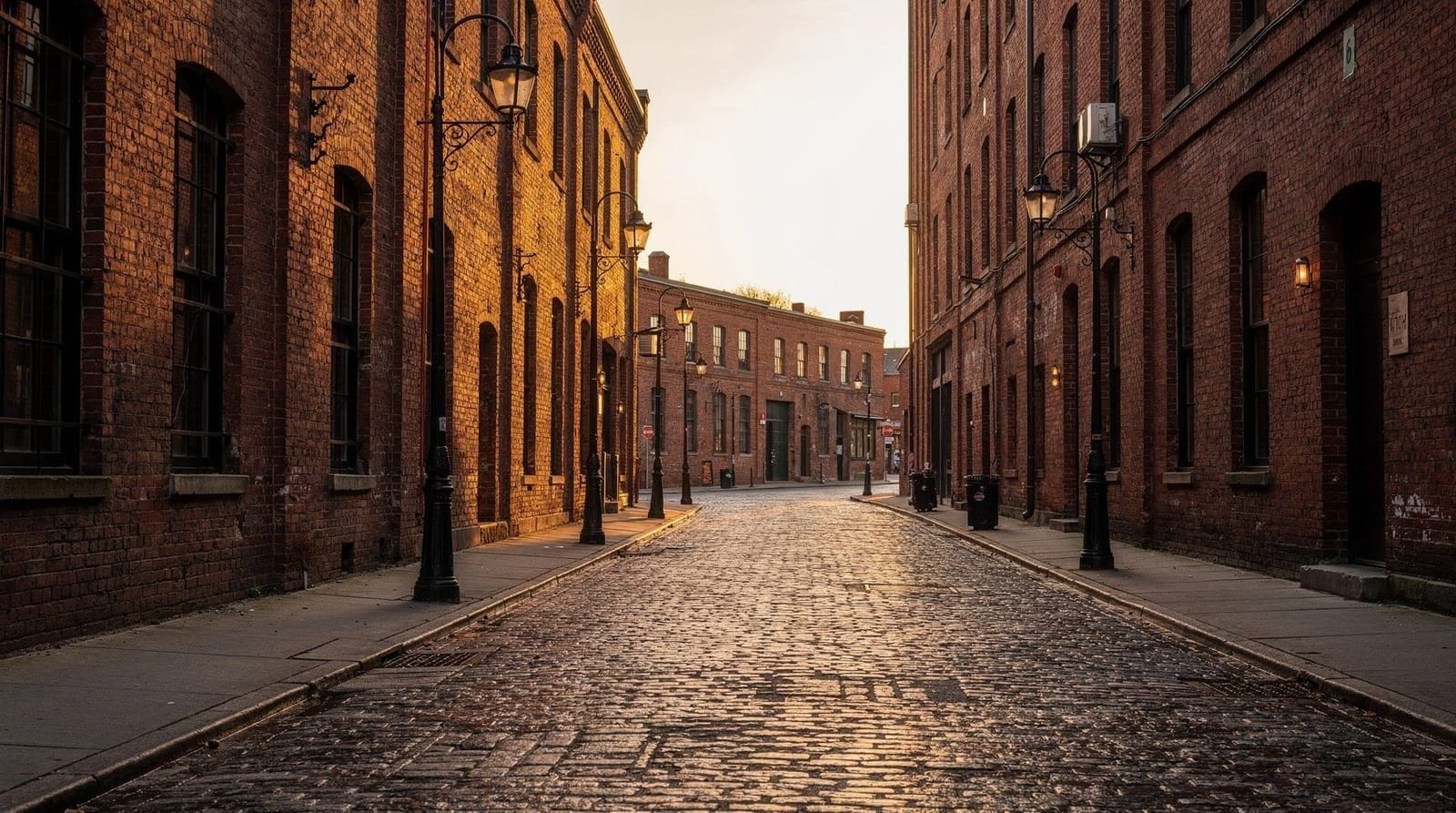
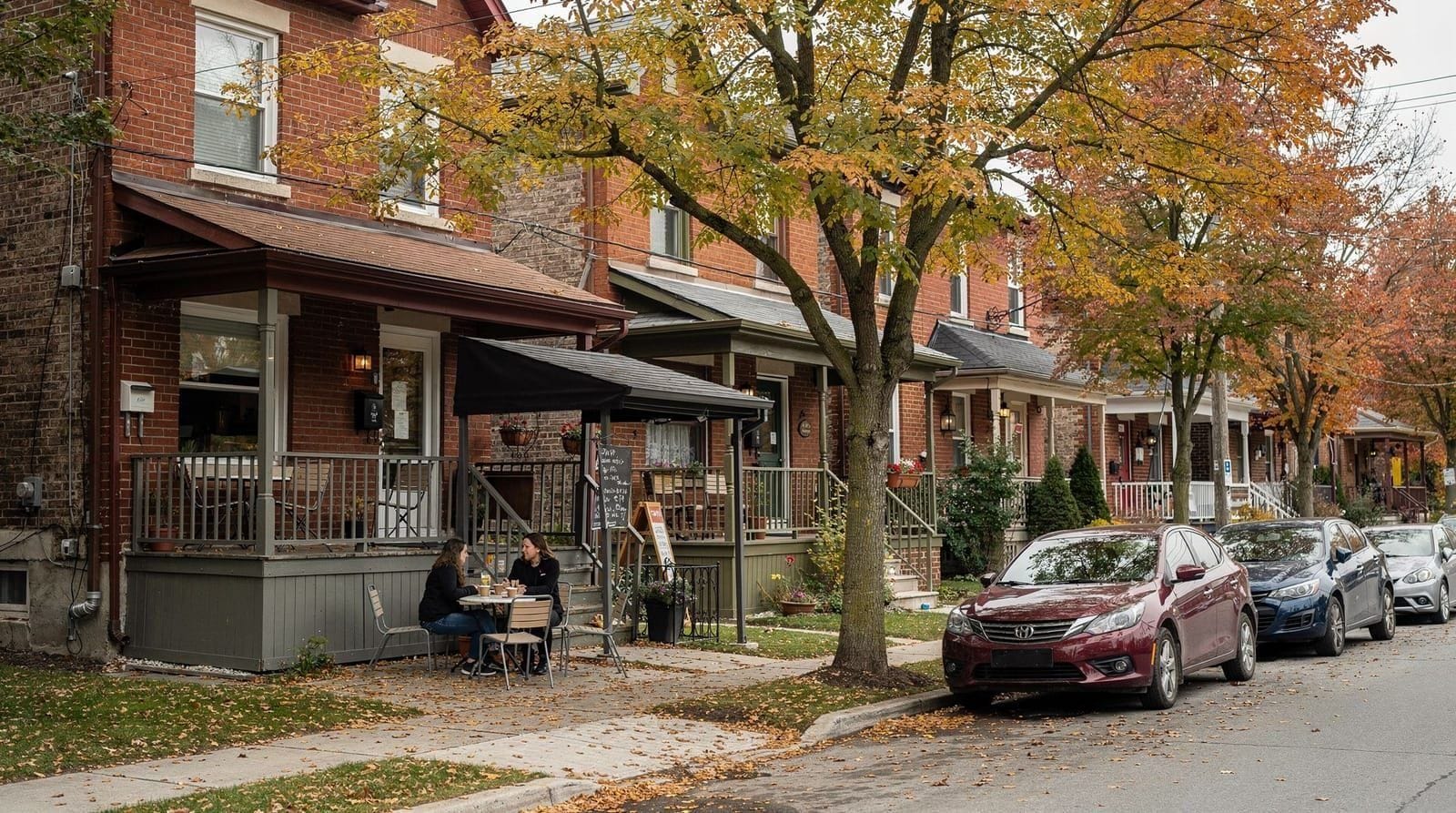
That’s the claim Cabbagetown makes, and walking its residential streets — Wellesley, Metcalfe, Winchester, and the others branching off Parliament Street — it’s a believable one. Bay-and-gable houses, ornate wooden porches, and small, carefully tended front gardens run block after block with a consistency you don’t find in neighbourhoods that were rebuilt or redeveloped piecemeal over the decades. Cabbagetown largely escaped the demolition waves that hit comparable Victorian districts elsewhere in the city during the mid-20th century, which is part of why so much of it survives intact today.
Riverdale Farm
Riverdale Farm, a free working farm within city limits at the neighbourhood’s eastern edge, sits on the site of Toronto’s original zoo (which relocated to its current, much larger location decades ago). It’s a genuinely charming, low-key stop — barns, farm animals, and walking paths down into the Don Valley ravine system — and one of the better free things to do with kids in the eastern half of the city. The farm connects directly into the broader Don Valley trail network if you want to extend the visit into a longer ravine walk.
The annual heritage house tour
Every September, Cabbagetown hosts a heritage house tour as part of a broader neighbourhood festival, opening a selection of the area’s Victorian homes to the public — a rare chance to see the interiors of houses that are otherwise entirely private. It draws a dedicated crowd of architecture and design enthusiasts and is worth checking current dates for if a September visit lines up with your trip; the festival typically includes a parade and market alongside the house tour itself.
The restoration movement of the 1970s and 80s
Cabbagetown’s transformation from a rough, at times neglected working-class district into one of the city’s most protected heritage neighbourhoods happened relatively quickly by urban standards, driven largely by a wave of young professionals and preservation-minded buyers who began purchasing and restoring the Victorian houses starting in the 1970s.
This restoration movement was formalized through Ontario Heritage Conservation District designation for several of the neighbourhood’s streets, which now legally protects the exterior character of the homes from significant alteration — part of why the streetscape has remained so visually consistent decades after the restoration wave began, unlike neighbourhoods where individual renovations gradually erode a shared architectural identity.
Notable residents and literary connections
Cabbagetown has a long-standing reputation as a magnet for writers and artists, a reputation formalized in part by Hugh Garner’s 1950 novel “Cabbagetown,” which chronicled the neighbourhood’s working-class, Depression-era hardship and gave the area its most enduring literary association. The novel’s grim portrait of the neighbourhood stands in sharp, almost ironic contrast to Cabbagetown’s current identity as an affluent, meticulously restored heritage district — worth knowing if the name comes up in conversation with a longtime resident, since the literary reference still carries weight locally.
Parliament Street and the neighbourhood’s edge
Parliament Street forms Cabbagetown’s commercial spine, with a mix of casual restaurants, cafés, and small independent shops that lean noticeably lower-key than the retail strips in Queen West or Yorkville. The street also marks a genuine transition point — Cabbagetown’s western edge borders Regent Park, a large public housing development that’s undergone a significant, ongoing revitalization over the past two decades. It’s worth being aware of this boundary rather than assuming Cabbagetown’s quiet, manicured character extends uniformly in every direction.
Getting there
The 506 Carlton streetcar runs along the neighbourhood’s northern edge, and the 65 Parliament bus covers the north-south spine of Parliament Street itself. Cabbagetown sits close enough to the Distillery District and St. Lawrence Market — roughly a 10-15 minute walk to either — that most visitors fold it into a broader Old Town and east-end day rather than visiting as a standalone destination.
Driving is possible but rarely necessary given the neighbourhood’s walkability once you’re there — street parking on the residential blocks is limited and largely reserved for permit holders, so arriving by streetcar or on foot from a nearby stop avoids the hassle of hunting for a spot.
Best time to visit
Spring and summer bring the neighbourhood’s front gardens into full bloom, which is a meaningful part of the appeal given how much of Cabbagetown’s character lives in its residential streetscapes rather than commercial attractions. September’s heritage house tour and festival is the single most concentrated event of the year if you want organized programming rather than a self-guided walk. Winter strips back the garden appeal but the architecture itself remains a worthwhile walk regardless of season.
Fall, after the heritage tour crowds clear but before winter sets in, is an underrated window — the tree canopy along the residential streets turns with the season, adding another layer to the Victorian streetscape without the crowds of the September festival weekend.
Cabbagetown’s coffee shops and cafés
Beyond the Parliament Street restaurants, a scattering of independent coffee shops tucked into the neighbourhood’s smaller side streets give Cabbagetown a genuinely local, unhurried café culture distinct from the busier chains found in more commercial parts of downtown. These spots tend to draw a mix of longtime residents and dog-walkers rather than tourists, which makes them a good option if you want a coffee break that feels like the neighbourhood rather than a tourist stop — worth building into the sample walking route above as a mid-walk pause.
Green space and the Don Valley connection
Beyond Riverdale Farm, Cabbagetown’s eastern edge drops directly into the Don Valley ravine system, giving the neighbourhood a genuine green corridor most visitors don’t expect from a district known primarily for its architecture. Trails here connect toward the broader ravine network that threads through much of the city, offering an option to extend a Cabbagetown visit into a longer nature walk without needing to travel elsewhere for it.
A sample walking route
Enter from Parliament Street near Carlton, and walk east into the residential core along Wellesley and Winchester Streets to take in the Victorian architecture at a slow pace. Continue toward Riverdale Farm at the neighbourhood’s eastern edge, spending twenty to thirty minutes with the animals and the ravine views. Finish by looping back toward Parliament Street for a casual lunch, or continue on to the Distillery District a short walk further south if you have the afternoon free.
Practical tips
This is a residential neighbourhood more than a shopping or dining destination, so keep noise down and be mindful walking past private homes, particularly during the heritage house tour when visitors are welcomed onto specific properties but the rest of the street remains private. Riverdale Farm is free and low-key enough to visit any day of the week without advance planning. If you’re walking from the Distillery District, the route through Cabbagetown’s residential streets is genuinely one of the more pleasant, low-traffic walks connecting two east-end destinations.
The Necropolis and other historic sites nearby
The Toronto Necropolis, a Victorian-era cemetery bordering Cabbagetown’s northern edge along the Don Valley, is a quietly notable historic site in its own right — its ornate gatehouse and chapel, along with the graves of several notable early Toronto figures, make it worth a short, respectful walk if 19th-century architecture and history interest you beyond the neighbourhood’s residential streets. It’s free, open to the public during daylight hours, and considerably less visited than the Victorian houses that get most of Cabbagetown’s attention, despite arguably offering an equally rich window into the same period.
How Cabbagetown compares to other heritage neighbourhoods
Toronto has several other pockets of preserved historic housing, but Cabbagetown’s designation as having the largest continuous stretch of Victorian architecture in North America sets it apart in scale rather than simply age — neighbourhoods like The Annex have comparable individual houses, but Cabbagetown’s density and continuity across dozens of consecutive blocks is what makes it a genuinely distinct case study for anyone interested in 19th-century residential architecture specifically, rather than scattered individual heritage buildings within a more modern streetscape.
Real estate and the neighbourhood’s current status
Cabbagetown’s Victorian houses now rank among the more expensive properties in the city’s east end, a striking reversal from the neighbourhood’s working-class and, for a period in the mid-20th century, genuinely rough reputation. This shift is a useful reminder of how thoroughly Toronto’s inner-city neighbourhoods have been reshaped economically over the past half-century — the same streets once associated with poverty now command a premium specifically because of the historic character that poverty, paradoxically, helped preserve by discouraging earlier redevelopment.
Comparing Cabbagetown to The Annex
Both Cabbagetown and Casa Loma and The Annex offer dense concentrations of preserved historic housing, but the styles and eras differ enough to reward visiting both if 19th- and early-20th-century residential architecture genuinely interests you — Cabbagetown leans more uniformly Victorian and modest in scale compared to The Annex’s mix of grander Edwardian mansions and later apartment buildings, giving a useful contrast in how Toronto’s wealthy and working-class residents built and lived in roughly the same period.
Visiting during a heritage tour weekend versus a regular day
A visit timed to the annual heritage house tour offers access most travellers never get — the interiors of private Victorian homes — but it also means navigating real crowds along otherwise quiet residential streets. A regular, non-festival visit trades that interior access for a genuinely peaceful walk, which some visitors, particularly those who’ve already toured similar historic homes elsewhere, may actually prefer.
A final note on pacing your visit
Cabbagetown rewards slow, unhurried walking more than almost any other neighbourhood in this guide — there’s no single landmark demanding your full attention, and the appeal comes from the cumulative effect of block after block of consistent Victorian streetscape. Resist the urge to rush through toward Riverdale Farm or the Distillery District; the residential streets themselves are the destination.
Photographing Cabbagetown respectfully
Because the appeal here is genuinely private residential streets rather than a public attraction, photography etiquette matters more than in most neighbourhoods on this list. Stick to photographing the streetscape and front gardens from the public sidewalk, avoid lingering directly outside a single home for an extended shoot, and be especially mindful during the heritage house tour, when interiors are opened deliberately but the surrounding private homes are not. Early morning light on Wellesley and Winchester Streets tends to be the most flattering and the quietest time to shoot without disturbing residents heading out for the day.
Frequently asked questions about Cabbagetown
Why is it called Cabbagetown?
The name originated as a 19th-century slight against poor Irish immigrant residents, who reportedly grew cabbages in their front yards. The name has since been reclaimed by the neighbourhood rather than dropped.
Is Cabbagetown worth visiting if I’m not interested in architecture?
Riverdale Farm is a solid stop regardless, and the neighbourhood works well as a quiet walking connector between the Distillery District and Leslieville further east, even without a specific architectural interest.
Is Riverdale Farm free?
Yes, admission is free, and it’s open daily with seasonal hour variations.
When is the Cabbagetown heritage house tour?
Typically in September as part of a broader neighbourhood festival; check current dates before planning a visit around it, since the exact weekend shifts year to year.
How do I get to Cabbagetown from downtown?
The 506 Carlton streetcar or the 65 Parliament bus both serve the neighbourhood; it’s also a walkable 20-25 minutes from Union Station via St. Lawrence Market.
Is Cabbagetown safe to visit?
Yes, the core residential area is quiet and safe; standard awareness applies near its western edge bordering Regent Park, an area that has undergone significant revitalization but still varies block to block.
Can I visit Cabbagetown as part of a Distillery District day?
Yes, and it’s one of the more natural pairings on this list — the walk between the two neighbourhoods is genuinely pleasant, low-traffic, and takes roughly 10-15 minutes, making it easy to treat Cabbagetown as a quieter bookend to a Distillery District visit rather than a separate trip.