Caribana Toronto guide
What is Caribana and when does it take place?
Caribana, officially the Toronto Caribbean Carnival, is North America's largest Caribbean festival, running across several weeks in summer and culminating in a Grand Parade along Lake Shore Boulevard near Exhibition Place. It began in 1967 as a Centennial-year celebration organized by Toronto's Caribbean community and has grown into a major annual event drawing well over a million attendees.
North America’s largest Caribbean festival
Caribana — officially the Toronto Caribbean Carnival, though the older name remains what most people call it — began in 1967 as a contribution from Toronto’s Caribbean community to Canada’s Centennial year celebrations. Rooted directly in Trinidad and Tobago’s carnival tradition, brought to the city by Caribbean immigrants, it has grown over more than five decades into North America’s largest festival of its kind, drawing well over a million attendees to its culminating Grand Parade each summer and standing as one of the most significant cultural events on Toronto’s annual calendar.
The festival’s full program stretches across several weeks in July and August, building toward the Grand Parade as its centerpiece, but the parade itself is only the most visible part of a broader season of events rooted in music, costume artistry, and Caribbean cultural celebration — see our Toronto summer festivals guide for how it fits alongside Pride and the CNE on the calendar.
| When | Several weeks in July-August, Grand Parade as centerpiece |
| Where | Lake Shore Boulevard West, near Exhibition Place |
| Cost | Free to watch the parade route; some events ticketed |
| Getting there | 509/511 streetcar from downtown |
| Best for | A full-day outing, not a quick stop |
The Grand Parade
The parade is Caribana’s signature event — a massive procession of masquerade bands, each representing months of work by costume designers and performers, moving along Lake Shore Boulevard West near Exhibition Place to the sound of soca, calypso, and steel pan music from accompanying trucks. The scale is genuinely difficult to convey without seeing it — elaborate, brightly colored costumes, some towering well above the wearer, move down the route for hours as bands compete informally for the crowd’s attention.
Watching from the public route along Lake Shore Boulevard is free, and it’s where the vast majority of spectators experience the parade. Arriving early — several hours before the scheduled start, if you want a genuinely clear sightline — is standard practice given the crowd size, which regularly exceeds a million people across the full day.
Beyond the parade: the full carnival season
Caribana’s broader program includes a King and Queen costume competition, showcasing the festival’s most elaborate individual costume pieces in a ticketed evening event that’s worth attending if costume artistry specifically interests you — some of these pieces take individual designers months to build and are genuinely extraordinary as wearable sculpture. A youth carnival, concerts featuring Caribbean and soca artists, and various community events round out the weeks leading up to the Grand Parade. Checking the festival’s current-year event calendar ahead of a visit is worthwhile if the parade alone isn’t the only draw for you.
The music
Soca and calypso dominate the festival’s soundtrack, played from massive sound trucks that accompany each masquerade band down the parade route, alongside a strong steel pan presence — an instrument with deep roots in Trinidadian carnival tradition. Beyond the parade itself, several of the festival’s associated concerts and club events bring in performers directly from the Caribbean, making Caribana weekend one of the best windows in the year to hear this music performed live in Toronto.
Steel pan holds its own dedicated spotlight within the broader festival calendar through Panorama, a large-scale steel band competition where ensembles, some fielding dozens of players, compete with intricately arranged instrumental pieces built around a chosen calypso or soca tune for that season. It’s a genuinely different experience from the parade itself, closer to a concert competition than a street party, and it draws a devoted following among steel pan enthusiasts who follow specific bands from year to year the way sports fans follow a team. Tickets for Panorama are sold separately from general parade viewing, and the event typically runs on its own evening earlier in the festival’s broader run rather than on Grand Parade day itself.
Getting there and dealing with the crowds
Exhibition Place, where the Grand Parade route runs, is accessible via the 509 and 511 streetcars — see our TTC transit guide for fares and PRESTO card details — both considerably more reliable than driving given the crowd size and the temporary road closures around the parade route. Expect significantly packed transit on parade day itself, and budget extra travel time accordingly. If you’re not committed to a specific viewing spot, arriving mid-morning and finding a position along a slightly less crowded stretch of the route, rather than pushing toward the most packed central sections, is a reasonable strategy for a more comfortable experience.
Food along the route
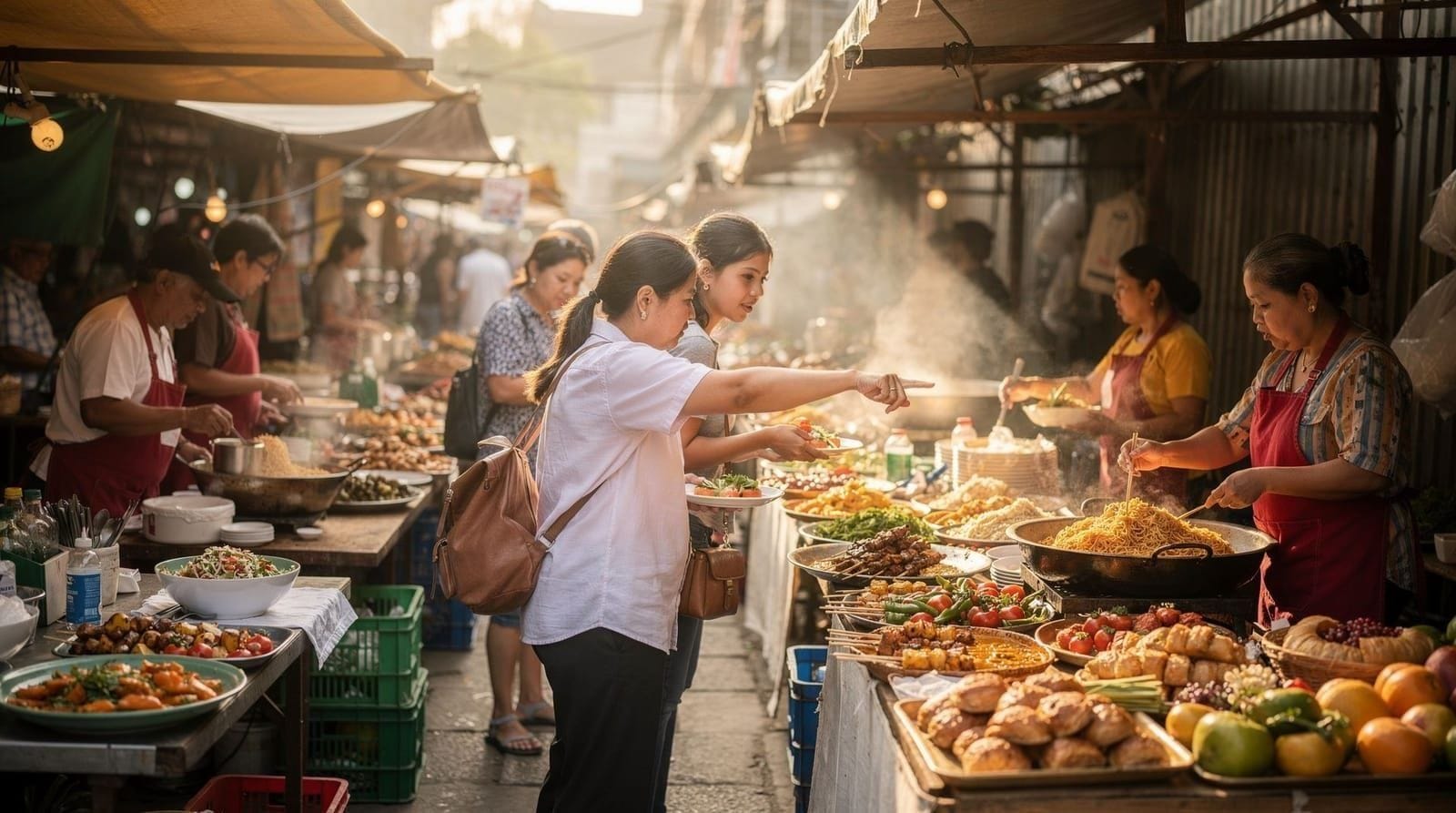
Caribbean food vendors set up throughout the parade grounds and along the route, offering jerk chicken, roti, doubles, and other Caribbean street food classics — a genuine highlight of the day for many attendees, and a good way to experience Toronto’s deep Caribbean culinary influence in one concentrated setting rather than seeking it out across the city’s various Caribbean-owned restaurants individually. Our Toronto food scene and immigrant cuisine piece on the blog goes further into that broader culinary landscape.
Where to stay
Downtown hotels within a short streetcar ride of Exhibition Place are the most practical base for Caribana weekend, since the festival’s core footprint sits west of the main downtown core near the waterfront. Our guide to the best Toronto neighborhoods to stay covers downtown options in more detail; expect elevated demand and pricing for hotels citywide during the festival’s peak weekend, similar to the pattern seen during TIFF and Pride.
Understanding Caribana’s place in Toronto’s identity
Caribana isn’t a tourist-created spectacle — it’s a genuine, community-rooted expression of Toronto’s large and long-established Caribbean population, one of the most significant immigrant communities to have shaped the city’s culture over the past half-century. Attending as a visitor is welcomed, and the festival actively markets itself internationally, but it’s worth approaching with the awareness that you’re a guest at a celebration with deep community meaning, not simply a tourist attraction staged for outside visitors.
Pairing it with the rest of your trip
Caribana typically falls in the same broad summer stretch as the Canadian National Exhibition later in August — our Canadian National Exhibition guide covers that separate, longer-running fair if your visit spans both. For a wider look at Toronto’s Caribbean and broader immigrant food culture beyond the festival itself, our piece on Toronto’s food scene and immigrant cuisine on the blog goes deeper into the everyday restaurants carrying that same influence year-round.
Trinidad’s carnival roots and the culture of playing mas
Caribana’s roots reach back to Trinidad and Tobago’s pre-Lenten Carnival, a tradition with its own layered history. Carnival in Trinidad began as elaborate masquerade balls held by French plantation owners in the late 18th century, timed to the weeks before Lent. Enslaved and later emancipated Black Trinidadians, excluded from those balls, developed parallel street celebrations that drew on West African drumming, call-and-response singing, and stick-fighting traditions known as kalinda.
Over the 19th and 20th centuries those threads fused into the modern Trinidadian Carnival: costumed masquerade bands, calypso and later soca music, and eventually the steel pan, an instrument invented in Trinidad from repurposed oil drums in the 1930s and 40s. When Caribbean immigrants brought the tradition to Toronto in 1967, they kept its core structure but moved it to summer, since a Lenten-timed February carnival isn’t practical in a city that’s still deep in winter that time of year.
The heart of the festival, both in Trinidad and in Toronto, is “playing mas,” short for masquerade. Mas bands are large organized groups, each built around a costume designer’s theme for that year, divided into sections that each carry a variation on the theme with their own costume design. Band leaders and designers begin planning a full year ahead, and the physical costume-building happens at “mas camps,” workshops, sometimes converted garages or community spaces, where teams assemble the feathers, sequins, wire-frame backpacks, and beading that make up a finished costume.
Individual participants, called masqueraders or players, register and pay a fee to join a band’s section and wear that section’s costume in the parade — it’s a genuine participatory tradition, not something manufactured solely for spectators, and many masqueraders play with the same band year after year, building relationships with designers and fellow players that carry across festival seasons. Some bands run open registration well ahead of the parade for visitors interested in playing mas themselves rather than only watching from the sidelines.
The festival’s name has shifted more than once as sponsorship and organizational structures have changed. It launched in 1967 simply as Caribana, organized by the Caribbean Cultural Committee. In later years, corporate title sponsorship led to periods where the event carried a bank’s name attached, branded for a stretch as the Scotiabank Caribbean Carnival Toronto, before organizers moved toward “Toronto Caribbean Carnival” as the event’s more neutral official name, while “Caribana” persisted, and still persists, as the name most Torontonians actually use day to day.
Whatever the official branding in a given year, the festival’s community roots and mas band tradition have stayed consistent across all of it, and longtime mas camp organizers frequently point out that the branding matters far less to the culture than who’s actually building the costumes.
Practical notes
- Cost: Free to watch the Grand Parade from the public route; the King and Queen competition and select concerts carry separate ticket prices.
- Crowds: Among the largest single-day crowds in Toronto’s annual event calendar — plan for significant congestion around Exhibition Place and on connecting transit routes.
- Weather: Late July and August in Toronto run warm and often humid — sun protection, water, and comfortable footwear matter for a full day along the parade route.
- What to bring: Cash for food vendors along the route, though many now accept cards; a portable phone charger given the likely all-day outing.
Caribana is best experienced by giving it a full day rather than trying to catch just the parade — the food, music, and atmosphere around Exhibition Place extend well beyond the procession itself, and the crowds make a rushed, in-and-out visit considerably less rewarding than settling in for the day.
Frequently asked questions about Caribana
Is Caribana the same as the Grand Parade?
The Grand Parade is the festival’s largest single event and the one most visitors associate with the name, but Caribana’s full program runs across several weeks and includes King and Queen costume competitions, concerts, a youth carnival, and other events beyond the parade day itself. Treating the parade as the whole festival means missing most of what’s actually on the calendar.
How much does it cost to attend Caribana?
Watching the Grand Parade along the public route is free. Grandstand seating, if offered, and some of the festival’s other ticketed events — concerts, the King and Queen competition — carry separate admission costs that vary by event and how far in advance you book.
Where is the best place to watch the Caribana Grand Parade?
Along Lake Shore Boulevard West near Exhibition Place, where the parade route runs its full length. Arriving early secures a spot with a clear sightline, since the route draws enormous crowds and good viewing positions fill hours before the parade actually starts, particularly near the main grandstand area.
What should I know about Caribana’s origins?
The festival began in 1967 as a contribution from Toronto’s Caribbean community to Canada’s Centennial celebrations, rooted in Trinidad and Tobago’s carnival traditions. It has since grown into an annual fixture recognized as one of the largest cultural festivals of its kind outside the Caribbean itself, and its mas band and costume traditions remain directly descended from Trinidad’s Carnival culture.
How crowded does Caribana get?
The Grand Parade draws over a million spectators across the full day, making it one of the most heavily attended single events in Toronto’s annual calendar. Expect significant crowds, limited street parking, and packed transit around Exhibition Place, especially in the hours immediately before and after the parade itself.
Is Caribana family-friendly?
The parade itself is open to all ages and includes a strong family presence along the route, though costumes can be elaborate and revealing by design, consistent with Caribbean carnival tradition — worth knowing if you’re planning specifically around young children’s comfort. Many families position themselves further from the grandstand area, where the atmosphere tends to be a little calmer.