Hamilton waterfalls day trip
Can you visit Hamilton's waterfalls as a day trip from Toronto?
Yes, and it's the shortest drive on this list — about 45 minutes to an hour from Toronto by car, or roughly the same by GO Train to Hamilton followed by a local taxi or rideshare. Hamilton has over 100 waterfalls within city limits, more than any other city in Canada, and several of the best are clustered close enough together to visit three or four in a single day.
The waterfall capital of Canada, 45 minutes from downtown Toronto
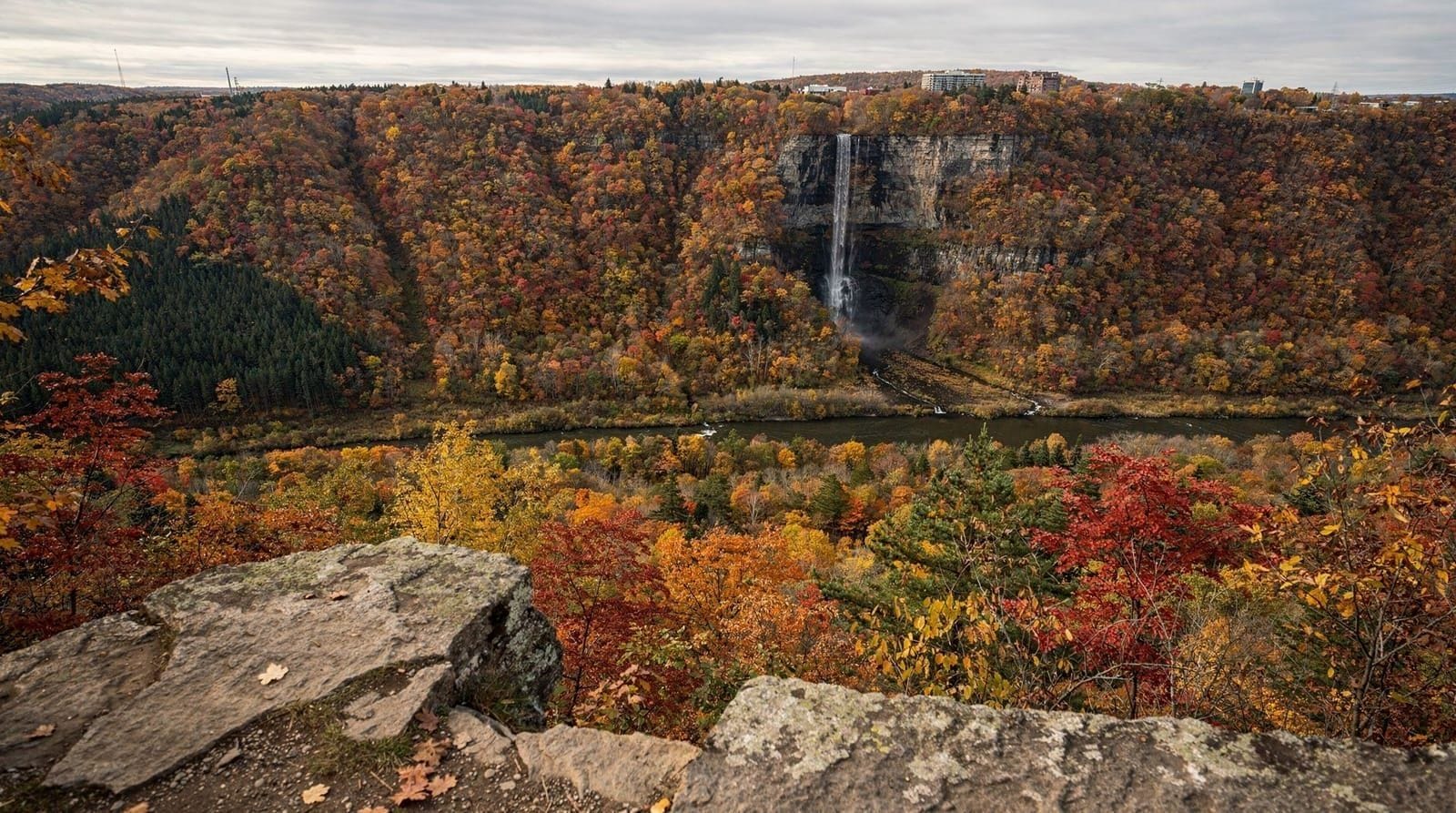
Hamilton has an odd claim to fame that most visitors don’t expect from a city better known for steel manufacturing: it has more waterfalls within its municipal boundaries than any other city in Canada, over 100 by the Hamilton Conservation Authority’s count, ranging from towering drops to modest creek cascades. The reason is geological — Hamilton sits directly on the Niagara Escarpment, the same limestone ridge that, further east, produces Niagara Falls itself. Dozens of creeks running toward Lake Ontario spill over the escarpment’s edge as they descend, and the resulting cluster of falls, most within a compact area of conservation land in the city’s western reaches, makes for one of the most efficient day trips on this entire list.
| Where | Dundas Valley, west Hamilton, about 45 min–1 hour from Toronto |
| Cost | Conservation area parking/entry around $8–12 CAD/vehicle |
| Time needed | 3–4 hours for the core Webster’s Falls–Tews Falls–Dundas Peak loop |
| Getting there | Car via QEW/Highway 403, or GO Train to Hamilton plus taxi/rideshare |
| Best time | Spring for peak water flow; weekdays to avoid the Spencer Gorge reservation system |
At 45 minutes to an hour from downtown Toronto, this is also the shortest drive in the day-trips series, which makes it a strong option if you want real natural scenery without committing to a half-day of highway driving.
Getting there
By car, the drive from Toronto to the waterfall areas west of downtown Hamilton — primarily around Dundas and the Niagara Escarpment’s Dundas Valley — takes roughly 45 minutes to an hour via the QEW and Highway 403, depending on your starting point and traffic. This is genuinely one of the easiest drives in the region, without the seasonal cottage traffic that clogs routes to Muskoka or the QEW backups heading further to Niagara itself.
GO Transit runs frequent train service from Union Station to Hamilton, taking roughly 50 minutes to an hour depending on the route. The trains land you in downtown Hamilton, though, which sits several kilometres from the main waterfall clusters around Dundas — you’ll need a taxi, rideshare, or a local bus connection for the final leg, adding time and complexity compared to simply driving.
The core waterfall cluster: Webster’s Falls, Tews Falls, and Dundas Peak
Three of Hamilton’s most-visited natural attractions sit close enough together, all within the Hamilton Conservation Authority’s Dundas Valley properties, to combine comfortably in a single visit.
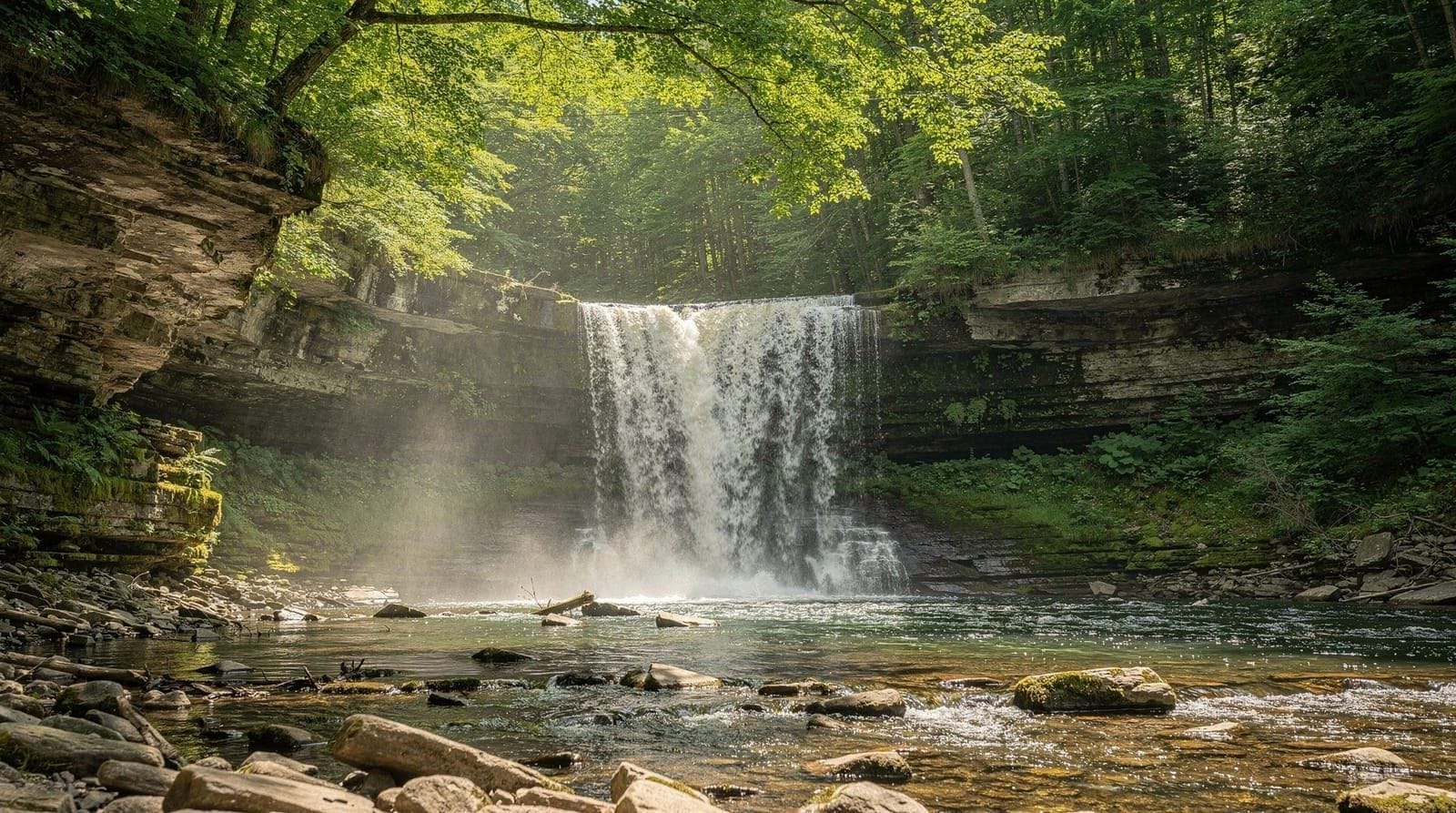
Webster’s Falls is the most photographed of Hamilton’s waterfalls, a roughly 22-metre curtain-style cascade over the escarpment’s limestone edge, reached by a short, easy walk from the parking area — a few minutes each way, making it accessible for most fitness levels and a good stop even with young kids or limited mobility.
Tews Falls, connected to Webster’s Falls by a walking trail of roughly 2 km, drops nearly as far as Niagara Falls itself despite being a fraction of the width — a striking, narrow ribbon of water rather than a broad curtain. The trail between the two falls runs through mixed forest and is a moderate walk of about 45 minutes to an hour each way if you’re doing the full loop rather than driving to separate parking areas for each.
Dundas Peak, reached via trail from the Webster’s Falls parking area, is less a waterfall than a lookout — but it delivers one of the best panoramic views in the Greater Toronto Area, looking out over the Dundas Valley and, on clear days, toward Hamilton Harbour and Lake Ontario. The full round trip from Webster’s Falls parking to the peak and back runs roughly 3 to 4 km with some genuine elevation gain, about 1.5 to 2 hours at a comfortable pace including time at the viewpoint. This combination — falls, connecting trail, and peak lookout — makes for a satisfying half-day of hiking on its own.
Other falls worth knowing about
Albion Falls, in the city’s east end rather than the Dundas cluster, is another of Hamilton’s most substantial waterfalls, a multi-tiered drop of around 19 metres, reached by a short walk from a dedicated parking area. It’s a worthwhile addition if your day includes both the eastern and western falls clusters, though combining both sides of the city adds meaningful driving time given they’re not close together.
Spencer Gorge, the conservation area containing Webster’s Falls and Tews Falls, has a reservation system in place on peak weekends (particularly through summer and during fall colour) to manage crowding — worth checking before you go, since walk-up entry can be turned away once daily capacity is reached.
Why the escarpment produces so many waterfalls in one place
The Niagara Escarpment is a long, curving limestone and dolostone ridge that runs from New York State through the Niagara region, up through Hamilton and the Blue Mountains, and continues all the way to Manitoulin Island — a UNESCO World Biosphere Reserve and one of Ontario’s most significant geological features. Hamilton happens to sit at a point where an unusually dense network of small watersheds crosses the escarpment’s edge on their way to Lake Ontario, which is why the city’s waterfall count is so disproportionately high compared to other escarpment communities.
Understanding this bigger geological picture also explains why Niagara Falls itself, further along the same escarpment, is so much larger — it’s fed by the much greater volume of the Niagara River rather than a modest urban creek, but the underlying rock formation producing the drop is the same one running beneath Hamilton’s waterfalls.
What locals do that visitors often miss
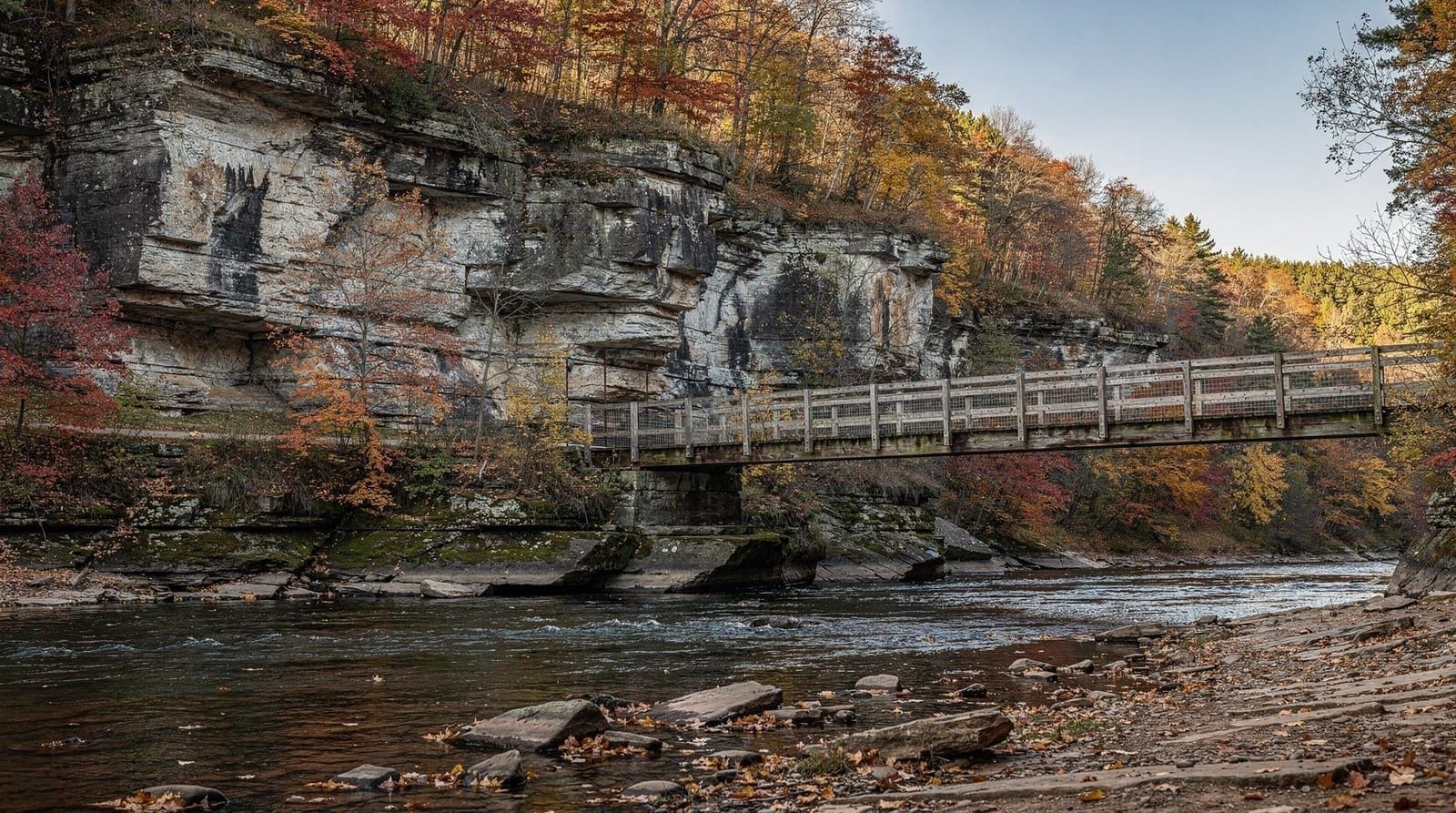
Hamilton residents who regularly visit the falls tend to treat the Dundas Valley trail network as a broader hiking destination rather than a single-falls checklist — the trails connecting Webster’s Falls, Tews Falls, and Dundas Peak are part of a much larger system that includes the Bruce Trail, Ontario’s oldest and longest marked hiking trail, which passes directly through this section of the escarpment. A visitor with extra time and genuine hiking interest can extend well beyond the standard falls loop onto additional Bruce Trail sections, which tend to be much quieter than the main tourist-trafficked routes to the falls themselves, offering a different pace of visit for those willing to walk further off the main circuit.
A realistic one-day itinerary
Given how short the drive is, this trip has more flexibility than most on this list. A typical day: arrive at the Webster’s Falls parking area by mid-morning, walk to the falls themselves (10–15 minutes), continue on the connecting trail to Tews Falls (45 minutes to an hour each way, or drive to a separate lot if you’d rather split the two), then tackle the Dundas Peak trail either before or after lunch, depending on energy levels.
This core loop comfortably fills 3 to 4 hours. With the short drive time back to Toronto, there’s room to add lunch or a coffee stop in the town of Dundas itself, a genuinely pleasant small downtown with several cafés and restaurants, or to extend the day with a stop at Albion Falls if you’re not ready to head back yet.
Combining with Royal Botanical Gardens or Hamilton’s craft brewery scene
Hamilton’s Royal Botanical Gardens, one of the largest botanical gardens in Canada, sits a short drive from the Dundas Valley falls cluster and makes a natural pairing if you want to balance the hiking with a gentler, more manicured stop — particularly appealing in spring when the gardens’ lilac collection and other seasonal plantings are in bloom. Hamilton has also developed a genuine craft brewery scene in recent years, concentrated partly around the downtown core, and a stop at one or two breweries on the way back toward the highway is a popular way to close out the day for visitors not driving straight back to Toronto.
Seasonal notes
Spring brings the highest water flow to the falls, thanks to snowmelt, making this arguably the most dramatic season to see them at full force — Tews Falls in particular looks noticeably different in April than in a dry August. Summer is the busiest season and the one most likely to trigger the Spencer Gorge reservation system on weekends, so plan ahead or aim for a weekday.
Fall brings good colour to the Dundas Valley’s forest cover, comfortable hiking temperatures, and generally thinner crowds than summer once school resumes. Winter transforms the falls into ice formations in cold snaps — genuinely striking, though trails become icy and require proper footwear or traction devices, and some conservation area facilities scale back winter hours.
A note on Hamilton’s broader reputation shift
Hamilton spent decades known primarily as a steel and manufacturing city, a reputation that lingered even as the local economy diversified and the downtown core began attracting investment in food, arts, and culture over the past fifteen to twenty years. Visitors who last thought about Hamilton in an industrial-city context are often surprised by how much the waterfall trails, the downtown restaurant scene, and the Royal Botanical Gardens have shifted the city’s profile as a genuine day-trip and even weekend destination in its own right, distinct from its longtime association with steel production and the accompanying assumptions about what the city has to offer a visitor.
What to pack specifically for this trip
Beyond standard hiking gear, a few Hamilton-specific details are worth planning around. Bring cash alongside cards for conservation area parking machines, which aren’t always reliable with tap payment during busy weekends. A printed or downloaded offline map of the Dundas Valley trail network is a reasonable backup, since cell coverage, while generally reliable, can dip in the more wooded sections between Webster’s Falls and Tews Falls. If you’re visiting in spring for peak water flow, expect muddier trail sections than the photos in most trip reports suggest, and pack accordingly — proper waterproof footwear matters more here than at drier, more manicured attractions elsewhere in the region.
Budget for a day trip
This is one of the more affordable day trips in the region. Conservation area parking or entry fees typically run 8 to 12 CAD per vehicle, and beyond gas and a casual lunch in Dundas, there’s little else to spend on. A full day including lunch runs roughly 30 to 50 CAD per person, making it a strong budget option compared to trips that involve winery tastings or boat tour tickets.
Practical notes before you go
Wear proper hiking shoes rather than sandals — the escarpment trails include rocky, sometimes muddy sections, and the Dundas Peak trail in particular runs close to unguarded cliff edges in places. Check the Spencer Gorge reservation system online before a summer weekend visit, since Webster’s Falls and Tews Falls parking can require advance booking during peak periods. Cell coverage is generally reliable throughout, given the proximity to Hamilton and the GTA. If visiting after rain, expect muddier trail conditions and correspondingly higher, more dramatic water flow at the falls themselves.
Frequently asked questions about a Hamilton waterfalls day trip
How many waterfalls can I realistically see in one day?
Three to four is a comfortable target — Webster’s Falls, Tews Falls, and Dundas Peak form a natural cluster reachable in a single 3 to 4 hour outing, with Albion Falls as a worthwhile add-on if you have extra time and don’t mind additional driving across the city.
Is Spencer Gorge Conservation Area the same as Webster’s Falls?
Spencer Gorge Conservation Area is the protected area that contains both Webster’s Falls and Tews Falls, connected by a walking trail. They’re often referred to individually since each has its own dedicated parking area, but they fall under the same conservation authority management, including the same reservation system during peak periods.
Can I swim at any of Hamilton’s waterfalls?
Swimming is generally discouraged or prohibited at the main falls due to submerged rock, unpredictable currents, and past safety incidents, and conservation authority signage reflects this. Treat these as viewing and hiking destinations rather than swimming spots.
Is Hamilton worth visiting beyond the waterfalls?
Yes — the city’s downtown has a growing food and craft beer scene, and the Royal Botanical Gardens is a substantial attraction in its own right. Many day-trippers combine the waterfalls with one of these to round out a fuller day rather than treating Hamilton as purely a hiking destination.
What’s the best time of day to visit for photos?
Morning light tends to favour the west-facing falls like Webster’s and Tews, while the Dundas Peak lookout works well for both morning and late afternoon light depending on cloud cover. Weekday mornings also offer the added benefit of thinner crowds for anyone trying to get an unobstructed shot of the falls themselves.
Do I need to book anything in advance for this day trip?
Only the Spencer Gorge reservation for Webster’s Falls and Tews Falls parking during peak summer weekends and fall colour season — outside those windows, or if you’re visiting on a weekday, walk-up access is generally available without booking ahead.
Is this trip doable without a car?
Yes, but with more friction than driving. GO Transit reaches downtown Hamilton in under an hour, but the falls sit several kilometres away in Dundas, requiring a taxi, rideshare, or local bus for the final leg — see the GO Transit guide for how that connection works.