Things to do in Stratford
What are the best things to do in Stratford?
See a production at the Stratford Festival, walk the Avon River trail and feed the swans, and explore the surprisingly strong downtown food scene — Stratford rewards a full day even if theatre isn't your main interest.
A theatre town that built a genuine food scene around it
Stratford, a small city of about 33,000 people 1.5 hours west of Toronto, would be an unremarkable Southwestern Ontario town if not for one decision in 1953: staging Shakespeare under a tent by the Avon River, which grew into the Stratford Festival — now one of the largest classical repertory theatre companies in North America. That single institution reshaped the whole town, drawing enough visitors and enough culinary talent (including, decades ago, a young Jamie Kennedy) that Stratford developed a restaurant scene wildly disproportionate to its size. This guide covers both halves of what makes it worth the trip.
Unlike most of the day-trip destinations covered elsewhere on this site — Niagara Falls, Muskoka, Prince Edward County — Stratford’s appeal isn’t built around nature or wine. It’s a genuinely rare case of a single cultural institution reshaping an entire small city’s economy and identity, closer in spirit to a scaled-down Avignon or Edinburgh Fringe than anything else in Ontario.
| Where | Stratford, Ontario — about 1.5hrs west of Toronto |
| Cost | Theatre tickets vary widely by seat; matinees typically cheaper than evenings |
| Time needed | A full day for a single show plus a walk and meal; overnight for two productions |
| Getting there | Car recommended; train and bus run but are slower and less frequent |
| Best time | April–October for the Festival season and fullest restaurant hours |
The Stratford Festival
Running roughly April through October, the Stratford Festival stages Shakespeare alongside musicals, contemporary drama, and classic works across four venues, the largest being the Festival Theatre’s distinctive thrust stage overlooking the river. Production quality is consistently strong enough that theatre-goers make the trip from well beyond Ontario specifically for it — this isn’t community theatre with a famous name attached. Tickets range widely by seat and production, with matinees generally offering better value than evening performances. See the Stratford Festival guide for a season overview and tips on getting the best seats without paying premium prices.
The Avon River and its swans
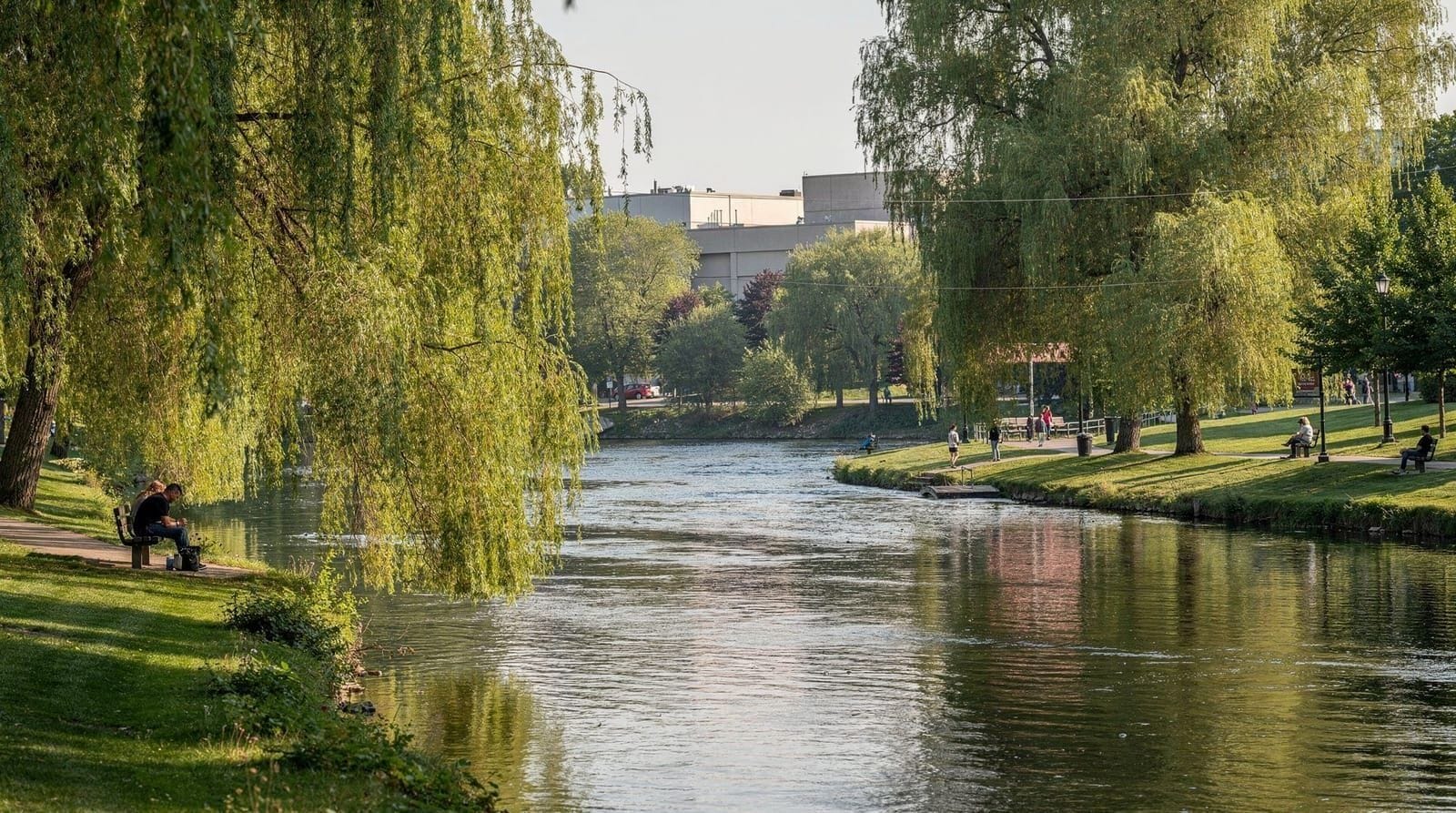
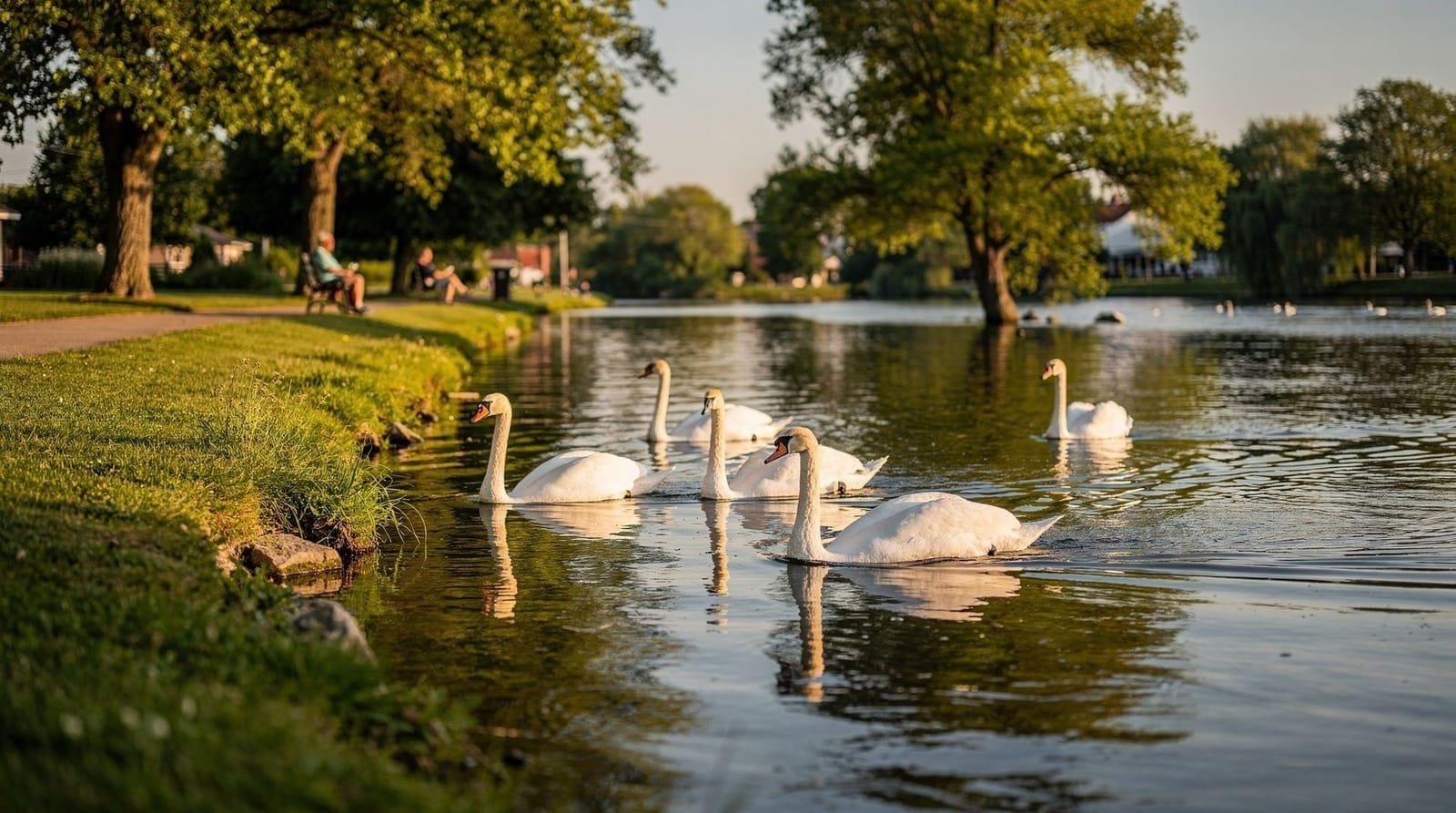
Running through the centre of town, the Avon River and its parkland are as central to Stratford’s identity as the theatre itself. Resident swans (a tradition dating back to the town’s early tourism-boosting years) glide along the water near the Festival Theatre, and a paved riverside trail loops past willow trees, public gardens, and picnic spots that make for an easy pre- or post-show walk. Paddleboat and canoe rentals are available in summer if you want to get onto the water rather than just alongside it.
Downtown Stratford’s food scene
Stratford’s downtown core punches well above its population for restaurant quality and density — a legacy of the culinary talent the Festival has drawn to the area over decades, combined with strong local farm sourcing from the surrounding agricultural region. Ontario Street and Downie Street form the main commercial spine, with everything from casual bakeries to destination-dining rooms within a few blocks of each other. Reservations are worth making ahead on performance nights, when the whole downtown fills up around show times.
The town’s connection to celebrity chef culture runs deeper than Jamie Kennedy’s early career — the Stratford Chefs School, a respected culinary training institution, has operated downtown for decades, feeding a steady pipeline of trained cooks into the local restaurant scene and reinforcing Stratford’s reputation as a genuine food town rather than one riding solely on the Festival’s coattails. This is part of why the food here compares more closely to what you’d find in Toronto’s strongest food neighborhoods than in a typical small-town Ontario main street.
The Stratford Perth Museum and heritage architecture
Stratford’s downtown retains a strong stock of 19th-century commercial architecture, largely intact thanks to the town’s steady rather than boom-and-bust growth. The Stratford Perth Museum, a short walk from downtown, covers the region’s agricultural and small-town history — a useful counterpoint to the Festival’s more cosmopolitan draw if you want a sense of what Stratford was before the theatre existed. The museum’s collection includes a genuine dedication to the town’s railway history — Stratford was a major Grand Trunk Railway hub in the 19th century, and that industrial heritage, alongside the more recent theatre boom, shaped much of the surviving architecture downtown.
City Hall, an ornate Second Empire-style building from the 1890s, anchors Market Square at the centre of downtown and remains one of the most photographed buildings in town, alongside the Avon Theatre and Festival Theatre themselves. A self-guided architectural walking route, available from the local visitor information centre, covers the most significant heritage buildings within a compact, easily walkable loop.
Farmers’ markets and day-trip pairings
Stratford’s Slow Food-affiliated farmers’ market, running Saturday mornings, draws on the same strong local agricultural base that supplies the town’s restaurants. It’s a good addition to a morning visit before an afternoon matinee. Stratford also pairs naturally with a stop in Elora, roughly 45 minutes away, if you’re making a longer loop through Southwestern Ontario — see Elora Gorge day trip from Toronto for a combined itinerary, or St. Jacobs, a Mennonite farming community about an hour east known for its own large farmers’ market and antique market.
Shakespearean Gardens and Tom Patterson Island
Behind the Old Post Office building near downtown, the Shakespearean Gardens is a small, formally landscaped garden planted with flowers, herbs, and plants referenced in Shakespeare’s plays — a quiet, low-key spot that most first-time visitors miss entirely despite its central location. Nearby, Tom Patterson Island, in the middle of the Avon River, is connected by a small footbridge and named for the local journalist who founded the Festival in 1953; it’s a good quiet picnic spot away from the busier riverside paths closer to the Festival Theatre.
Costume Warehouse and behind-the-scenes tours
For Festival enthusiasts wanting more than a single performance, the Stratford Festival occasionally runs public tours of its costume and props warehouse — one of the largest theatrical costume collections in North America, built up over more than seven decades of continuous production. These tours run on a limited schedule and require advance booking, but offer a genuinely different perspective on the scale of what goes into each season’s productions beyond what’s visible on stage.
Stratford’s art scene beyond the theatre
Alongside the Festival, Stratford has a modest but genuine visual arts community, with a handful of commercial galleries downtown and the Gallery Stratford, a public art gallery with rotating exhibitions of Canadian art. It’s a smaller-scale draw than the theatre, but worth a stop if you have time between a matinee and dinner reservation.
Boating and the river beyond the swans
Beyond the swans, the Avon River supports a small fleet of rental paddleboats and canoes launched from near the Festival Theatre, giving visitors a genuinely different vantage point on the parkland and theatre buildings from the water. The river loop is short and calm enough to suit families and casual paddlers rather than requiring any real boating experience, and it’s a pleasant way to fill the hour or two before an evening performance without committing to a full walking tour.
Where to stay
Stratford’s accommodation ranges from historic downtown inns and bed-and-breakfasts (several within converted 19th-century homes) to standard hotel options on the town’s outskirts. Given the town’s small size, even outskirts accommodation tends to be only a short drive or taxi ride from downtown and the theatre venues, making the choice more about budget and style than genuine convenience trade-offs.
Practical notes
Stratford is walkable once you’re downtown, with the theatre venues, river trail, and restaurant strip all within a 10-15 minute walk of each other. A car is the most practical way to get there, since train and bus service from Toronto is limited and slower than driving; see the Stratford day trip from Toronto guide for the full route and timing. Outside Festival season (roughly November through March), the town is noticeably quieter, with reduced restaurant hours — plan a Festival-season visit if the theatre and full food scene are the draw.
Matinee vs evening: which to pick
| Matinee | Evening | |
|---|---|---|
| Ticket price | Generally lower | Peak pricing, especially weekends |
| Crowd | Quieter, more locals and seniors | Fuller houses, more of a special-occasion feel |
| Pairs well with | An evening restaurant reservation after | A relaxed morning walking the Avon River first |
| Best if | Budget-conscious or seeing two shows in a day | Theatre is the centrepiece of the trip |
Building a fuller Stratford day
A well-paced day starts with the Saturday farmers’ market or a slow walk through the Shakespearean Gardens and past Tom Patterson Island before the crowds near the Festival Theatre pick up, then a matinee, an early dinner reservation on Ontario or Downie Street, and a post-dinner stroll along the Avon River as the swans settle in for the evening.
If you’re building a longer Southwestern Ontario loop, Stratford, Elora, and St. Jacobs sit close enough together that a two- or three-day trip covering all three is realistic without excessive driving — the Stratford day trip from Toronto guide has route timing if you’re deciding how much to cram into a single day versus spreading it out.
Frequently asked questions about things to do in Stratford
Do I need to see a show to enjoy visiting Stratford?
No — the Avon River walk, downtown architecture, and restaurant scene are worth a visit on their own, though seeing at least one production is the reason most first-time visitors make the trip.
How far is Stratford from Toronto?
About 1.5 hours by car. Train and intercity bus options exist but generally take longer and run less frequently than driving.
When does the Stratford Festival run?
Typically April through October, with the exact schedule and productions changing annually — check the Festival’s official season calendar before planning dates around a specific show.
Is Stratford a good day trip, or should I stay overnight?
A day trip covers a single show plus a walk and meal comfortably. An overnight stay lets you see two productions (a matinee and an evening show) or add a slower exploration of downtown and the river.
Is Stratford expensive to visit?
Theatre tickets and destination-dining restaurants can add up, but the town itself — walking the river, browsing downtown, the farmers’ market — costs little to nothing, making it flexible for different budgets.
Can I combine Stratford with other Southwestern Ontario towns in one trip?
Yes — Stratford pairs well with Elora and St. Jacobs for a longer day or weekend loop through the region’s small-town and countryside attractions.
How do I get the best seats for a Stratford Festival production without overpaying?
Matinee performances and preview-period shows (early in a production’s run, before reviews are out) generally offer better value than peak evening performances; booking directly through the Festival’s official box office also avoids resale markups from third-party ticket sites.
Is Stratford suitable for a trip without children?
Yes — much of Stratford’s appeal (the Festival, fine dining, the Shakespearean Gardens) skews toward an adult audience, though the Avon River walk and paddleboat rentals work well for families too if traveling with kids.
Do I need to book restaurants in advance?
On performance nights, yes — the whole downtown fills up around show times, and Stratford’s destination-dining rooms in particular can book out days ahead in peak Festival season.
Is Stratford walkable, or will I need to drive between attractions?
It’s genuinely walkable once you’re downtown — the theatre venues, river trail, and restaurant strip sit within a 10–15 minute walk of each other, so a car mostly matters for getting there rather than getting around.