Fall foliage in Muskoka
Muskoka: High Falls, Hardy Lake & Huckleberry Rock Tour
When does fall foliage peak in Muskoka?
Peak colour generally falls in the last week of September through the first week of October, similar timing to Algonquin Park but shifting by a few days year to year with temperature. Muskoka's mix of hardwood forest and lakeshore makes the colour visible from the water as well as the road, which is the main way it differs from a purely forest-based display.
The one region where fall colour and lake views come as a package
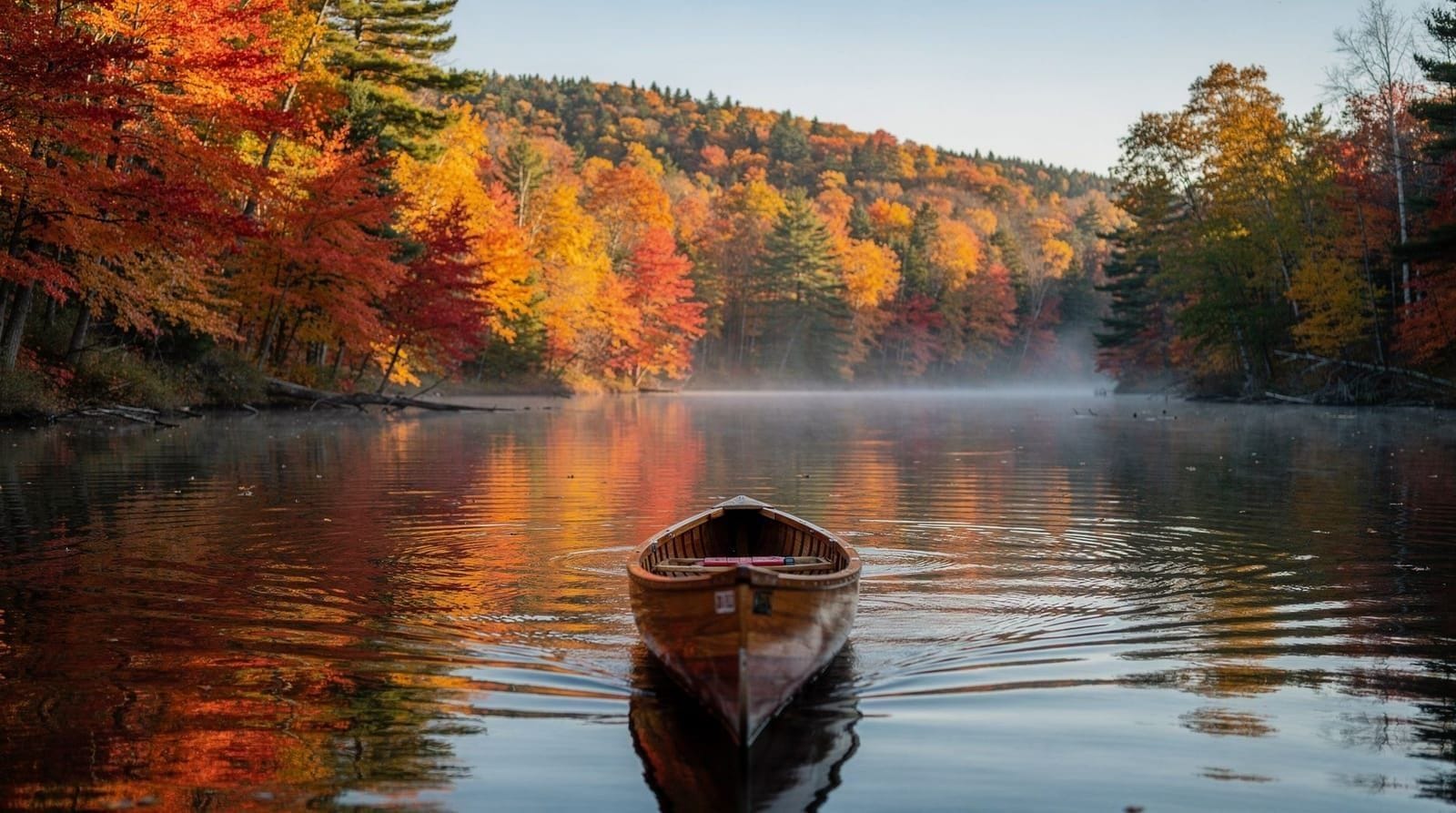
Muskoka’s fall foliage display doesn’t rely on forest alone the way Algonquin’s does — the region’s defining feature is water, and that changes how the colour reads. Sugar maples and red maples ringing Lake Muskoka, Lake Rosseau, and Lake Joseph turn against a backdrop of granite shoreline and still water, which means the same colour is visible from a hiking trail, a highway pullout, a resort dock, or the deck of a boat tour.
That range of vantage points, combined with a shorter drive from Toronto than Algonquin and a well-developed resort-town infrastructure of restaurants and shops in Bracebridge, Huntsville, and Port Carling, makes Muskoka the more convenient of the region’s two big fall-colour destinations, even if Algonquin’s continuous forest and elevated lookouts arguably produce a more dramatic single view.
| Where | Bracebridge, Port Carling, Huntsville and the lakes between them |
| Cost | No park permit needed; 50-100 CAD/person for a self-driven day |
| Time needed | 6-7 hours on the ground after a ~2 hr drive each way |
| Getting there | Self-drive from Toronto via Highway 400/11 (~200 km), or a guided tour |
| Best time | Weekday mornings, last week of Sept-first week of Oct |
When the colour peaks
Muskoka’s peak generally falls in the same general window as Algonquin’s — the last week of September through the first week of October — though the exact timing shifts by several days year to year with temperature and rainfall through late summer. Because the region spans a range of elevations and microclimates, colour doesn’t turn uniformly across Muskoka at once; areas slightly further north around Huntsville and Algonquin’s fringe tend to turn a few days ahead of the more southern stretches near Bracebridge and Gravenhurst. Checking a current foliage report shortly before travel is worth the few minutes it takes, since a week’s difference in timing can mean the gap between muted greens and full colour.
The best viewpoints and drives
High Falls, just outside Bracebridge, pairs a genuinely dramatic waterfall on the Muskoka River with viewing platforms only steps from the parking area, making it one of the highest-payoff, lowest-effort stops in the region during peak colour. Hardy Lake Provincial Park and the trails around it offer a quieter, less commercial alternative with granite outcrops and mixed forest turning together. For a scenic drive rather than a hike, the stretch of road connecting Bracebridge, Port Carling, and Huntsville threads past lake views and hardwood stands continuously, and pulling off at any of the small public docks along the way gives an unobstructed water-level view of the colour.
Guided tours that combine several of these stops into a single day work well here specifically because Muskoka’s highlights are spread across a wider area than Algonquin’s Highway 60 corridor. The Muskoka: High Falls, Hardy Lake and Huckleberry Rock tour links several of the region’s best short walks and viewpoints into one itinerary, which removes the need to plan a driving route between them yourself and works particularly well for a visitor without a car.
Seeing the colour from the water
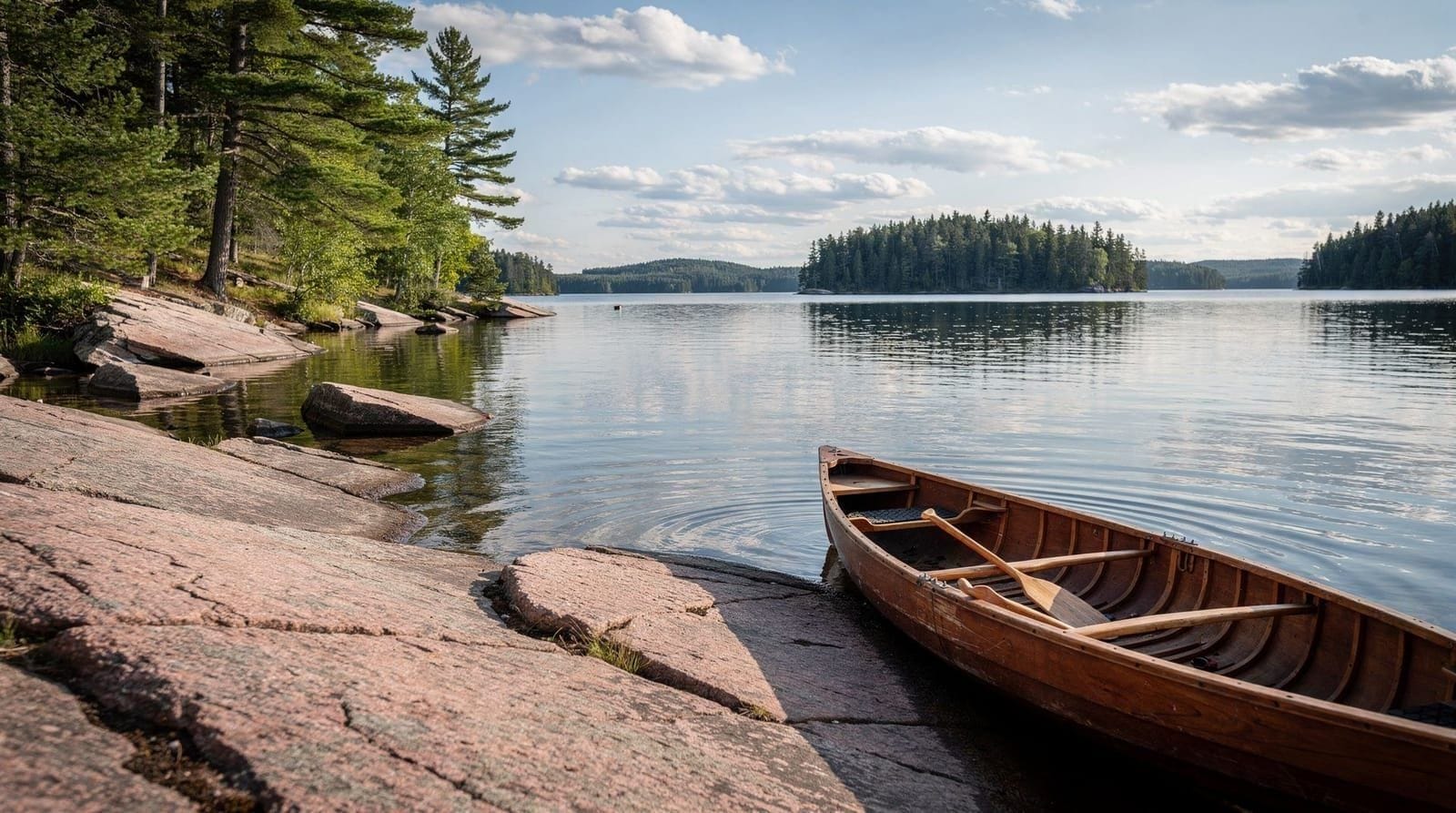
Muskoka’s lakes make boat-based foliage viewing genuinely practical in a way most fall-colour destinations can’t match. Several operators in Gravenhurst, Bracebridge, and Port Carling run scenic cruises timed specifically to the fall season, putting colour-lined granite shoreline in view from the water rather than the road. Canoe and kayak rentals at public launches offer a quieter, self-paced version of the same idea, particularly effective on calm mornings when still water doubles the display with reflection. For visitors staying at a lakeside resort, even a short paddle from the dock delivers a meaningfully different perspective on the same colour visible from the shore trails.
Resort and restaurant availability during the season
Peak foliage season falls before the broader wind-down of Muskoka’s resort season, which typically runs through Canadian Thanksgiving weekend in October before many properties scale back hours or close entirely for winter. That means most restaurants, resorts, and rental operators in Bracebridge, Huntsville, and Port Carling are still fully operating during peak colour, unlike a late-October visit that risks running into reduced hours or seasonal closures. Reservations at popular restaurants and resort dining rooms are worth making ahead specifically for Thanksgiving weekend itself, when the last big crowd of the season arrives before the region quiets down for winter.
A realistic day-trip itinerary
The drive from downtown Toronto to the Bracebridge area covers roughly 200 kilometres and takes about two hours via Highway 400 and Highway 11, leaving a comfortable six to seven hours in the region on a day trip departing Toronto by mid-morning. A workable itinerary pairs High Falls as a first stop, a short hike or paddle at Hardy Lake or a similar spot, lunch in Bracebridge or Port Carling, and either a scenic drive or a lake cruise to close out the afternoon before heading back. Unlike Algonquin, where the drive itself eats a significant share of the day, Muskoka’s shorter travel time leaves genuine flexibility to add or drop a stop depending on how the day is going.
Budget for a fall foliage day trip
Muskoka doesn’t require a park entry permit the way Algonquin does, which simplifies the budget somewhat. Canoe and kayak rentals typically run 25 to 40 CAD per hour, scenic lake cruises vary widely by operator and length but commonly fall in the 30 to 60 CAD per person range, and lunch at a resort-town restaurant in Bracebridge or Port Carling runs 20 to 35 CAD per person for a casual sit-down meal. Factor in gas for the roughly 400-kilometre round trip and a self-driven day lands somewhere between 50 and 100 CAD per person depending on how many paid activities you add. A guided tour that bundles several stops removes the need to plan routing but typically runs higher per person than piecing the day together independently.
Comparing Muskoka’s foliage to Algonquin’s
The two regions peak in roughly the same window but suit different trip priorities. Muskoka is shorter to reach, easier to navigate without extensive planning, and adds water views and resort-town amenities that Algonquin’s more remote Highway 60 corridor doesn’t offer. Algonquin’s forest is more continuous and its lookout trails climb higher, producing a more dramatic single vista, but it demands a longer drive, a day-use permit, and more tolerance for gate-line crowds during peak week. For a full comparison covering logistics, cost, and which trip suits which kind of traveler, see the Muskoka vs. Algonquin guide and the fall foliage in Algonquin Park guide.
The small towns worth building a stop around
Bracebridge, often called the falls capital of Ontario for the number of waterfalls within its town limits, is worth more than a drive-through — its downtown core has a walkable strip of cafés and shops along the Muskoka River, with High Falls itself only a few minutes outside the town centre.
Port Carling, sitting on the channel connecting Lake Muskoka and Lake Rosseau, has a smaller but well-kept downtown with a lock system worth a short stop to watch boats pass through, along with several restaurants with water views that make a strong lunch stop midway through a foliage-focused driving loop. Huntsville, the northernmost of the three main towns and the closest to Algonquin’s West Gate, has a longer main street with more restaurant variety, making it the better choice for a fuller lunch or dinner stop if the day’s route runs that far north.
Photographing the display
Muskoka’s water-and-forest combination rewards photographing colour in reflection, which means calm, windless mornings produce the strongest images — a still lake doubling the visible colour is a genuinely different result from the same shoreline under midday wind chop. High Falls works well throughout the day given its waterfall itself is the main subject rather than reflected colour, but the quieter lakes and public docks along the Bracebridge-Port Carling-Huntsville route are best visited in the first couple of hours after sunrise, both for the light and for beating the day-tripper crowds to the same public access points.
Quieter alternatives to the well-known stops
High Falls and the main Bracebridge-to-Huntsville corridor draw the bulk of day-tripper traffic during peak colour weekends, and a handful of smaller public access points and side roads off the main route see considerably less traffic for comparable colour — Hardy Lake Provincial Park in particular is far less visited than High Falls despite offering a genuinely worthwhile short trail through granite outcrops and turning hardwood. Asking locally at a Bracebridge or Port Carling café or shop about a specific quieter lookout is a reasonable way to find a spot that isn’t already crowded with other day-trippers by mid-morning on a weekend.
Weather variability and what it does to the display
Muskoka’s fall weather can shift quickly given the region’s proximity to open water and higher ground further north, and a week that starts mild can turn sharply colder within a few days, both accelerating leaf drop and occasionally bringing the first light frost of the season. Checking a short-range forecast a few days ahead of a planned trip, rather than committing to a date weeks in advance, helps avoid arriving either before the colour has developed or after a wind-and-rain event has stripped a significant share of leaves from the trees.
Staying overnight instead of a day trip
Given Muskoka’s shorter drive from Toronto, a day trip covers the region comfortably, but an overnight stay opens up a genuinely different experience of fall colour — an early morning paddle before the day-tripper crowds arrive, or a sunset view from a lakeside restaurant deck, neither of which fits easily into a single-day itinerary built around the roughly four-hour round-trip drive.
Resort and cottage-rental availability during peak foliage weekends, particularly the Canadian Thanksgiving long weekend, books up well in advance, so a spontaneous overnight decision made close to the date often comes up against limited options. Booking a night or two several weeks ahead, even as a backup plan to a day trip, is a reasonable hedge if the season’s schedule allows the flexibility.
Practical notes for a fall visit
Weekday visits see noticeably thinner crowds than weekends during peak colour, particularly at High Falls and other well-known stops that draw day-trippers from Toronto. Layer clothing even on a warm-feeling day, since temperatures near the water and in shaded forest sections run cooler than the open highway.
Fuel up in Bracebridge or Huntsville before heading to quieter back roads, and confirm ahead if a specific resort restaurant or boat cruise is part of the plan, since fall weekend bookings fill faster than midweek visitors might expect. For the rest of the year beyond fall colour, see things to do in Muskoka and the Muskoka day trip from Toronto guide for full logistics and other seasonal highlights.
Frequently asked questions about fall foliage in Muskoka
What’s the single best spot for fall colour photos in Muskoka?
High Falls near Bracebridge combines a dramatic waterfall with easy viewing platforms and turning hardwood forest right at the water’s edge, making it the most reliably photogenic single stop in the region during peak colour.
Is a boat tour worth it just for fall foliage?
For visitors who haven’t seen Muskoka’s lakes from the water before, yes — the granite shoreline and turning maples read differently from a boat than from a road or trail, and several operators run cruises timed specifically to the fall season. It’s a genuine add-on rather than a necessity if a tighter budget or schedule rules it out.
Do I need a park permit to see fall colour in Muskoka?
No. Unlike Algonquin Provincial Park, Muskoka’s lakes, trails, and viewpoints don’t require a day-use vehicle permit, which simplifies both the budget and the logistics of a spontaneous day trip.
How does Muskoka’s foliage compare to what’s visible closer to Toronto?
Toronto’s own ravines and parks show fall colour too, but at a smaller scale and without Muskoka’s lake and granite-shoreline backdrop. Muskoka’s display is more continuous and more dramatic, at the cost of a two-hour drive each way rather than a walk from a downtown neighborhood.
Can I combine a Muskoka fall foliage trip with Algonquin in the same day?
It’s tight but possible with an early start, since Huntsville sits roughly 25 minutes from Algonquin’s West Gate. Trying to properly cover both regions’ viewpoints in a single day usually means shortchanging one, so a dedicated day for each is the more satisfying option if time allows.
Top experiences
Bookable activities with verified prices and instant confirmation on GetYourGuide.