Niagara Falls: Canada vs USA side
Niagara Falls Hornblower Boat & Power Station Tour
Should I visit the Canadian or American side of Niagara Falls?
The Canadian side has the better overall view, since you're looking across at the American Falls while standing beside the larger Horseshoe Falls, plus more infrastructure (hotels, boat tours, the Skylon Tower). Cross to the US side only if you specifically want Prospect Park's above-the-falls angle or the American Maid of the Mist boat.
Two countries, one waterfall, and a genuinely different experience on each side
Niagara Falls actually consists of three waterfalls — Horseshoe Falls (the largest, mostly on the Canadian side), American Falls, and the smaller Bridal Veil Falls — straddling the border between Ontario and New York State. Visitors deciding where to stay or which side to prioritize often assume it’s a coin flip, but the two sides offer genuinely different vantage points, price levels, and infrastructure. This guide breaks down the real differences so you can decide whether one side is enough, or whether the border crossing is worth it.
| Better view | Canadian side (faces both American and Horseshoe Falls) |
| Crossing needed | Passport, US Customs at Rainbow Bridge, ~15–30 min on foot |
| Boat tour | Niagara City Cruises (Canada) or Maid of the Mist (USA) |
| Extra time needed | a half-day add-on, not a full separate trip |
| From Toronto | stick to the Canadian side unless you already have a passport and a spare half-day |
Canada vs USA side, side by side
| Canadian side | American side | |
|---|---|---|
| Signature view | Full panorama of both falls from Table Rock | Above-the-falls angle from Prospect Park |
| Boat tour | Niagara City Cruises + Journey Behind the Falls | Maid of the Mist + Cave of the Winds |
| Infrastructure | Skylon Tower, Clifton Hill, casinos, more hotels | Quieter, fewer falls-view hotels |
| Border crossing required | No | Yes, from the Canadian side |
| Typical visitor base | Nearly all Toronto day-trippers | Mostly US-side road-trippers |
If you’re coming from Toronto, the practical answer is straightforward: Niagara Falls, Ontario is roughly 1.5 hours away and requires no border crossing at all, while the American side requires the additional step of clearing customs. See the things to do in Niagara Falls guide for the fuller list of what the Canadian side alone offers before deciding whether the US side is worth adding.
The view: why Canada wins on this specific point
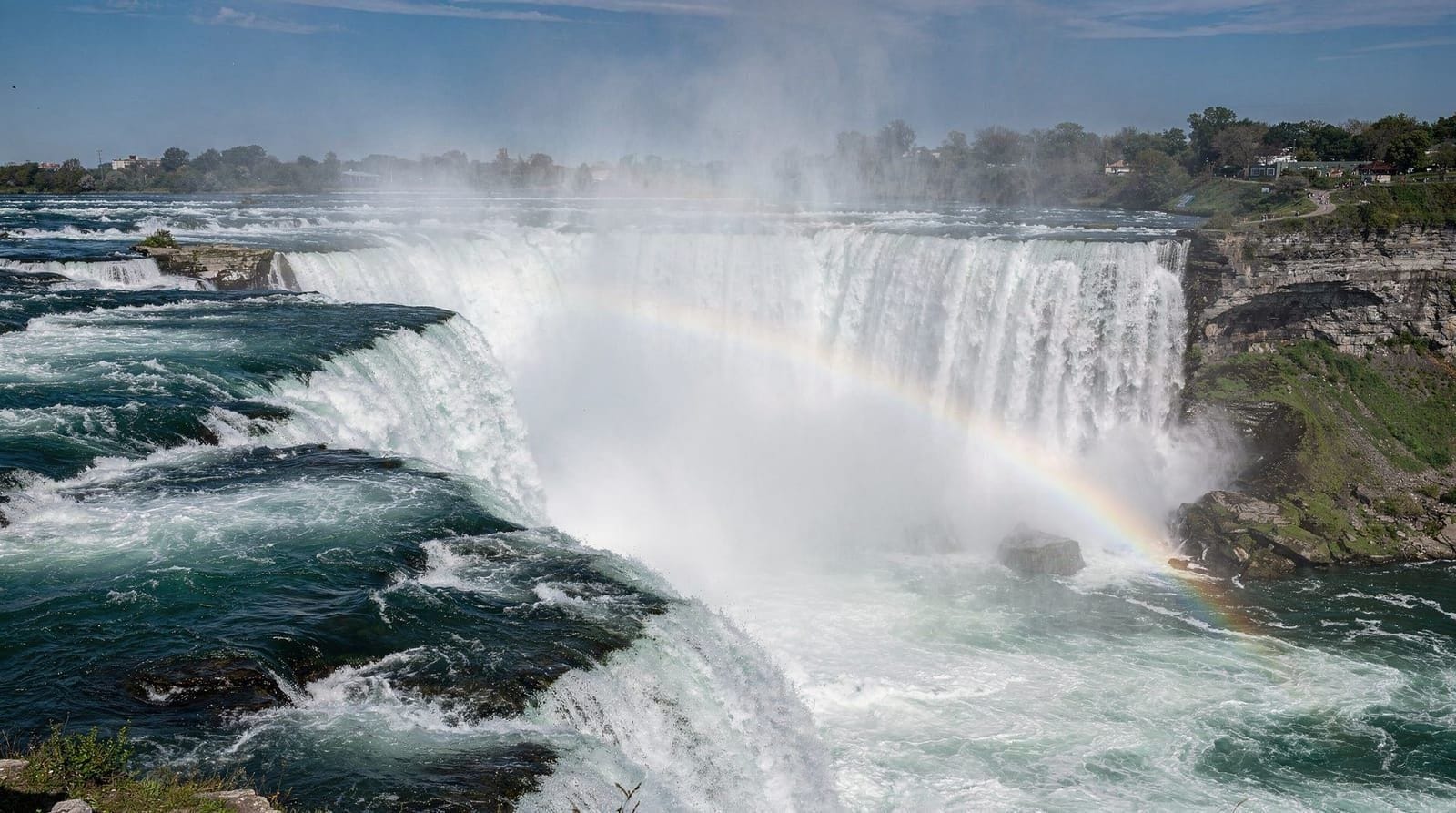
This is the single most decisive factor, and it’s not close. Standing on the Canadian side at Queen Victoria Park or Table Rock, you look almost directly across at both the American Falls and Bridal Veil Falls, while standing right beside the much larger, horseshoe-shaped Canadian falls itself. The American side, by contrast, looks primarily at its own falls from above and to the side — you don’t get the same full, sweeping panorama that makes the Canadian view so photographed. Most professional photography and virtually every postcard image of Niagara Falls is shot from the Canadian side for exactly this reason.
Boat tours: Hornblower/Niagara City Cruises (Canada) vs. Maid of the Mist (USA)
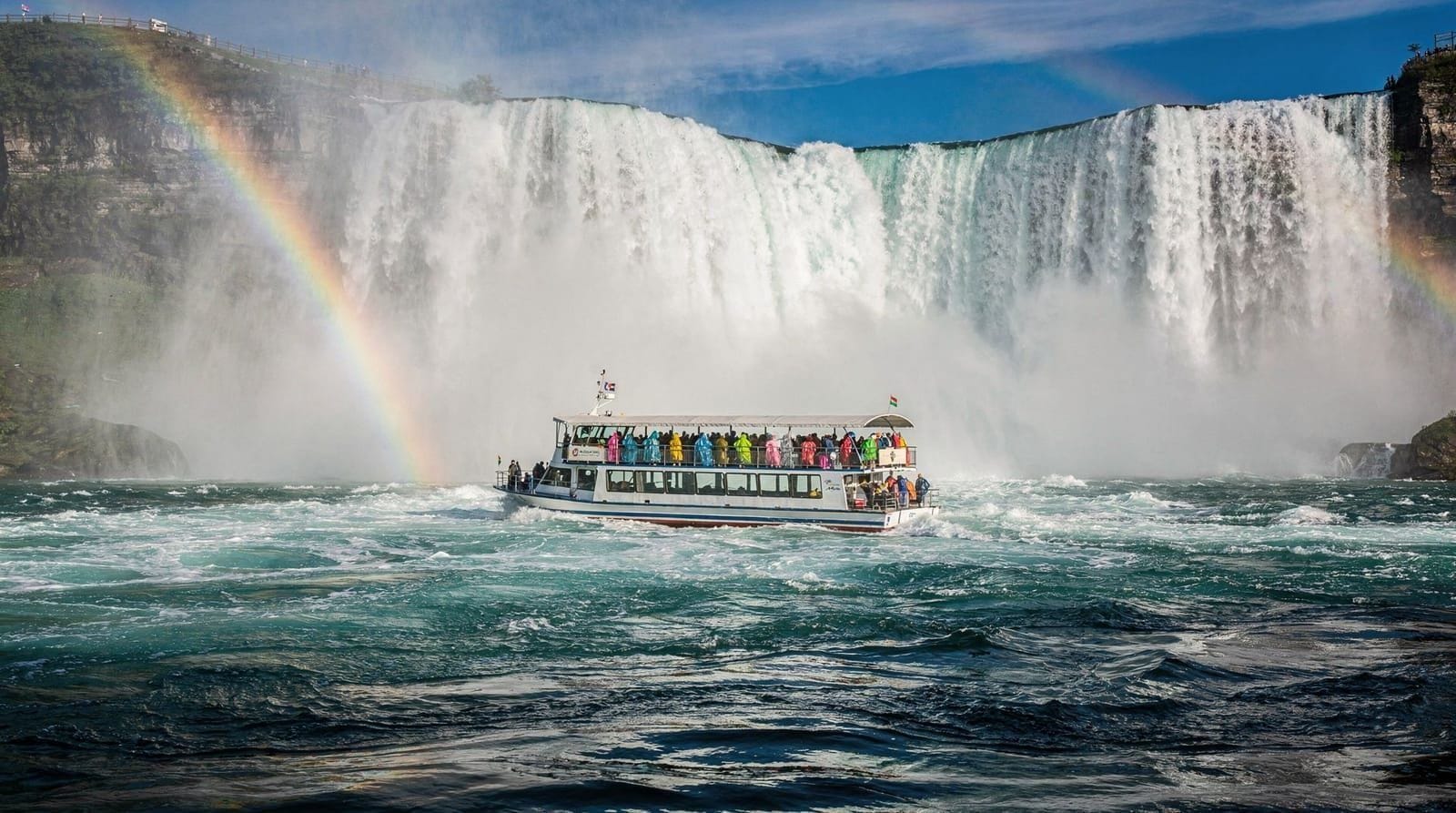
Both sides operate a version of the classic close-approach boat tour to the base of Horseshoe Falls, and both are genuinely worth doing — the routes overlap significantly, since there’s really only one place to approach the falls by boat. On the Canadian side, Niagara City Cruises runs the boat combined with the Journey Behind the Falls tunnel experience:
Niagara Falls Hornblower boat & Power Station tourOn the American side, the historically named Maid of the Mist operates the equivalent boat tour from Prospect Park, with a similarly close approach to the base of the falls:
Niagara Falls USA tour with Maid of the Mist boat rideIf you’re only doing one boat tour, the Canadian side’s version is generally preferred simply because it’s paired with more surrounding infrastructure (the Skylon Tower, Journey Behind the Falls, and Queen Victoria Park) within easy walking distance, making a single-side day trip more complete. See Hornblower vs Journey Behind the Falls for how to combine the Canadian side’s two signature attractions.
Infrastructure and things to do beyond the falls themselves
This is where the gap widens further. The Canadian side has developed significantly more tourist infrastructure over the decades: the Skylon Tower observation deck, Clifton Hill’s entertainment strip, casinos, a wider range of hotels with falls views, and closer proximity to Niagara-on-the-Lake’s wine country (about 20 minutes north). The American side, centered on the smaller city of Niagara Falls, New York, has fewer hotels directly overlooking the falls and a noticeably quieter, less developed tourist strip — some visitors find this a plus (less commercialized), others find it means fewer things to do once you’ve seen the falls themselves.
Crossing the border: what it actually involves
If you’re staying on the Canadian side (the more common base given the stronger infrastructure and view), crossing to the US side requires a valid passport (not just a driver’s license) and clearing US Customs and Border Protection at the Rainbow Bridge, a short walk connecting the two downtown cores. Wait times vary — often 15-30 minutes on foot, longer by car — and pedestrian crossing carries a small toll.
It’s entirely doable as a half-day add-on if you’re already staying Canadian-side and want the US perspective, but it’s not necessary to “complete” a Niagara visit; most visitors who stick to the Canadian side don’t feel they’re missing anything essential. See how to get to Niagara Falls from Toronto for logistics if you’re coming from Toronto and considering a cross-border add-on, or driving from Toronto to Niagara guide if you’re planning to drive across rather than walk.
Rainbow Bridge is the most common pedestrian crossing point directly at the falls, but drivers have additional bridge options further along the river if traffic backs up at peak times. Whichever crossing you use, keep in mind that both directions require full customs clearance — re-entering Canada afterward involves the same process in reverse, so budget the wait time twice into a same-day round trip.
Price comparison
Prices run broadly similar on both sides for comparable experiences (boat tours in the $45-50 CAD/USD range, observation decks in the $18-25 range), though currency conversion and cross-border card fees can make the US side marginally more expensive for Canadian travelers depending on the exchange rate at the time. Parking and general tourist-strip pricing (food, souvenirs) tend to run slightly higher on the more developed Canadian side, simply reflecting the larger crowds and infrastructure.
How this compares to other Ontario-vs-elsewhere debates
Niagara Falls isn’t the only Ontario attraction that spans a border or invites a side-by-side comparison — for a similar honest breakdown of two nearby options, see Niagara vs Prince Edward County wine or Muskoka vs Algonquin guide, both built around the same principle: understanding what each option actually offers before assuming more time or a border crossing automatically means a better trip.
The two cities behind the falls
Niagara Falls, Ontario and Niagara Falls, New York are genuinely two different cities that happen to share a name and a landmark, and their divergence tells its own story. The Canadian city invested heavily in tourism infrastructure over the 20th century — casinos, high-rise hotels, an entertainment strip — and today has a population and economy substantially built around visitor spending. The American city, by contrast, struggled economically for decades after its manufacturing base declined, and while downtown revitalization efforts have made real progress, the contrast with the polished Canadian side remains noticeable to visitors moving between the two.
Prospect Park and the American vantage points
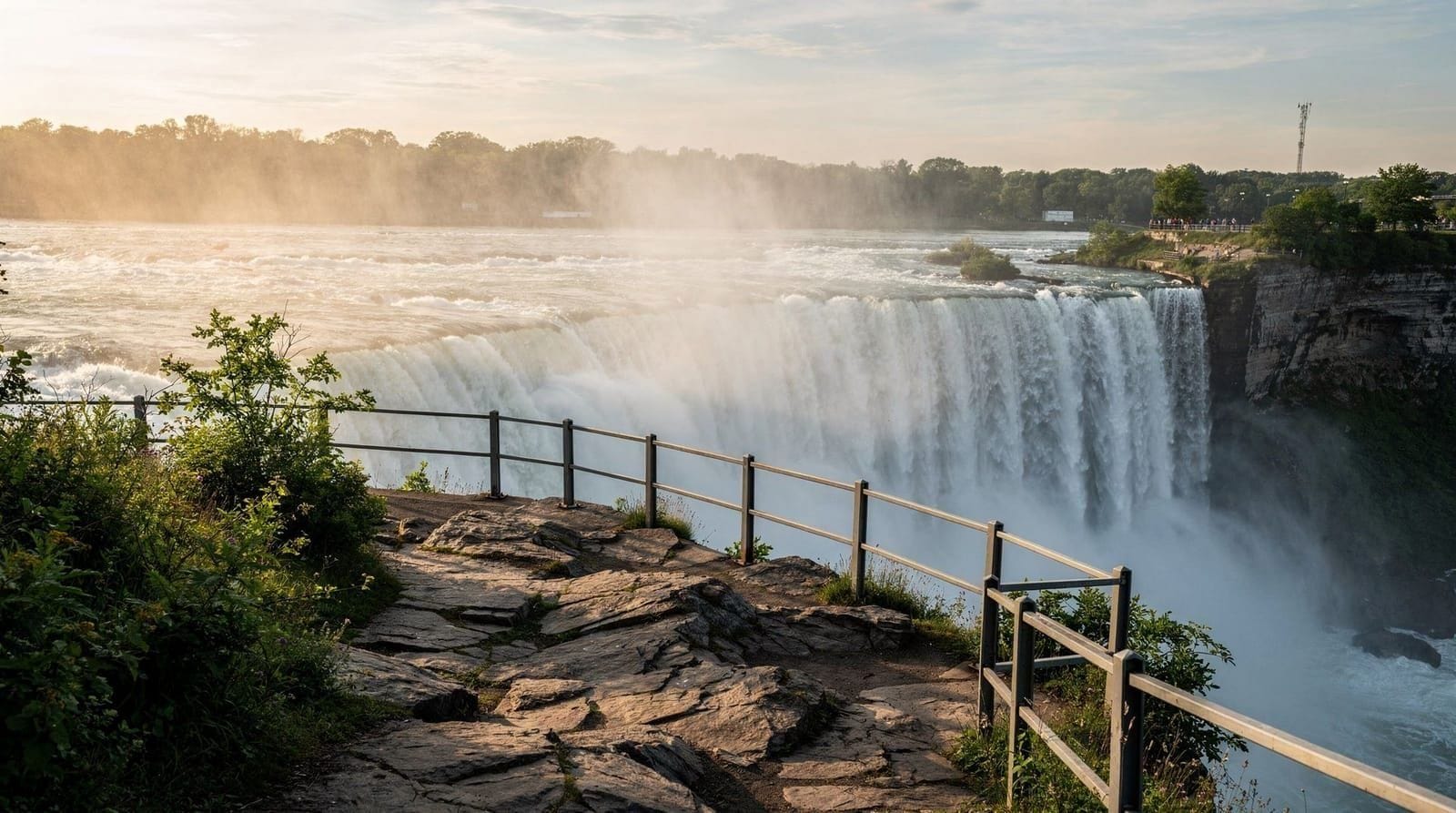
The American side’s Prospect Park does offer genuine value the Canadian side can’t replicate: a close, almost overhead view down onto the top of American Falls, plus the Cave of the Winds attraction, which takes visitors via elevator and boardwalk to a platform at the base of Bridal Veil Falls — close enough that, like the boat tours, getting soaked is part of the experience. Goat Island, connected to the American mainland by a short bridge, sits directly between the American and Horseshoe Falls and offers its own unique vantage points not replicated from the Canadian side, including views of the upper rapids just before the water goes over the brink.
Which side to base your accommodation on
Given the stronger infrastructure and view, most visitors — including nearly all Toronto-based day-trippers — base themselves on the Canadian side, whether staying overnight or simply parking there for the day. If you’re coming from the US side of the border (driving up from New York State or further south), it can make more logistical sense to spend a night on the American side before crossing, though the actual sightseeing time is still better spent primarily on the Canadian side given the view.
The honest verdict
For most visitors, especially on a day trip from Toronto, the Canadian side alone delivers the complete Niagara Falls experience — better views, the boat tour, Journey Behind the Falls, and easy access to wine country. Add the US side only if you have a full extra day, already hold a passport, and specifically want the above-the-falls Prospect Park angle or the American Maid of the Mist branding.
Don’t feel obligated to cross the border just to say you’ve “done both sides” — it adds real time and complexity for a view that’s genuinely secondary to what you’ll already see from Canada. For the fuller single-day itinerary built entirely around the Canadian side, see Niagara Falls day trip from Toronto.
Frequently asked questions about Niagara Falls: Canada vs USA side
Do I need a passport to see Niagara Falls from the Canadian side?
No — a passport is only needed if you plan to cross the border to the American side. Visiting the Canadian side of Niagara Falls requires standard entry documentation for Canada (passport or eTA, depending on your nationality), not a US crossing.
Which side has better hotels with falls views?
The Canadian side has significantly more hotel options with direct falls views, reflecting its more developed tourist infrastructure.
Is it worth doing a boat tour on both sides?
No — the routes largely overlap since both approach the same base of Horseshoe Falls. Doing one (typically the Canadian side’s, given the surrounding infrastructure) is sufficient.
How long does it take to cross from the Canadian to the American side?
On foot via the Rainbow Bridge, typically 15-30 minutes including customs clearance, though this varies with traffic and time of year.
Is the American side cheaper to visit?
Prices are broadly comparable; any difference usually comes down to currency exchange rates and cross-border card fees rather than genuinely lower base pricing.
Can I see both sides of Niagara Falls in one day?
It’s possible if you start early and don’t linger too long on either side, but it makes for a rushed day. Most visitors get more value from spending a full day thoroughly on the Canadian side.
What’s the Cave of the Winds, and is it on the Canadian or American side?
Cave of the Winds is an American-side attraction, taking visitors by elevator and boardwalk to a platform at the base of Bridal Veil Falls. It’s a genuine equivalent to the Canadian side’s Journey Behind the Falls in terms of proximity to the water, just from a different angle.
Do eTA or visa requirements differ for visiting the Canadian side versus crossing to the US side?
Yes — entry into Canada requires whatever documentation applies to your nationality (passport, eTA, or visa), while crossing into the US requires a valid passport and meeting US entry requirements separately, which can differ significantly depending on your nationality.
Is the view from Niagara-on-the-Lake or other nearby Canadian towns comparable to the falls themselves?
No — Niagara-on-the-Lake and the surrounding wine country offer a completely different experience (vineyards, historic architecture) rather than any view of the falls themselves, which are only visible from the immediate Niagara Falls area on either side of the border.
Top experiences
Bookable activities with verified prices and instant confirmation on GetYourGuide.