Secret Toronto spots locals love
Toronto’s best spots aren’t hidden, they’re just not on the postcard list
Every city has a “secret spots” article, and most of them list places that are either genuinely secret and therefore not that useful to a visitor with limited time, or so well-known locally that calling them “hidden” is a stretch. This list aims for the useful middle: places that don’t show up on the CN Tower/Ripley’s Aquarium checklist most first-timers follow, but that are entirely reachable on a normal visit and genuinely loved by people who live here.
| Best for | Repeat visitors or anyone with 4+ days in the city |
| Getting there | Streetcar/ferry for most; car recommended for Scarborough Bluffs |
| Cost | Free to explore — pair with a meal or coffee stop |
| Best time | Early morning or early evening, off-peak |
| Treat as | An addition to, not a replacement for, main attractions |
Scarborough Bluffs
Twenty minutes east of downtown by car (longer by transit), the Scarborough Bluffs are dramatic clay cliffs rising up to 90 metres above Lake Ontario, with a completely different feel from anything downtown — more Pacific coastline than what most visitors expect from Ontario. Bluffer’s Park at the base gives you beach and cliff views together; the clifftop parks above offer a quieter, greener vantage. Most tourists never make it out here because it requires a car or a longer TTC ride, which is exactly why it stays uncrowded even in peak summer.
Leslieville
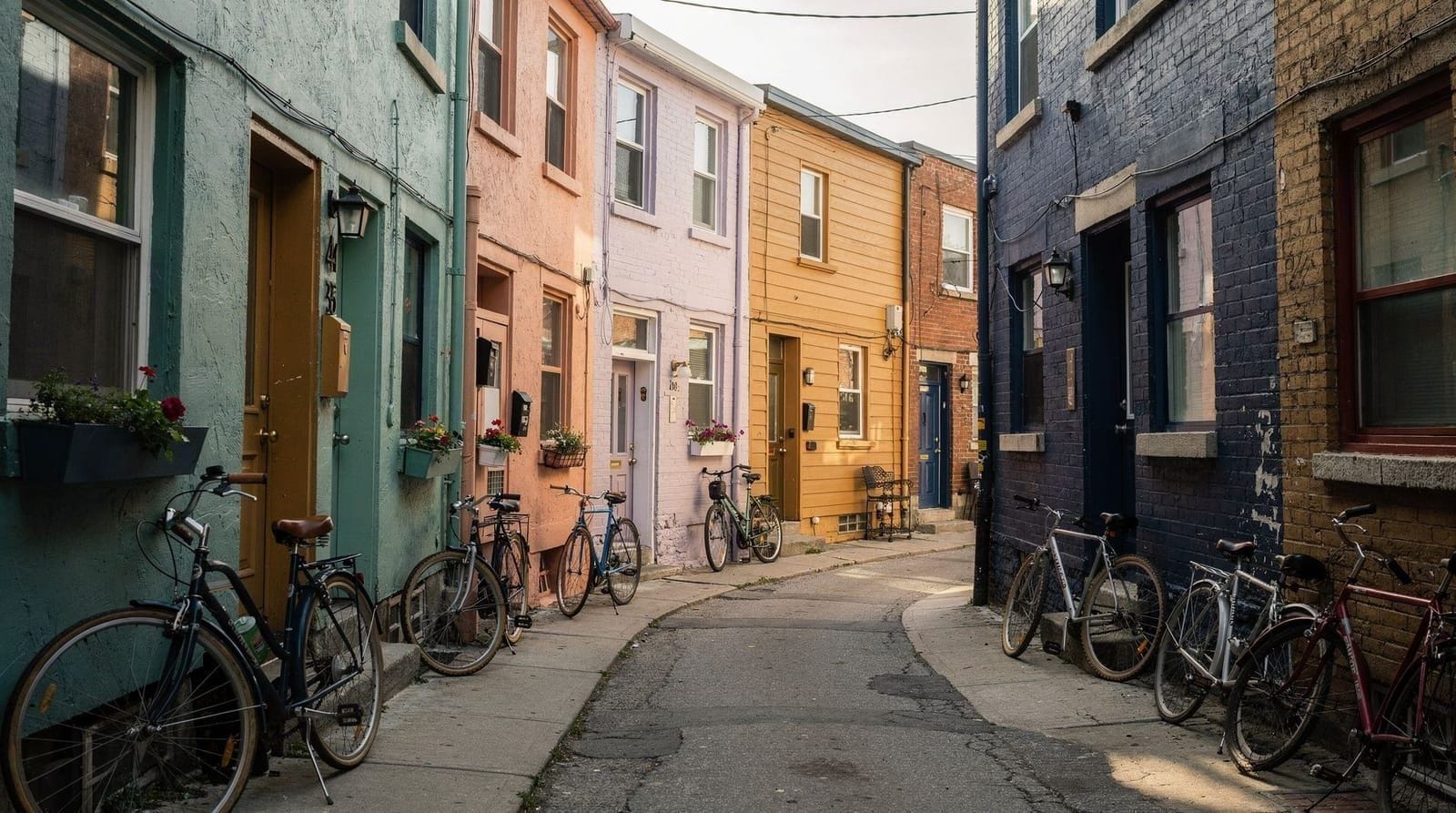
Leslieville, east of downtown along Queen Street, has quietly become one of Toronto’s best neighborhoods for independent coffee shops, brunch spots, and a genuinely residential, unhurried feel that’s hard to find closer to the core. It’s popular with locals precisely because it hasn’t been fully absorbed into the tourist circuit — a 15-minute streetcar ride from downtown gets you a completely different pace of neighborhood.
Cabbagetown’s Victorian streets
Cabbagetown has one of the largest continuous stretches of Victorian architecture in North America, tucked just east of the downtown core, and most visitors walk right past the turnoff toward it without realizing what’s a few blocks away. It’s a genuinely pleasant, quiet residential walk — not a “sight” in the traditional sense, but the kind of neighborhood texture that a lot of Toronto guides skip entirely in favor of pointing everyone toward the same five landmarks.
The Toronto Islands after the day-trippers leave
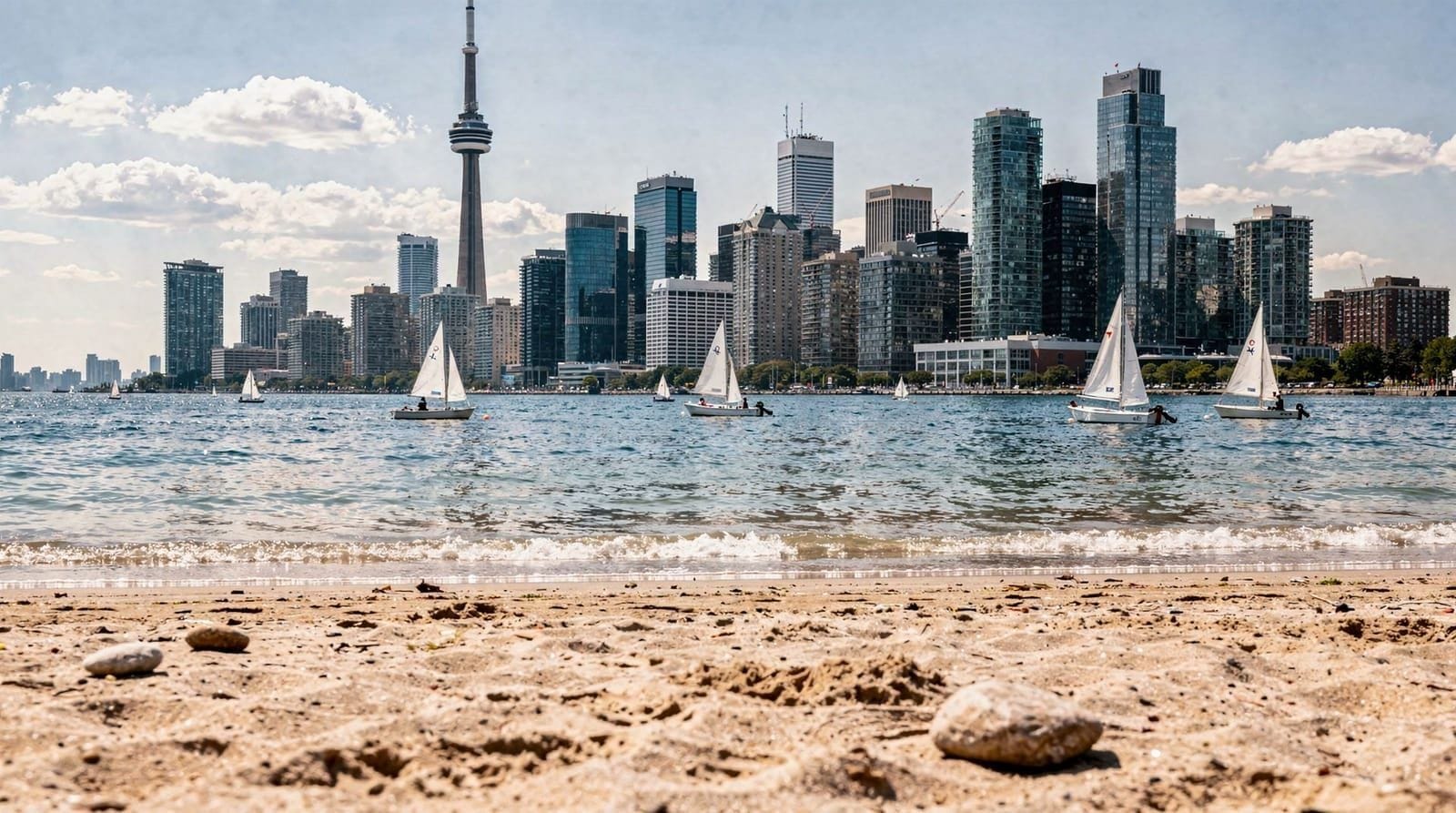
Most visitors do the Toronto Islands as a daytime ferry trip — reasonable, but it means missing the islands at their quietest and most atmospheric: early evening, once the bulk of day-trip crowds have caught the last ferries back. A night walk with the ferry included gets you the skyline lit up across the water with a fraction of the daytime foot traffic:
Toronto Island night walk with ferry rideCorktown Common and the Distillery District’s quieter edges
Most visitors treat the Distillery District as a single loop through the main cobblestone lanes and miss Corktown Common just beyond it — a genuinely well-designed park built on reclaimed industrial land, with skyline views and considerably fewer tourists than the district’s core. A historic walking tour that goes beyond the main lanes covers this kind of context better than wandering on your own with no background:
Distillery District historic walking tourToronto’s hidden laneways and street art
Beyond the well-photographed Graffiti Alley near Queen West, Toronto has an extensive network of laneway art scattered through less-touristed stretches of the downtown core — a genuinely different way to see the city’s creative side than the handful of Instagram-famous walls everyone already knows. A guided tour focused specifically on this side of the city finds routes and context a self-guided wander typically misses:
Hidden Toronto city walking tourWhy locals gravitate toward these over the “official” attractions
None of this is about avoiding the CN Tower or the harbourfront — those are worth doing, and our things to do in Toronto guide covers them honestly. It’s that Torontonians who actually live here spend most of their time in neighborhoods, not landmarks, and a visit that includes even one or two of these spots gives you a more accurate sense of the city than a purely landmark-driven itinerary. Pair one of these with a normal day of sightseeing rather than trying to build a whole trip around “hidden gems” — most work best as an addition, not a replacement.
Cabbagetown’s William Street and the Necropolis
Beyond the general Victorian streetscape, Cabbagetown’s Toronto Necropolis — an 1850s cemetery with mature trees, a small chapel, and views over the Don Valley — is one of the more atmospheric quiet spots in the downtown-adjacent area, and rarely appears on any standard visitor itinerary. It’s a genuinely peaceful place for a slow walk, not a “sight” to check off, which is exactly the kind of stop that tends to get left off itineraries built around landmarks rather than atmosphere.
The Junction and High Park’s western edge
West of downtown, High Park’s less-visited western and southern sections — away from the cherry blossom grove that draws the spring crowds — offer genuinely quiet trails, a small zoo enclosure with bison (a strange and pleasant surprise for a city park), and Grenadier Pond, which is worth a slow walk in any season. The adjacent Junction neighborhood has its own small but growing collection of independent shops and restaurants that locals frequent without much tourist traffic at all.
Why these spots stay under the radar
Part of the reason these places don’t make standard Toronto lists comes down to how tourism content gets made — writers on tight deadlines default to the same handful of landmark attractions that are easy to research and universally recognizable, while neighborhood-level spots require actual time on the ground to discover and describe accurately. That’s not a criticism of standard guides so much as an explanation for why this list looks different, and why it’s worth cross-referencing with people who actually live in the city rather than relying on a single source.
Getting to these spots without a car
Leslieville and Cabbagetown are both reachable by streetcar from downtown in 15-20 minutes. The Scarborough Bluffs are the outlier — a car, taxi, or a longer TTC/GO Transit combination (roughly 45-60 minutes from downtown) is realistically needed. The Toronto Islands and Distillery District are both easily reached by ferry and streetcar/walking respectively, no car required. See our free things to do in Toronto guide for more no-cost additions to a day that includes any of these.
A note on respecting these spots
Part of what keeps neighborhoods like Leslieville, Cabbagetown, and the quieter corners of the Distillery District pleasant is that they haven’t been overwhelmed by tour-group volume the way the city’s headline attractions have. Visiting respectfully — normal noise levels, not blocking residential doorways for photos, supporting the small businesses that make these areas worth visiting — helps keep them that way for the next visitor and, more importantly, for the people who actually live there year-round.
One more: the Beaches boardwalk at off-peak hours
The Beaches is well-known enough that it doesn’t quite qualify as hidden, but most visitors only see it on a busy weekend afternoon. An early-morning walk along the boardwalk, before the crowds and with the lake often perfectly calm, gives a genuinely different, quieter version of a neighborhood most people only experience at its busiest — worth the earlier start if a peaceful lake walk appeals more than a lively summer scene.
Combining two or three in a single day
A realistic combination for one day: an early boardwalk walk at The Beaches, a mid-morning coffee stop in Leslieville on the way back downtown, and a Distillery District/Corktown Common finish in the afternoon. That’s a full day of genuinely varied Toronto without ever setting foot near the CN Tower — proof the city’s appeal extends well past its most-photographed single landmark.
Little Italy and the Junction’s food scenes, briefly
Two more neighborhood-level spots worth a mention rather than a full section: Little Italy, along College Street west of downtown, retains a genuinely local Italian-Canadian food and café culture despite decades of the neighborhood’s demographics shifting, and rewards a slow walk more than a single destination stop. The Junction, at the western edge covered above near High Park, has quietly built its own small restaurant and brewery scene in former industrial buildings, worth combining with a High Park visit rather than a separate trip. Neither needs advance planning — both work as a spontaneous add-on to a day already headed that direction.
A short list for visitors with only one extra afternoon
If only one addition fits the itinerary, Leslieville or the Distillery District’s Corktown Common edge are the easiest wins — both close to downtown, no car required, and genuinely different from a landmark-driven day without adding real logistics. Save Scarborough Bluffs for a trip with a car or more time, since the transit commitment is real. Our things to do in Toronto guide and free things to do in Toronto guide both pair well with whichever of these you choose.
Frequently asked questions about hidden Toronto spots
Are the Scarborough Bluffs worth the trip from downtown?
Yes, if you have a car or don’t mind a longer transit ride — the cliff and lake views are genuinely different from anything downtown and worth the extra travel time for photography or a quiet afternoon.
What’s the best “hidden gem” neighborhood in Toronto for a short trip?
Leslieville or Cabbagetown are the most accessible — both a short streetcar ride from downtown with a genuinely different, quieter neighborhood feel than the main tourist circuit.
Is Corktown Common worth visiting?
Yes, especially if you’re already at the Distillery District — it’s a five-minute walk further and offers skyline views with far fewer visitors than the district’s main lanes.
Do I need a car to see these hidden spots?
Only for the Scarborough Bluffs. Leslieville, Cabbagetown, the Toronto Islands, and the Distillery District’s quieter corners are all reachable by transit, ferry, or walking.
Should I skip the main Toronto attractions for these hidden spots instead?
No — treat these as additions to a normal itinerary rather than replacements. The main attractions are well-known for good reason; these spots round out the picture rather than substituting for it.