Stratford Festival guide
What is the Stratford Festival?
The Stratford Festival is one of the largest classical repertory theatre festivals in North America, running across a long season from April through October in Stratford, Ontario, about 1.5 hours from Toronto. Founded in 1953 under a tent staging Shakespeare, it now operates four permanent theatres with a season mixing Shakespeare, classic drama, and contemporary works and musicals.
From a tent to four theatres
The Stratford Festival began in 1953 with an audacious, slightly improbable premise: a journalist named Tom Patterson convinced a small Ontario town — named, not coincidentally, after Shakespeare’s own Stratford-upon-Avon and sitting on its own Avon River — to host a professional Shakespeare festival under a temporary tent, with British stage and film actor Alec Guinness starring in the opening production. It worked well enough that the festival never stopped, and it has grown over seven decades into one of the largest classical repertory theatre companies in North America, now operating four permanent theatres and drawing audiences from across Canada and the United States each season.
That growth from tent to institution matters because it shapes what a modern visit looks like: this isn’t a small-town summer-stock operation, it’s a major professional theatre company staging a genuinely ambitious season each year, performed by some of the strongest classical actors working in Canadian theatre.
| Where | Stratford, Ontario, ~1.5hrs from Toronto |
| Season | Roughly April-October, four theatres |
| Cost | Tickets vary widely; comparable to mid-range city theatre pricing |
| Getting there | Car (~1.5-2hrs via Hwy 401/8) or VIA Rail |
| Best time | September-early October for weather and thinner crowds |
The four theatres
The Festival Theatre, the company’s flagship and largest venue, uses a distinctive thrust stage design — extending out into the audience on three sides rather than a traditional proscenium arch — that has become one of the festival’s signature architectural and staging innovations, influencing theatre design well beyond Stratford itself.
The Avon Theatre, a more traditional proscenium venue in Stratford’s downtown, typically hosts musicals and some of the larger dramatic productions. The Studio Theatre and the Tom Patterson Theatre — the latter named for the festival’s founder and rebuilt in recent years along the Avon River — host smaller-scale and more experimental productions, rounding out a season that spans a genuinely wide range of theatrical styles across the four spaces.
What’s actually on the program
Shakespeare remains the festival’s foundational identity — expect at least a couple of his plays in any given season, staged with real production values and top-tier casting. But the modern Stratford Festival season extends well beyond that core, typically including other classic dramatists, contemporary plays, and at least one large-scale musical production each year, which has become one of the festival’s more commercially significant draws. Checking the current season’s specific lineup before booking matters, since the mix shifts meaningfully year to year.
The festival also runs a substantial education and outreach arm beyond its mainstage productions, including student matinees, teacher resources, and post-show discussions aimed at introducing younger audiences to classical theatre, a program that has grown considerably since the festival’s early decades, when outreach was a minor sideline rather than a core part of its mandate. Many school groups from across Ontario make an annual trip built specifically around these discounted student performances, which is part of why weekday matinees during the school-year portion of the season can carry a noticeably younger crowd than a typical weekend evening show.
Planning your visit: day trip or overnight
Stratford sits about 1.5 hours from Toronto by car via Highway 401 and Highway 8, making a single-show day trip technically feasible — but it’s a long day, given 3 hours of round-trip driving on top of a performance that typically runs 2.5 to 3 hours itself, plus time for a meal. Many festival-goers instead choose to stay overnight in Stratford, which opens up the possibility of seeing both a matinee and an evening performance in the same visit — a genuinely different, richer experience than rushing back to Toronto after a single show. Stratford’s downtown has a reasonable range of accommodation, from boutique inns to chain hotels, though availability tightens during the festival’s peak summer months.
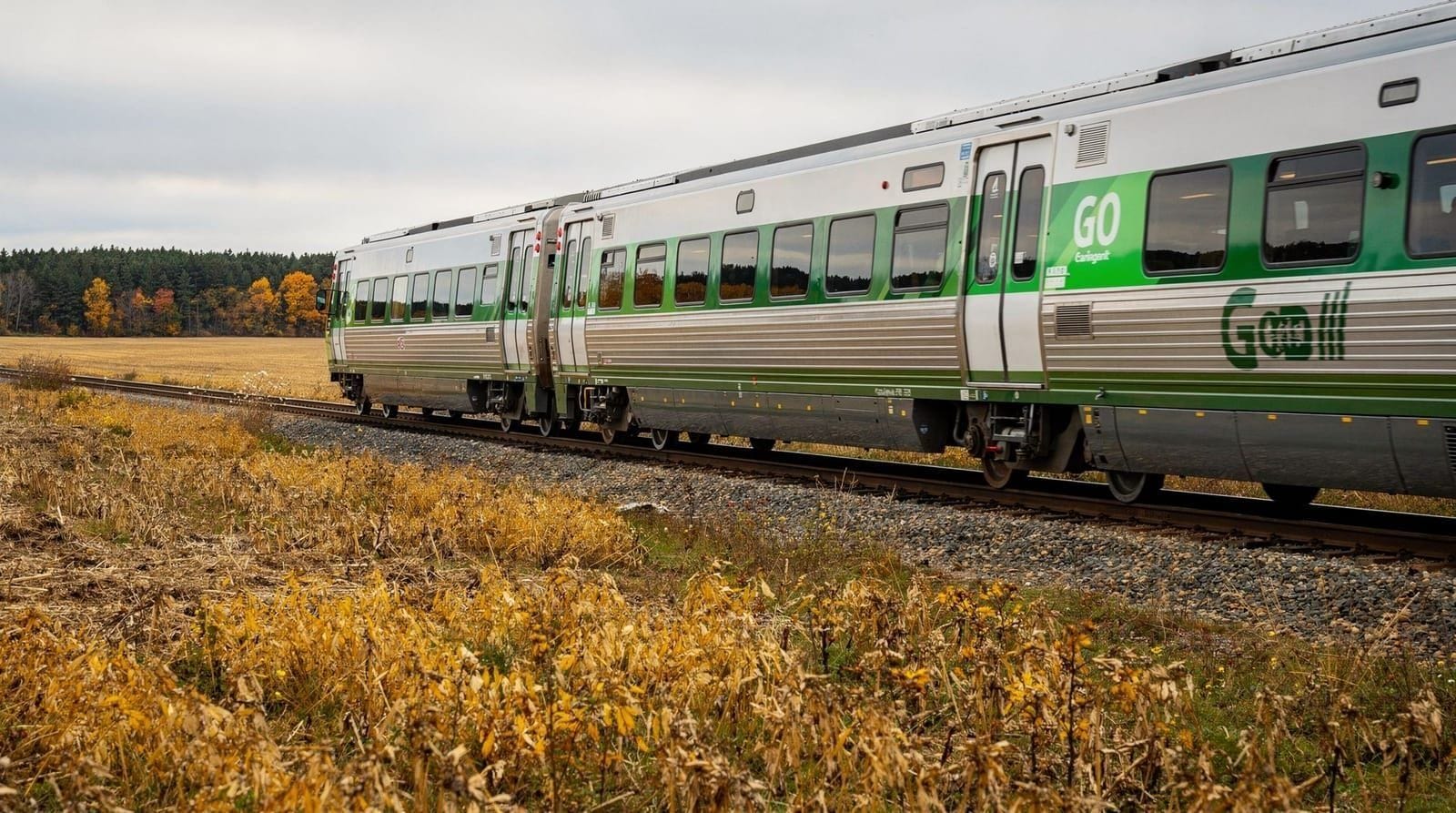
VIA Rail also runs service between Toronto and Stratford, a workable alternative if you’d rather not drive — see our VIA Rail Toronto guide for schedules and booking — though train schedules are considerably less flexible than a car, and timing an evening performance around train departure times takes some planning.
Beyond the theatre: the town itself
Stratford is a genuinely appealing small Ontario town independent of the festival, and most visitors build time into their trip to explore it rather than treating the theatre as the sole reason to come. The Avon River, which winds through the center of town, is home to a resident population of swans — a long-standing local tradition, with the town hosting an annual swan parade each spring when the birds are moved between their winter and summer homes on the river.
A riverside park with well-maintained gardens runs alongside the water, offering a pleasant pre- or post-show walk. Stratford’s downtown core has grown a strong restaurant and café scene over the decades, largely driven by the festival’s audience, including several restaurants well above what you’d typically expect in a town of Stratford’s modest size.
Tickets and pricing
Ticket prices vary by theatre, seating section, and specific production, generally landing in a range comparable to mid-range professional theatre in a major city — significant, but not at the premium end of top-tier Broadway or West End pricing. Our Toronto budget travel guide has more on how a Stratford overnight compares cost-wise to a downtown Toronto stay.
Preview performances, held before a production’s official opening, and select discount programs earlier in a show’s run typically offer lower prices than peak-season, prime-seating tickets. Popular productions, particularly any high-profile Shakespeare staging or major musical, can sell out well in advance, so booking ahead — especially for weekend performances during peak summer months — is worth doing rather than assuming walk-up availability.
When to go
The festival’s long season, running from spring through fall, gives real flexibility on timing. Early in the season (April-May) and later in the fall bring smaller crowds and a quieter town, along with slightly cooler weather for exploring outdoors between performances. Summer (June-August) is the festival’s busiest stretch, with the fullest range of productions running simultaneously across all four theatres, but also the highest demand for tickets and accommodation.
Pairing it with the rest of your trip
Stratford pairs naturally with nearby Elora, another small Southwestern Ontario town known for its scenic gorge and historic downtown, and our Stratford & Elora countryside escape itinerary lays out a combined multi-day route covering both towns without the need to backtrack to Toronto in between.
If outdoor time matters as much as theatre to your visit, our Elora Gorge hiking guide covers a nearby natural landmark worth the short additional drive. Our best day trips from Toronto by train guide also covers the VIA Rail option in more detail, and our maple syrup farms near Toronto guide is a good companion stop if you’re driving through the same stretch of Southwestern Ontario in early spring.
Tyrone Guthrie, Tanya Moiseiwitsch, and the tent that changed theatre design
When Tom Patterson set out to convince backers that a small Southwestern Ontario town with no professional theatre tradition could support a Shakespeare festival, he needed a director credible enough to make the idea plausible. He recruited Tyrone Guthrie, a prominent British stage director then closely associated with London’s Old Vic, to lead the inaugural 1953 season. Guthrie’s involvement did much of the work of making the festival’s improbable premise credible to skeptical funders and the wider theatre world, and his decision to sign on, along with his insistence on a radically unconventional staging approach, shaped the festival’s identity from its very first production.
Guthrie worked with stage designer Tanya Moiseiwitsch to develop what became the festival’s defining architectural feature: a thrust stage, jutting out into the audience on three sides, seated in a steep amphitheater-style bowl rather than the traditional proscenium arrangement common in mid-century theatre, where the audience faces a single flat stage front-on.
The design was a deliberate attempt to recreate something closer to the intimacy and audience proximity of Elizabethan-era playhouses, where actors performed surrounded on multiple sides rather than framed by a picture-box stage. For the first season, this stage sat inside a temporary canvas tent, erected specifically for that summer with no guarantee the festival would run again the following year.
It worked, both artistically and financially, well enough that the tent returned for subsequent seasons, and the thrust-stage design proved so successful that when the company built its permanent Festival Theatre a few years later, the architects retained the same basic stage geometry rather than reverting to a conventional proscenium house, an unusual decision at the time, since thrust staging was still considered experimental in North American professional theatre.
The design’s influence extended well beyond Stratford itself: Guthrie went on to found a theatre in Minneapolis that adopted a similar thrust-stage layout and was later named the Guthrie Theater in his honor, and Stratford’s example is frequently cited by theatre historians as a turning point that helped normalize thrust and arena staging in North American theatre architecture more broadly, rather than remaining a European or purely academic curiosity.
The festival’s growth after that first tent season wasn’t uninterrupted. Like many arts institutions built on a single ambitious founding vision, Stratford weathered real financial strain in later decades as the costs of running a year-round professional company grew, and successive artistic directors had to balance the box-office reliability of a large annual musical against the company’s founding commitment to classical repertory.
That tension, between commercial necessity and artistic mission, has shaped programming decisions across every era of the festival’s history since Guthrie’s departure, and it’s part of why a modern season mixes Shakespeare, classic drama, and a headline musical rather than committing to any single one of those categories exclusively.
Practical notes
- Cost: Tickets vary widely by show and seating; budget for accommodation and meals on top if staying overnight, which most repeat visitors recommend over a rushed day trip.
- Booking window: Book ahead for weekend and peak-summer performances, particularly for high-demand productions.
- Getting there: A car offers the most flexibility; VIA Rail is a workable but more schedule-constrained alternative.
- Dress code: Casual to smart-casual is standard for most performances; no formal dress code is enforced.
A Stratford Festival trip rewards treating it as a genuine getaway rather than a rushed evening — between the theatre itself, the town’s restaurants, and the riverside setting, an overnight stay consistently delivers a better visit than a single-show day trip from Toronto.
Choosing between the four theatres if you have limited time
If you only have time for one show, the Festival Theatre delivers the fullest sense of what makes Stratford distinctive — its thrust stage and the season’s flagship Shakespeare production are usually staged there, and it’s the most iconic of the four venues to experience at least once. The Avon Theatre is the better pick if a musical is what you’re after, since large-scale musicals are generally staged there rather than in the Festival Theatre’s more classical repertory slot. The Tom Patterson Theatre and Studio Theatre suit visitors who’ve already seen a mainstage production before and want something more intimate or experimental on a return trip, rather than a first-timer’s introduction to the Festival.
Accessibility and family considerations
All four theatres offer accessible seating and, in most cases, assistive listening devices — worth arranging in advance through the box office rather than requesting on arrival, since accessible seating is limited relative to general capacity. Families with younger children should lean toward the season’s musicals or lighter contemporary programming rather than assuming any Shakespeare title suits a first theatre experience; checking a synopsis and run time before booking avoids a mismatch between a family day out and a dense three-hour classical tragedy.
Frequently asked questions about the Stratford Festival
How far is Stratford from Toronto?
About 1.5 hours by car via Highway 401 and Highway 8. VIA Rail also runs service between Toronto and Stratford, a reasonable option if you’d rather not drive, though schedules are limited compared to the flexibility of a car.
How long does the Stratford Festival season run?
Typically from April through October, one of the longest repertory theatre seasons in North America, with productions rotating across the festival’s four theatres throughout that window rather than a short, concentrated run. That length is itself a legacy of the festival’s growth from a single-production tent season into a full repertory company.
Do I need to see Shakespeare at the Stratford Festival, or are there other plays?
Shakespeare remains central to the festival’s identity and programming, but the season typically also includes other classic drama, contemporary plays, and large-scale musicals, giving visitors a real choice beyond just the Shakespeare titles if that’s not specifically what draws you. Checking the current year’s specific lineup is worth doing if you have a strong preference either way.
Can you do a Stratford Festival trip as a day trip from Toronto?
Yes, though it’s a long day — driving time alone is 3 hours round trip, plus a typical evening performance running 2.5-3 hours. Many visitors prefer an overnight stay in Stratford to see two shows, a matinee and an evening performance, without the late drive back to Toronto afterward.
What else is there to do in Stratford besides the theatre?
Stratford is a genuinely charming small Ontario town in its own right, with a walkable historic downtown, the Avon River and its resident swans, several well-regarded restaurants that have grown up around the festival’s audience, and gardens along the riverside park.
How much do Stratford Festival tickets cost?
Prices vary by theatre, seating section, and show, generally comparable to mid-range professional theatre pricing in a major city, with lower-priced preview performances and some discount options available earlier in a production’s run. Booking early in a production’s run, rather than close to a popular show’s closing weekend, is generally the better strategy for value.
Which Stratford Festival theatre should I choose if I only see one show?
The Festival Theatre, home to the season’s flagship Shakespeare production and the distinctive thrust stage, gives first-time visitors the fullest sense of what makes the Festival distinctive. Choose the Avon Theatre instead if a musical is specifically what you’re after.