Things to do in Hamilton
What are the best things to do in Hamilton?
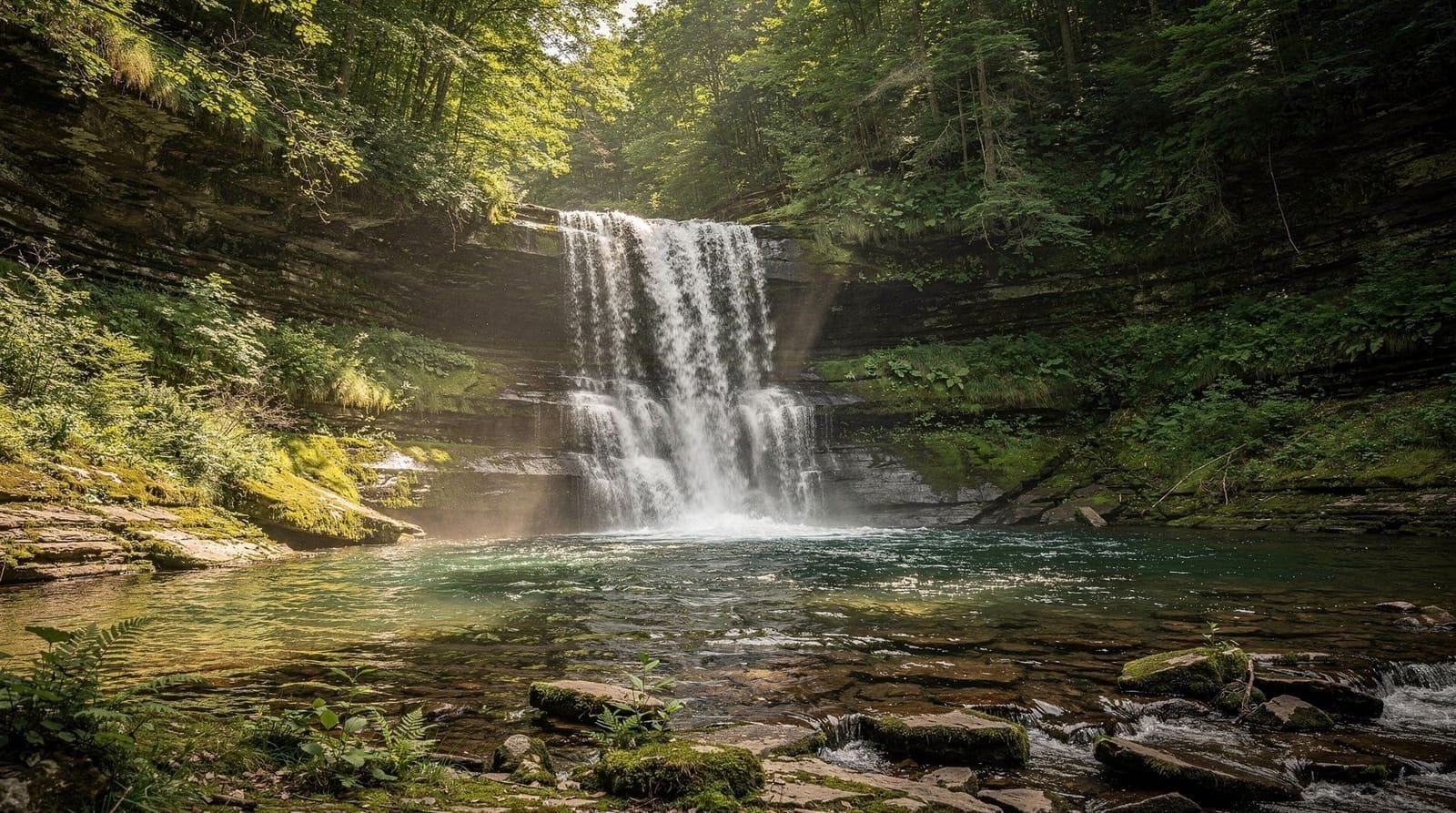
Chase waterfalls along the Niagara Escarpment (Hamilton has more than 100 within city limits), walk James Street North's gallery and restaurant strip, and hike Dundas Peak for the region's best lookout — Hamilton rewards visitors who've already done the obvious Toronto and Niagara list.
The waterfall capital nobody expects
Hamilton spent decades known mainly as a steel town — and the mills along the harbour are still there — but the city sitting on top of the Niagara Escarpment has quietly become one of the most interesting day-trip destinations near Toronto, with more than 100 waterfalls within its municipal limits (more than any other city in the world, a claim Hamilton’s tourism board is understandably proud of), a genuinely strong contemporary food and arts scene, and none of Niagara’s crowds. Hamilton sits 45 minutes west of Toronto by car or GO Train, making it one of the easiest and cheapest day trips from the city.
The city’s geography splits neatly into two levels: the “lower city,” where downtown, the harbour, and most of the historic industrial district sit, and the “mountain” — Hamiltonian shorthand for the escarpment brow overlooking the lower city, not an actual mountain, but treated with the same reverence locally. Most of the waterfalls and Dundas Peak sit up on or near the mountain, while downtown, James Street North, and the harbourfront occupy the lower level, connected by a handful of roads and the city’s distinctive public staircases.
| Where | Hamilton, Ontario, ~45 min west of Toronto |
| Cost | Mostly free (waterfalls, Bayfront Park); Dundurn Castle is paid entry |
| Getting there | GO Train (~1hr from Union Station) or car (~45 min) |
| Time needed | Full day for waterfalls plus James Street North |
| Best time | Spring for water volume, fall for foliage around the falls |
Chasing waterfalls along the escarpment
Hamilton’s waterfalls range from roadside curiosities to genuine hiking destinations. Webster’s Falls and Tews Falls, both within Spencer Gorge Conservation Area, are the two most photographed — Tews Falls, in particular, is nearly as tall as Niagara Falls itself, just with a fraction of the water volume and none of the crowds. Access to Spencer Gorge requires a reservation during peak season (weekends, May through October) due to capacity limits, so check ahead before driving out. Albion Falls, in the city’s east end, is a wider curtain falls with a viewing platform requiring no reservation and no entry fee.
Beyond these headline falls, Hamilton’s full waterfall count includes dozens of smaller, less-visited cascades scattered across the escarpment brow — Felker’s Falls, Devil’s Punch Bowl, and Buttermilk Falls among them, each with its own short trail and viewing platform. Most locals will tell you the “over 100 waterfalls” claim isn’t marketing exaggeration so much as an accurate reflection of how many distinct creeks cut through the escarpment as they drop from the upper city down toward Lake Ontario. For a route that strings together several of the best falls in a single day, see the Hamilton waterfalls day trip guide.
Dundas Peak
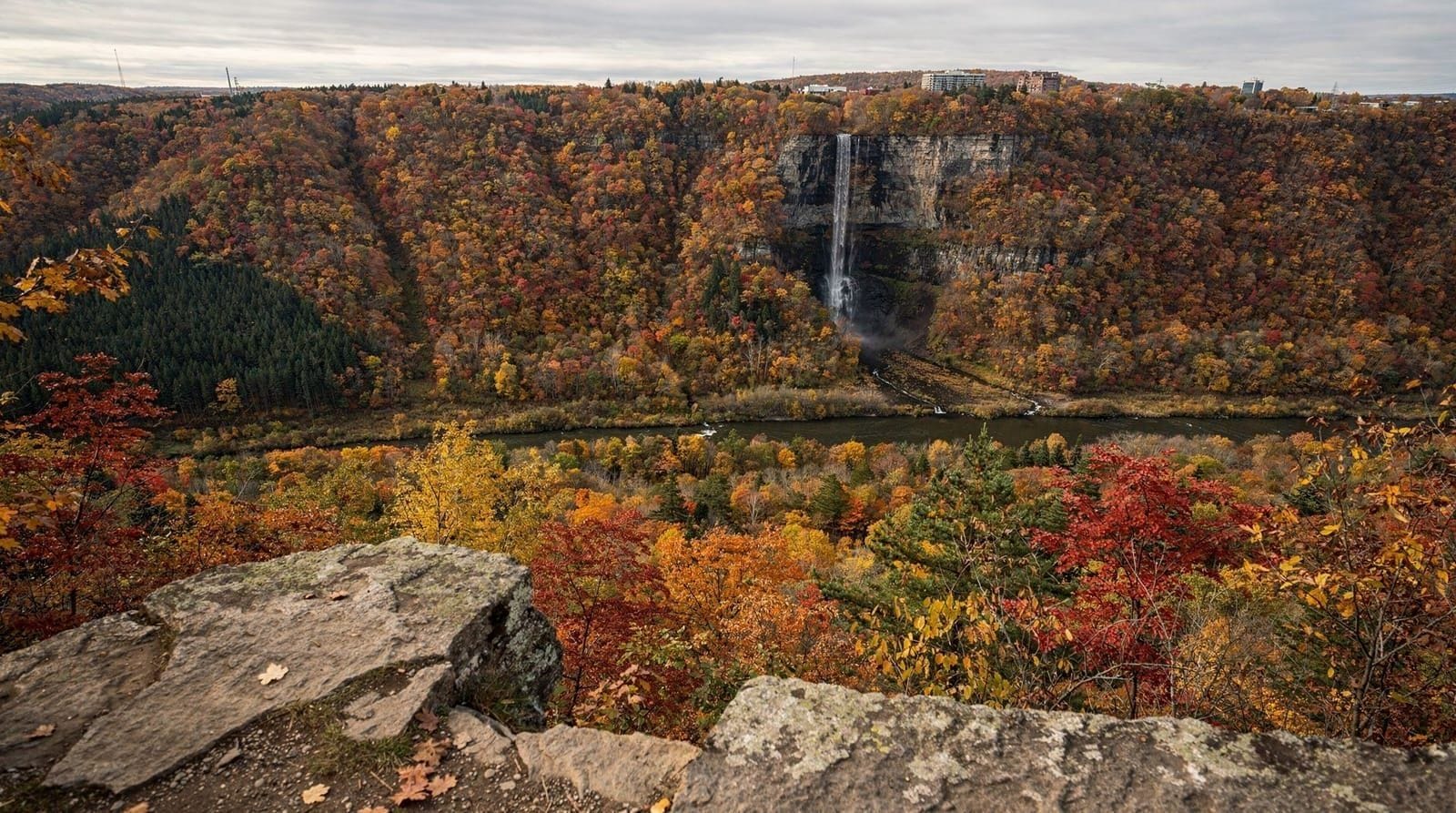
The single best view in the Hamilton area, Dundas Peak sits above Webster’s Falls with a sweeping lookout over the Dundas Valley and Cootes Paradise wetland below. It’s a short but genuinely steep hike from the Spencer Gorge parking area, and the payoff — especially at sunset or during fall foliage — rivals any paid viewpoint in the region for zero cost. See the Dundas Peak Hamilton hiking guide for trail details and the reservation system.
James Street North
Hamilton’s arts-and-food revival is most visible on James Street North, a strip that’s gone from largely vacant storefronts a couple of decades ago to a dense run of galleries, independent restaurants, and coffee shops. The Art Gallery of Hamilton, the city’s flagship art institution, sits at the strip’s southern end and punches well above its weight for a mid-sized city, with a strong Canadian historical and contemporary collection. Art Crawl, a monthly evening event on James Street North, turns the whole strip into an open-gallery walk with live music and vendors — worth timing a visit around if the schedule lines up.
Bayfront Park and the harbour
Hamilton’s industrial waterfront has a genuinely pleasant public side too — Bayfront Park and the adjoining waterfront trail offer lake views, picnic space, and a launch point for kayaking that most visitors don’t associate with a steel city. It’s a good lower-key alternative to the waterfall hikes if you want a flatter, easier afternoon.
Dundurn Castle
A restored 1830s Regency-style villa overlooking the harbour, Dundurn Castle offers guided tours through 40 period-furnished rooms that give a genuine sense of upper-class life in pre-Confederation Ontario. It’s a smaller-scale alternative to Toronto’s Casa Loma, with a shorter visit time and generally lighter crowds.
Comparing Hamilton to Toronto’s own green spaces
Hamilton’s waterfall-and-escarpment landscape offers a genuinely different kind of nature experience from anything within Toronto proper — closer in feel to a scaled-down version of what Muskoka or Algonquin Park offer further north, just far more accessible for a same-day round trip. If you’re deciding between a Hamilton waterfall day and a longer trip north, Hamilton wins on convenience and cost, while Muskoka and Algonquin offer considerably more scale and genuine wilderness.
The Royal Botanical Gardens
Straddling the Hamilton-Burlington border, the Royal Botanical Gardens is the largest botanical garden in Canada, encompassing formal cultivated gardens alongside extensive nature sanctuaries around Cootes Paradise marsh — the same wetland visible from the Dundas Peak lookout. The Rock Garden and Lilac Garden are the most photographed sections, particularly during peak bloom in late May, while the broader trail network through the nature sanctuaries offers a quieter, less manicured alternative for visitors more interested in birdwatching and wetland ecology than formal plantings.
The Hamilton Farmers’ Market and Locke Street
The Hamilton Farmers’ Market, one of Canada’s oldest continuously operating markets, occupies a large downtown building near City Hall and draws both a strong local following and a growing number of food-tourism visitors for its density of vendors under one roof. Locke Street South, a few kilometres west, offers a different kind of food experience — an independent, walkable strip of cafés, bakeries, and restaurants that’s developed its own loyal following distinct from the James Street North scene, worth a stop if you want a second, less crowded neighborhood to explore.
Hamilton’s escarpment stairs and urban hiking
Because Hamilton sits directly below the Niagara Escarpment, the city has built an unusual number of public staircases connecting the lower and upper parts of town — over 100 sets, collectively known locally as the “Hamilton stairs.” Several of the longer sets, particularly near the Chedoke Golf Course and the Escarpment Rail Trail, double as genuine urban hiking routes with views back over the harbour and lower city, a distinctly Hamilton way to get outdoor exercise without leaving city limits.
The food scene
Hamilton’s food scene has grown fast alongside its arts revival, with James Street North and the Locke Street strip both offering a dense concentration of independent restaurants, bakeries, and coffee roasters at prices noticeably lower than equivalent spots in downtown Toronto. It’s a legitimate reason on its own to make the trip, particularly for visitors who’ve already covered Toronto’s better-known food neighborhoods like Kensington Market or the Distillery District.
Hamilton’s live music and nightlife scene
Hamilton’s affordability relative to Toronto has drawn a genuine wave of musicians and artists over the past decade, and the city’s live music venues — many clustered around James Street North and the downtown core — reflect that with a denser, more consistently active gig scene than a city its size would typically support. It’s worth checking listings before a visit if live music is part of what you’re after, since Hamilton acts increasingly punch above their local-scene weight on the wider Ontario touring circuit.
Practical notes
Hamilton is best explored with a car, since the waterfalls and Dundas Peak sit outside the walkable downtown core and public transit between them is limited. GO Transit connects Hamilton directly to Toronto’s Union Station, making a car-free day trip workable if you’re sticking to downtown, James Street North, and Bayfront Park rather than the escarpment trails.
Spencer Gorge’s reservation system (for Webster’s Falls, Tews Falls, and Dundas Peak access) fills up on summer weekends — book ahead rather than risk being turned away. Hamilton’s downtown core has undergone real revitalization over the past decade, but as in most mid-sized Canadian cities, some pockets remain rougher around the edges than the polished James Street North strip — standard city awareness applies rather than any specific elevated concern.
A one-day route that covers the highlights
If you only have one day, a workable route starts early at Spencer Gorge for Webster’s Falls, Tews Falls, and the Dundas Peak lookout while the reservation window and morning light both work in your favour, then heads down to the lower city for lunch and a wander along James Street North in the early afternoon, finishing at Bayfront Park for a relaxed, flatter close to the day if you want it. This order front-loads the reservation-dependent stops and the steepest walking while you’re freshest, leaving the flatter, more flexible lower-city stops for later.
Hamilton for a rainy day
If the weather turns, the Art Gallery of Hamilton and Dundurn Castle both work as indoor alternatives to the outdoor waterfall hikes, and James Street North’s density of cafés and restaurants makes an easy indoor-heavy afternoon without feeling like a compromise. The Royal Botanical Gardens also has indoor conservatory space, though its outdoor gardens are obviously better experienced in dry weather.
Frequently asked questions about things to do in Hamilton
Is Hamilton worth visiting if I’ve already been to Niagara Falls?
Yes — Hamilton’s waterfalls are smaller but far less crowded, and the city offers an arts-and-food scene that Niagara doesn’t. The two make a complementary rather than redundant pairing.
Do I need a reservation to see Hamilton’s waterfalls?
For Webster’s Falls, Tews Falls, and Dundas Peak (all within Spencer Gorge Conservation Area), yes, during peak weekend season. Albion Falls and several other city waterfalls require no reservation.
Can I visit Hamilton without a car?
Downtown, James Street North, and Bayfront Park are reachable by GO Train and local transit. The waterfalls and Dundas Peak require a car or taxi, since they sit outside the urban core.
How long is the drive from Toronto to Hamilton?
About 45 minutes by car under normal traffic conditions, or roughly an hour by GO Train from Union Station.
What’s the best season to visit Hamilton’s waterfalls?
Spring (for higher water volume from snowmelt) and fall (for foliage around the falls) are the two strongest seasons; summer offers the most reliable weather but lower water flow.
Is Hamilton a good day trip for families?
Yes — Dundurn Castle, Bayfront Park, and several of the more accessible waterfalls (like Albion Falls) work well for families, though the steeper hiking trails around Dundas Peak are better suited to older kids and adults.
Is Hamilton cheaper to visit than Toronto?
Generally yes — accommodation, dining, and most paid attractions in Hamilton run noticeably lower than equivalent options in downtown Toronto, part of why it’s become a popular lower-cost alternative for both day trips and longer stays.
Can I combine Hamilton with a Niagara Falls trip?
Yes — Hamilton sits roughly on the way between Toronto and Niagara Falls, making it a practical stop to break up the drive or add as a second day if you’re spending a weekend in the region. See things to do in Niagara Falls for the fuller Niagara side of a combined itinerary.
What should I do in Hamilton if it’s raining?
The Art Gallery of Hamilton, Dundurn Castle, and James Street North’s cafés and restaurants all work well as indoor alternatives to the waterfall hikes, making a rainy day a reasonable time to visit rather than a wasted trip.