Toronto taxi vs Uber honest guide
Is it cheaper to take a taxi or Uber in Toronto?
For most point-to-point trips within the city, rideshare apps (Uber and Lyft both operate in Toronto) are usually cheaper than metered taxis outside of surge pricing periods, and the upfront price shown before booking removes uncertainty. Taxis have real advantages in specific situations though — cash payment, airport flat-rate pickup zones, and accessibility-equipped vehicles among them.
The short version, then the detail that actually matters
For most short-to-medium trips within downtown Toronto, rideshare apps generally beat metered taxis on price outside of surge periods, and the fixed upfront quote removes the guesswork of a running meter. But “generally cheaper” isn’t the same as “always the right choice” — several specific situations genuinely favour a taxi, and understanding which is which saves both money and hassle depending on your trip.
| Cheaper default | Rideshare (Uber/Lyft), outside surge periods |
| Better for airport | Taxi flat-rate zone at Pearson, or UP Express |
| Cash payment | Taxi only |
| Accessible vehicles | Taxi dispatch generally more reliable |
| Typical tip | 10-15% for both |
A quick decision framework
For most trips, default to checking a rideshare quote first, since it’s usually the cheaper option outside of surge windows and gives you a firm price before committing. Switch to a taxi specifically when you need cash payment, an accessible vehicle, a flat-rate airport transfer, or simply want to hail one on the street without setting up an app — situations where a taxi’s structural advantages outweigh rideshare’s typical price edge.
How Toronto taxi metering actually works
Toronto taxis run on a regulated meter combining a flag-drop base fare with a per-kilometre and per-minute rate, set by the city rather than by individual drivers or companies. This means, in theory, taxi pricing should be consistent and predictable — the reality is that traffic delays add real cost through the per-minute component, meaning a taxi trip during a bad traffic window can cost noticeably more than the same trip would at an off-peak time, even though the distance hasn’t changed. Drivers are required to run the meter for standard trips within the city; a flat rate offered instead of running the meter, outside of officially designated flat-rate zones (like the airport, covered below), is worth questioning before agreeing.
How rideshare pricing works — and where surge pricing bites
Uber and Lyft both operate in Toronto, quoting a fixed price before you confirm the ride based on real-time demand, distance, and traffic conditions. This upfront pricing is genuinely useful for budgeting, but it also means prices climb sharply during high-demand windows — major events letting out downtown, bad weather, or peak rush hour can trigger “surge” or “prime time” multipliers that make rideshare noticeably more expensive than a standard metered taxi covering the same distance. Checking the quoted price before confirming, and waiting a few minutes if it looks unusually high, sometimes avoids a temporary surge spike.
Pearson Airport: taxis have a real structural advantage
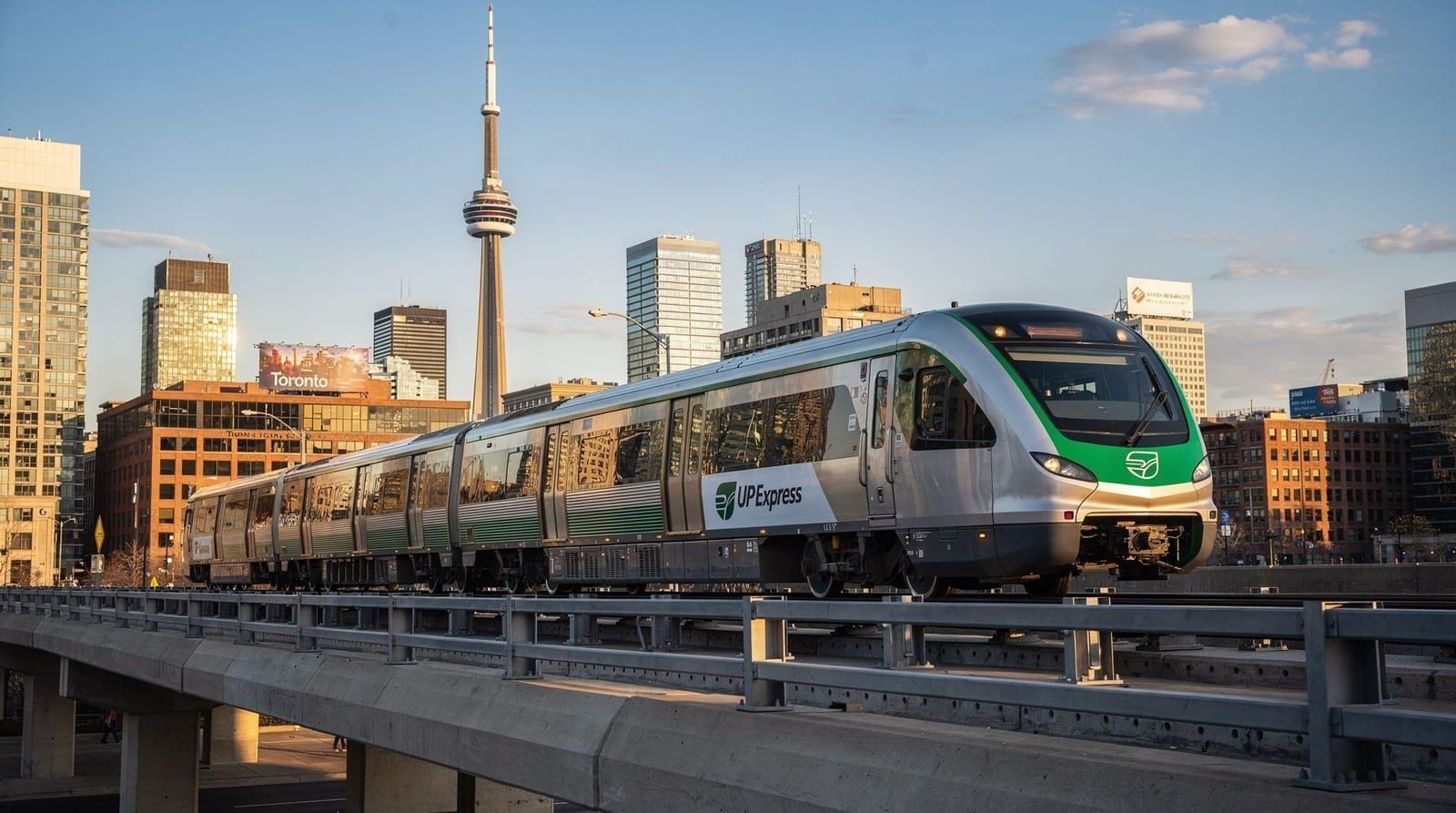
Pearson Airport (YYZ) operates an official flat-rate taxi zone for trips into the city, with posted rates by destination zone — a meaningful advantage over rideshare pickup, since rideshare pricing at the airport is dynamic and can spike substantially during busy arrival periods, particularly evenings and weekends. For predictable airport-to-downtown pricing specifically, a flat-rate airport taxi is often the more reliable choice, though the UP Express train (roughly CAD $12.35 one-way, 28 minutes to Union Station) is cheaper than either option if your final destination is near a UP Express stop. See Pearson Airport to downtown guide for the full comparison across all transport options.
When cash matters
Taxis in Toronto are required to accept cash as well as card payment; rideshare apps require a linked payment card and don’t offer a cash option within the app itself. Travelers without a card usable for international transactions, or who simply prefer not to link a card to an app, are better served by a taxi for this reason alone.
Billy Bishop Airport — a different calculation
Billy Bishop Airport (YTZ), on the Toronto Islands and only about 2 km from downtown, has a much shorter and cheaper taxi or rideshare trip into the city than Pearson, without the same official flat-rate zone structure — a standard metered taxi or rideshare quote generally applies, and the short distance means the total cost difference between the two options matters less here than it does for the longer Pearson run. See the Pearson vs Billy Bishop airport guide if you’re choosing which airport to fly into in the first place.
How taxi and rideshare pricing compares to just taking the TTC
For anyone weighing cost over convenience, the TTC subway, streetcar, and bus network is dramatically cheaper than either taxi or rideshare for point-to-point trips within the city — a single fare runs a fraction of even a short rideshare quote. The trade-off is time and directness: transit requires walking to a station or stop and possibly a transfer, while a taxi or rideshare goes door to door. For short downtown hops during off-peak hours, transit is often genuinely competitive on time as well as price; for late-night trips, luggage-heavy airport runs, or anywhere transit doesn’t reach directly, taxi or rideshare remains the more practical choice.
Renting a car instead: when it doesn’t make sense
Visitors comparing taxi and rideshare costs sometimes wonder whether renting a car would simply be cheaper overall. For a Toronto-only stay, it almost never is — downtown parking runs a genuine daily cost on top of the rental itself, and Toronto’s one-way streets and construction zones add friction for unfamiliar drivers that neither taxis nor rideshare require you to deal with. A rental car becomes worth considering only once day trips outside the city (Niagara, Muskoka) enter the picture, not for getting around Toronto itself.
Toronto street hailing versus app booking
Toronto taxis can still be hailed directly on the street in addition to being booked via an app or phone dispatch, an option rideshare doesn’t offer in the same way. Street hailing is most useful downtown where taxi density is high; in outer neighbourhoods, booking via app or phone is generally more reliable than waiting for a passing cab.
Accessibility
Toronto’s taxi fleet includes wheelchair-accessible vehicles that can be specifically requested, with dispatch systems designed around this need. Rideshare accessibility options exist but availability and wait times vary more than the dedicated taxi accessible-vehicle dispatch system, making taxis generally the more reliable choice for travelers with mobility equipment needs.
Late-night and safety considerations
Both taxis and rideshare are broadly safe in Toronto, a comparatively low-crime major city, but each has a slightly different safety profile: taxis are licensed and regulated with visible plate and driver ID displayed, while rideshare apps provide driver name, photo, and vehicle details in advance along with trip-sharing features that let you send your live location to someone else. Neither is meaningfully “safer” than the other in Toronto specifically; personal preference and which safety features matter more to you is the more relevant deciding factor.
Getting to and from the airport with luggage
Both taxis and standard rideshare vehicles accommodate typical checked-luggage volumes for one or two travelers without issue, but larger groups or extra bags may need to specifically request a larger vehicle option through the rideshare app (both Uber and Lyft offer XL or van categories) since a standard sedan may not have room. Taxis dispatched for airport runs are generally sized appropriately by default given how common the route is, but confirming vehicle size when booking ahead for a larger group avoids an awkward curbside surprise.
Tipping norms
Both taxis and rideshare drivers in Toronto generally expect a tip in the 10-15% range, similar to broader Canadian tipping norms, though it’s not mandatory in the way restaurant tipping is treated. Rideshare apps typically prompt for a tip after the ride; taxi tipping is generally handled the same way as elsewhere in Canada, rounding up or adding roughly 10-15%.
The honest bottom line
For most trips within the city outside of surge pricing windows, rideshare is the cheaper and more predictable default. For airport transfers specifically, comparing the flat-rate taxi zone against current rideshare pricing before choosing is worth the extra minute, since which one wins depends on time of day and demand. For cash payments, accessibility needs, or simply flagging a cab on the street without app setup, a taxi remains the more practical choice regardless of price.
For the broader picture of getting around downtown without a car, see the downtown Toronto walking guide, and for how transportation pricing fits into avoiding overpriced tourist-zone traps generally, see the Toronto tourist traps guide.
Frequently asked questions about taxis and Uber in Toronto
Is Uber cheaper than a taxi in Toronto?
Generally yes for standard trips outside of surge pricing periods, since Uber’s upfront pricing tends to undercut a metered taxi covering the same distance. During surge windows (major events, bad weather, peak rush hour), a metered taxi can end up cheaper.
Do Toronto taxis accept cash?
Yes, Toronto taxis are required to accept cash in addition to card payment, unlike rideshare apps, which require a linked payment card.
Is it cheaper to take a taxi or Uber from Pearson Airport?
It varies by time and demand. Pearson operates an official flat-rate taxi zone with predictable posted pricing, while rideshare pricing at the airport is dynamic and can spike during busy periods. Comparing both before choosing, or using the UP Express train if convenient, is worth the extra step.
Are wheelchair-accessible vehicles available for taxis and rideshare in Toronto?
Toronto’s taxi fleet includes accessible vehicles that can be specifically requested through dispatch, generally with more reliable availability than rideshare accessibility options, which vary more in wait time.
How much should I tip a taxi or Uber driver in Toronto?
Roughly 10-15% is standard for both, in line with broader Canadian tipping norms, though it isn’t strictly mandatory the way restaurant tipping is treated.
Is it safe to take a taxi or Uber alone at night in Toronto?
Both are broadly safe in Toronto, a comparatively low-crime major city. Rideshare apps offer trip-sharing and driver details in advance, while taxis are licensed and clearly marked — the choice between them for safety is mostly personal preference rather than one being objectively safer than the other.
Is it cheaper to get from Billy Bishop Airport to downtown by taxi or Uber?
The trip is short (about 2 km) and doesn’t use the same flat-rate zone structure as Pearson, so a standard metered taxi or rideshare quote applies. The cost difference between the two options is smaller here than for the longer Pearson run given the short distance involved.
Can I hail a taxi on the street in Toronto?
Yes, particularly downtown where taxi density is high. In outer neighbourhoods, booking via app or phone dispatch is generally more reliable than waiting for a passing cab.
Is it cheaper to just take the TTC instead of a taxi or Uber?
Almost always, for point-to-point trips within the city — a single TTC fare is a fraction of even a short rideshare quote. The trade-off is time and directness, since transit requires walking to a stop and possibly transferring, while taxi or rideshare goes door to door.