How Canadians really feel about tourists
The politeness stereotype is mostly true, but it’s more specific than that
“Canadians are polite” is one of the few national stereotypes that holds up reasonably well in daily life, but it’s worth unpacking what that politeness actually looks like in a city like Toronto, because it’s easy to misread. It’s not effusive warmth — Torontonians aren’t going to strike up long conversations with strangers the way some cultures do — it’s closer to a baseline social contract: hold the door, apologize if you bump into someone even when it’s their fault, don’t jump queues, keep noise down on transit. Visitors who match that low-key, considerate register tend to have noticeably smoother interactions than visitors who don’t.
| Tipping norm | 15-20% at sit-down restaurants, expected not optional |
| Small talk | Common but shorter/lighter than typical American small talk |
| TTC etiquette | Stand right on escalators; let riders off before boarding |
| Backlash level | None organized, unlike parts of over-touristed Europe |
| Best neighborhoods to see it firsthand | Kensington Market, Chinatown, The Beaches |
What locals actually appreciate from visitors
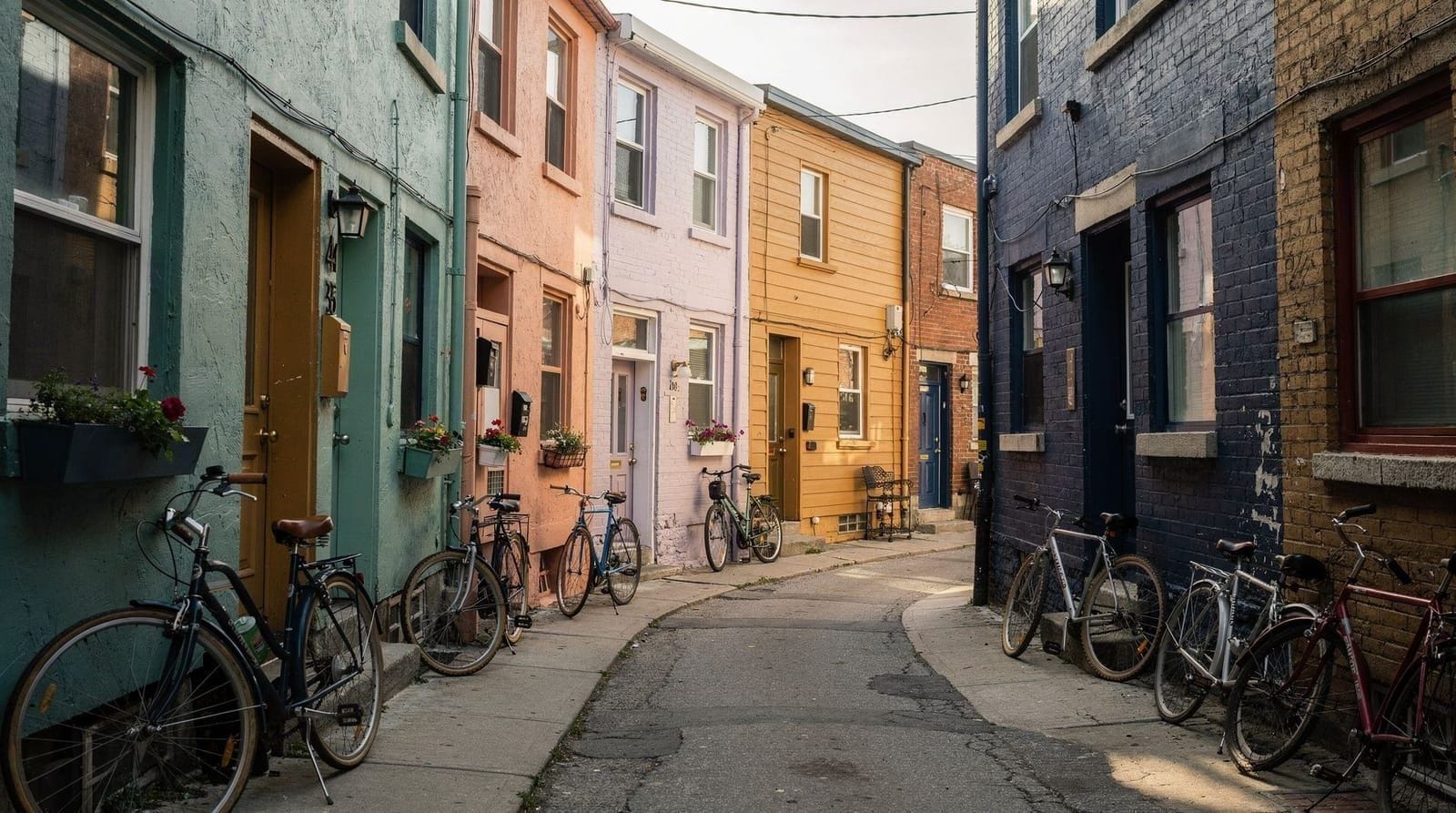
Torontonians generally don’t mind tourists — the city’s economy depends on visitor spending, and its identity is built partly around being an immigrant and visitor-friendly place. What draws quiet irritation is specific behavior, not the fact of being a tourist: blocking subway doors while checking a phone, walking four-abreast on a narrow Kensington Market sidewalk, or treating restaurant staff dismissively. None of this is unique to Toronto, but Toronto’s density means these frictions surface more visibly than in a sprawling car-dependent city.
The multicultural reality behind the “politeness” stereotype
What’s more distinctive about Toronto than pure politeness is how genuinely diverse the city is — over half of Toronto’s residents were born outside Canada, and neighborhoods like Chinatown and Kensington Market reflect decades of successive immigrant communities rather than a single “Canadian” culture on display for visitors. This means there’s no single monolithic “how Canadians feel about tourists” — a shop owner in Chinatown whose family immigrated in the 1980s and a downtown office worker whose family has been in Toronto for five generations may have genuinely different relationships to the idea of tourism, even if both are broadly welcoming.
A guided walk through these neighborhoods with someone who can explain that layered history adds a lot more than wandering with a generic map:
Hidden Toronto: Kensington Market & Chinatown walkSmall talk and tipping norms visitors should know
Tipping in Toronto follows North American norms closely — 15-20% at sit-down restaurants is standard, and it’s genuinely expected rather than optional the way it might be framed in some countries. Casual small talk with service staff and strangers in line is common and generally welcome, though it stays lighter and shorter than, say, typical American small talk — a comment about weather or a quick friendly exchange rather than an extended conversation. Overly loud conversation in enclosed public spaces (the subway, small restaurants) tends to draw more attention in Toronto than in some cities, simply because the baseline noise level is lower.
Where the “aggressively polite” stereotype breaks down
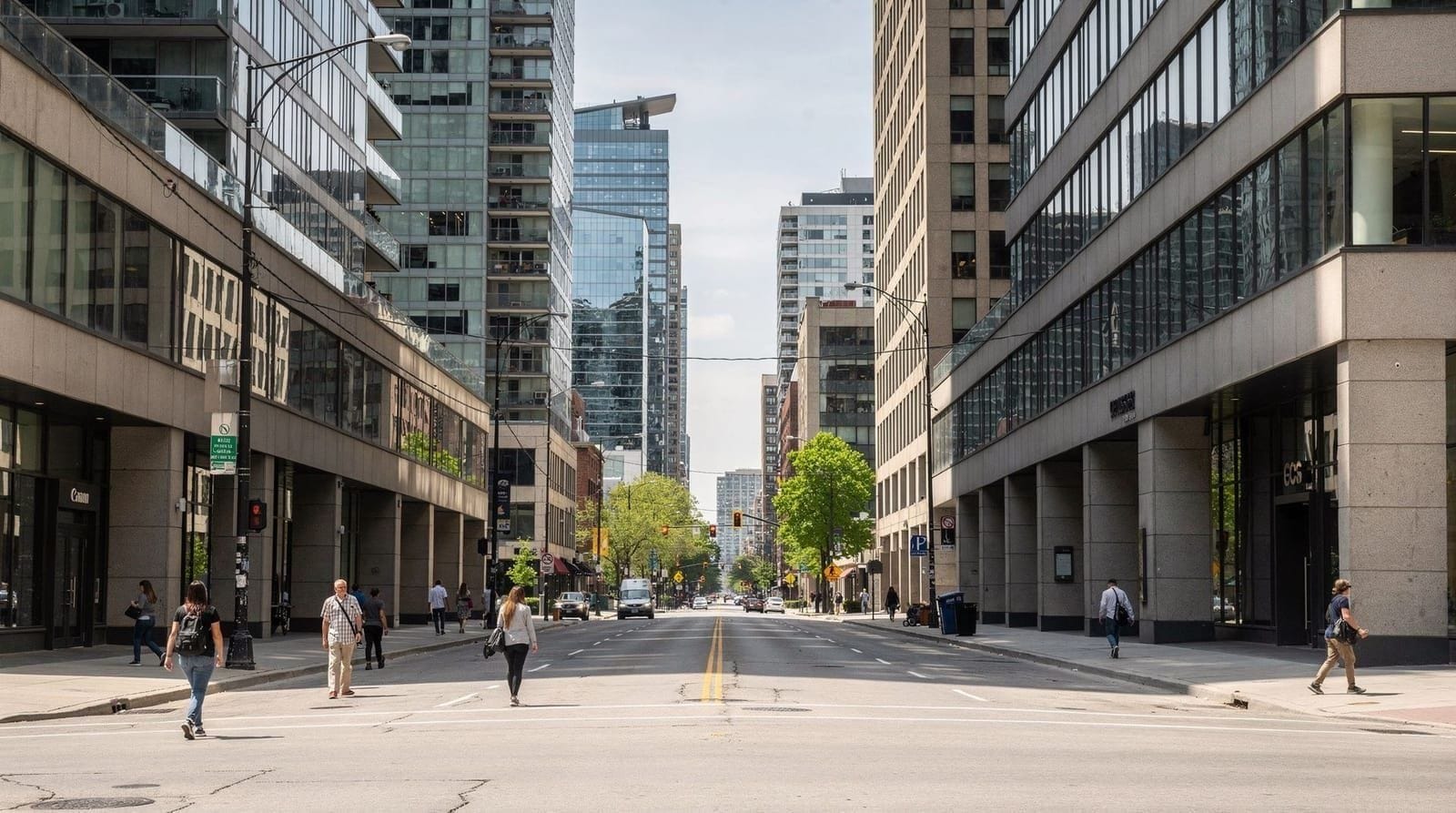
Toronto is a genuinely fast-paced, busy city, and downtown pedestrian and driving culture during rush hour can feel less patient than the polite-Canadian stereotype suggests — jaywalking is common, subway platforms get pushy during peak commute times, and drivers aren’t especially forgiving of hesitant tourists at intersections. The stereotype holds better in one-on-one, lower-stakes interactions (asking for directions, ordering food) than in high-density, high-stress moments (rush hour transit, downtown traffic).
Hidden Toronto city walking tourHow to be a genuinely welcome visitor
Basic effort goes a long way: learn a couple of TTC etiquette basics (stand right on escalators, let people off the subway before boarding), tip appropriately, and treat neighborhood-specific businesses in areas like Kensington Market or Chinatown as someone’s livelihood rather than a photo backdrop. None of this is especially different from good travel etiquette anywhere, but Toronto’s mix of genuine friendliness and fast urban pace means small courtesies register more than they might in a slower-paced destination.
How this plays out differently across generations
Attitudes toward tourism in Toronto aren’t uniform across age groups either. Older, longer-established residents in neighborhoods that have seen the most tourism-driven change — parts of the Distillery District area and Kensington Market among them — sometimes express more ambivalence about rising visitor numbers and the commercial pressure that comes with them, tied to genuine concerns about affordability and neighborhood character rather than tourists themselves.
Younger residents and those working directly in hospitality tend to be more uniformly positive, since tourism dollars are more directly tied to their livelihoods. Neither view is wrong; both are worth understanding if you want a fuller picture than a single “Canadians are friendly” headline gives you.
Comparing Toronto’s tourist reception to other major cities
Visitors who’ve spent time in cities currently experiencing visible tourism backlash — parts of Southern Europe, for instance, where anti-tourist graffiti and protests have made international news — often remark on how different Toronto’s atmosphere feels by comparison. There’s no equivalent organized pushback here, and service industry interactions read as genuinely welcoming rather than transactional or resigned. Part of this comes down to scale: Toronto’s tourism numbers, while significant, don’t overwhelm a metro area of six million people the way visitor volume can overwhelm a much smaller historic European city center.
What first-generation immigrant business owners have told us
In reporting on neighborhoods like Chinatown and Kensington Market, a recurring theme from business owners — many of them first- or second-generation immigrants themselves — is that they view respectful tourist curiosity about their food and culture positively, provided it comes with genuine interest rather than treating a family-run shop as a photo prop. Asking questions, actually trying unfamiliar dishes, and supporting these businesses with purchases rather than just photos are the small things repeatedly mentioned as the difference between a welcome visitor and simply foot traffic.
The bigger picture: Toronto wants visitors, on these terms
Toronto’s tourism economy, hospitality sector, and cultural institutions all depend meaningfully on visitor spending, and the general civic attitude toward tourism is positive rather than resentful — unlike some heavily over-touristed European destinations currently pushing back against visitor volume. The honest read: Torontonians are, on balance, glad you’re here, provided you treat the city (and its many distinct communities) with the same basic consideration you’d want shown to your own neighborhood.
A note on Canada-US comparisons specifically
American visitors in particular sometimes arrive expecting Toronto to feel like a slightly quieter, more polite version of a US city, and mostly that expectation holds up — but it’s worth knowing Canadians can be genuinely sensitive to being lumped in with American culture or assumed to be interchangeable with it. Small things — knowing Toronto uses Celsius and the metric system, that Canadian spelling conventions differ slightly (colour, centre), or simply not assuming Canadian and American perspectives on any given topic are identical — go further than expected in signaling genuine interest rather than treating the visit as an extension of a US trip.
What this means for planning your interactions
None of this should read as a warning to be overly cautious — the practical takeaway is simpler than it sounds. Approach service staff, shop owners, and strangers with the same baseline courtesy you’d want shown to you, don’t assume Toronto is culturally identical to wherever you’re visiting from, and be genuinely curious rather than performatively so about the neighborhoods and communities you’re moving through. That’s a low bar, and most visitors clear it without thinking too hard about it — which is exactly why Toronto’s tourist-visitor relationship stays as positive as it does.
A brief comparative note on regional Ontario attitudes
Attitudes outside Toronto proper, in day-trip destinations like Niagara Falls or smaller towns, tend to be even more visibly welcoming, partly because smaller local economies are more directly and visibly dependent on tourist spending. Don’t assume Toronto’s slightly more reserved big-city demeanor extends uniformly across the wider Ontario region — smaller towns often greet visitors with noticeably more overt warmth than the pace of a major city naturally allows for.
How this plays out in specific neighborhoods
The reception you get varies somewhat by neighborhood, not just by individual. In The Beaches, a residential, family-oriented area popular with day-tripping locals as much as tourists, visitors blend in fairly seamlessly since it doesn’t read as a purely tourist zone the way some downtown spots do. Around Yorkville, a more upscale, boutique-heavy area, service interactions stay polished and professional regardless of visitor volume, in keeping with the neighborhood’s overall register. Both are useful contrasts to Kensington Market and Chinatown’s more layered, immigrant-community-driven dynamic described above.
Language differences worth knowing before you arrive
Beyond spelling conventions, a handful of everyday terms differ enough to cause small mix-ups: a “double-double” is a coffee order (two cream, two sugar), “loonie” and “toonie” are the one- and two-dollar coins, and “washroom” rather than “restroom” or “bathroom” is the standard term in public settings. None of these cause real confusion, but using the local term rather than a home-country equivalent tends to land as a small, appreciated signal that you’ve paid attention rather than arrived on autopilot.
What to do if you get something wrong
Minor missteps — standing on the wrong side of an escalator, not realizing a specific queue etiquette, mispronouncing a neighborhood name — are treated with more patience than visitors often expect, provided the response to a gentle correction is good-natured rather than defensive. A quick, genuine “sorry, didn’t realize” goes a long way in a culture where the correction itself is often delivered more apologetically than the mistake warranted in the first place.
Frequently asked questions about Canadian attitudes toward tourists
Are Canadians really as polite as the stereotype suggests?
Broadly yes, in low-stakes daily interactions — but it’s a specific, understated politeness (holding doors, queuing properly) rather than effusive warmth, and it can wear thinner during high-stress moments like rush hour.
Is it rude to ask locals for directions in Toronto?
No, this is completely normal and generally welcomed. Torontonians are generally happy to help with directions or recommendations if approached politely.
What’s considered rude behavior for tourists in Toronto?
Blocking subway doors, walking slowly in large groups on narrow sidewalks in busy neighborhoods, being dismissive toward service staff, and not tipping appropriately at restaurants.
Is tipping expected in Toronto?
Yes — 15-20% at sit-down restaurants is standard and expected, following North American norms rather than being optional.
Does Toronto have any tourism backlash or anti-tourist sentiment?
Not in a significant, organized way, unlike some European cities currently experiencing visitor-volume backlash. Toronto’s economy and civic identity are generally welcoming toward tourism.