Kensington Market food guide
Kensington Market International Food Tour
What should I eat in Kensington Market?
Jamaican beef patties from the counter windows on Baldwin and Augusta, Baja-style fish tacos from Seven Lives, and Caribbean-Italian fusion from Rasta Pasta cover the market's food identity best. Budget CAD $15-25 per person for a grazing lunch across three or four stops.
A food scene built on layered immigration, not curation
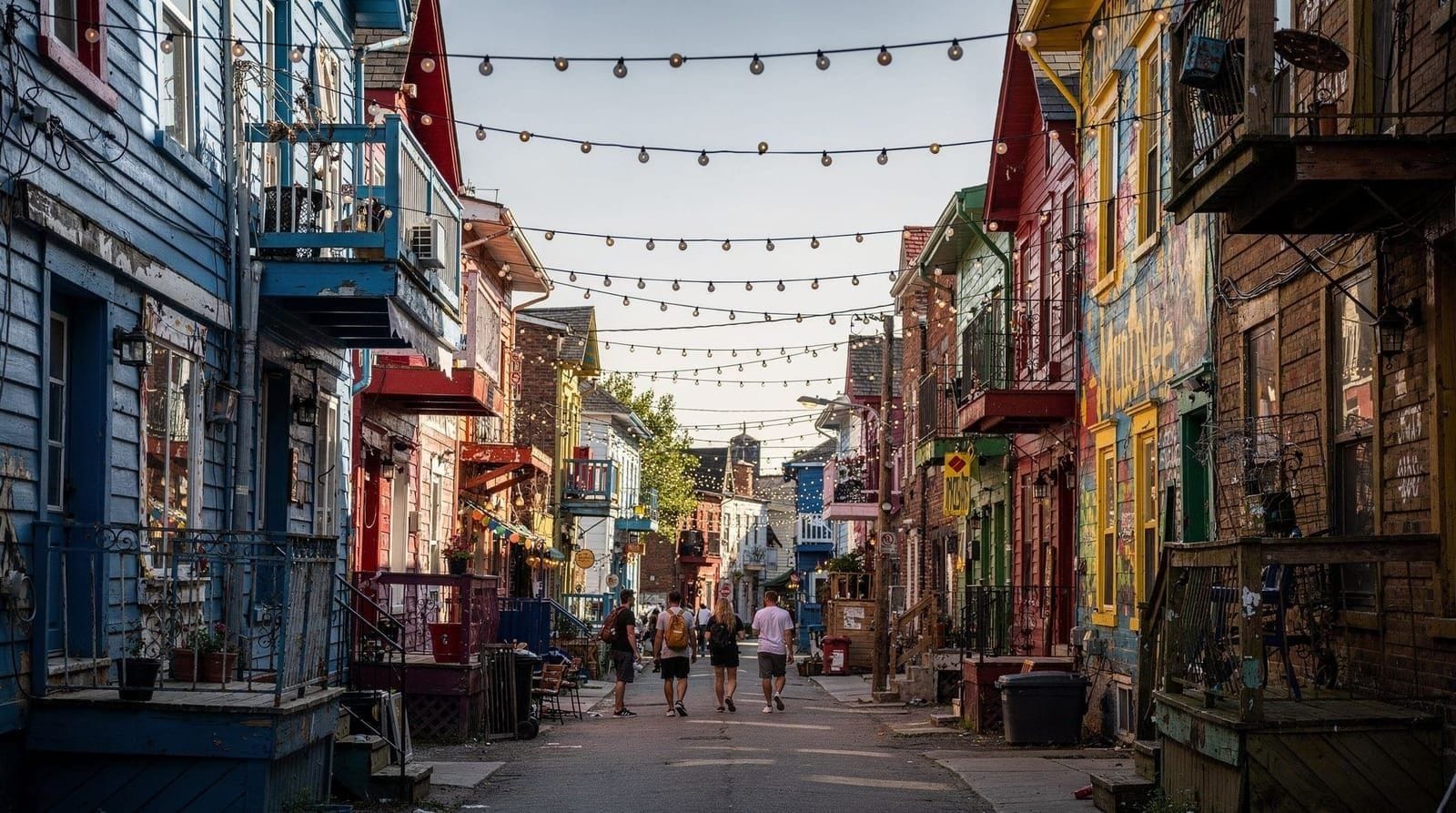
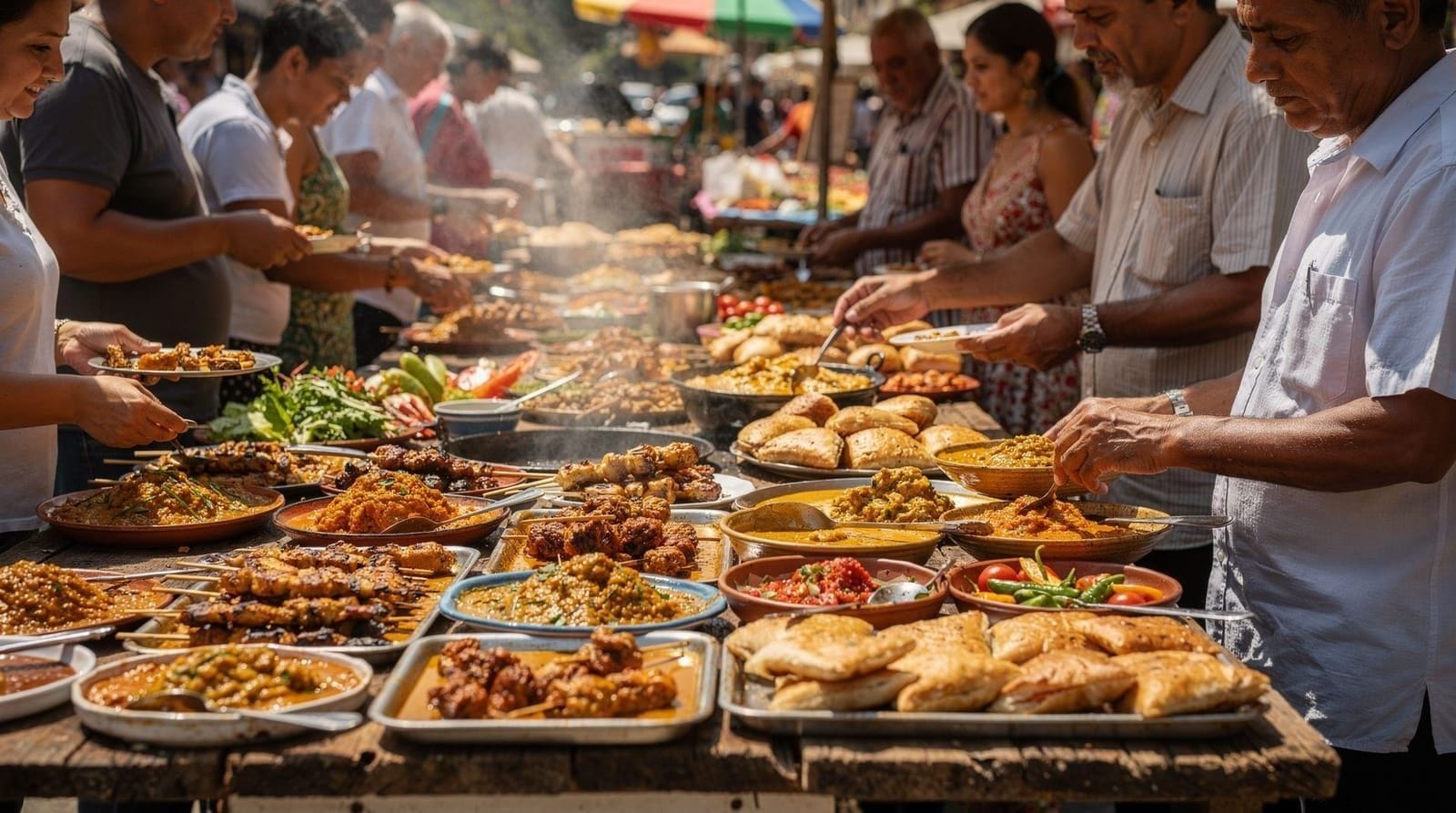
Kensington Market’s food identity reflects the neighborhood’s history as successive waves of immigrant communities — Jewish, Portuguese, Caribbean, Latin American, Chinese — settled here and left their mark on the storefronts without any single group displacing the last entirely. That layering is why a single block can hold a Jamaican patty window next to a Portuguese fishmonger next to a Mexican taqueria, and why the market’s food scene reads as genuinely organic rather than assembled for visitors. It’s built for grazing across multiple small stops rather than one sit-down meal, and budgeting CAD $15-25 per person across three or four stalls is the realistic way to experience it.
| Where | Kensington Market, downtown Toronto, bordering Chinatown |
| Cost | Around CAD $15-25 for a grazing lunch across 3-4 stalls |
| Best time | Weekday lunch for calm; last Sunday (May-Oct) for Pedestrian Sunday |
| Getting there | Streetcar or a 15-20 minute walk from downtown; walkable once there |
| Bring | Cash for smaller stalls; appetite for grazing, not a sit-down meal |
The essential stops
Patty counters on Baldwin Street and Augusta Avenue sell Jamaican beef and vegetable patties (flaky, curry-colored pastry filled with spiced meat or vegetables) for CAD $4-6 each — the fastest, cheapest, and arguably most essential bite in the market. Seven Lives Tacos, a tiny stand-up counter on Augusta Avenue open since 2010, serves Baja-style fish tacos that have built a genuine cult following; expect a short line most afternoons.
Rasta Pasta, tucked on Nassau Street, does Caribbean-Italian fusion — jerk chicken pasta is the dish to order — in a small, brightly painted space that captures the market’s eclectic spirit as well as any single restaurant. Wanda’s Pie in the Sky has sold butter tarts and baked goods to the neighborhood since the 1990s and remains a reliable, unpretentious sweet stop.
Casa Acoreana, a decades-old Portuguese shop on Baldwin Street, sells coffee, dried fruit, nuts, and spices by weight out of burlap sacks — not a meal, but worth a stop for the smell alone and a genuinely good coffee bean souvenir. Grasslands is one of Toronto’s better sit-down vegan restaurants, useful if you want a proper meal rather than a graze-and-go stop.
Guided vs. self-directed
If you’d rather have the neighborhood’s food history explained alongside the tastings than piece it together yourself, the Kensington Market international food tour walks a small group through five or six vendors with a guide who covers the market’s immigration history block by block — useful if your time in Toronto is limited and you want context along with the food. Self-directed visits cost less and let you linger at whichever stall you like best, a genuine trade-off worth weighing against your schedule and budget.
Timing your visit
Weekday lunchtime keeps every vendor open without the heaviest crowds. Saturdays are the busiest single day, and if your trip dates allow, the last Sunday of the month from May through October brings Pedestrian Sunday — the market closes its core streets to cars, buskers and DJs take over intersections, and the food stalls see their liveliest, most festival-like crowd of the month. It’s a genuinely different, better version of the market than a typical weekday, worth checking your dates against before booking a trip if flexibility allows.
Dietary considerations
Kensington Market handles vegetarian and vegan diets better than most Toronto neighborhoods — Grasslands anchors a genuinely strong plant-based dining option, and several juice bars and produce stalls cater specifically to that market. Halal options exist at some vendors but formal certification is inconsistent; ask directly rather than assuming. The market’s Jewish garment-district roots left a few kosher-adjacent bakeries, though the food identity has shifted heavily toward Caribbean, Latin American, and Portuguese influences over the past several decades.
Pairing Kensington Market with the rest of your food day
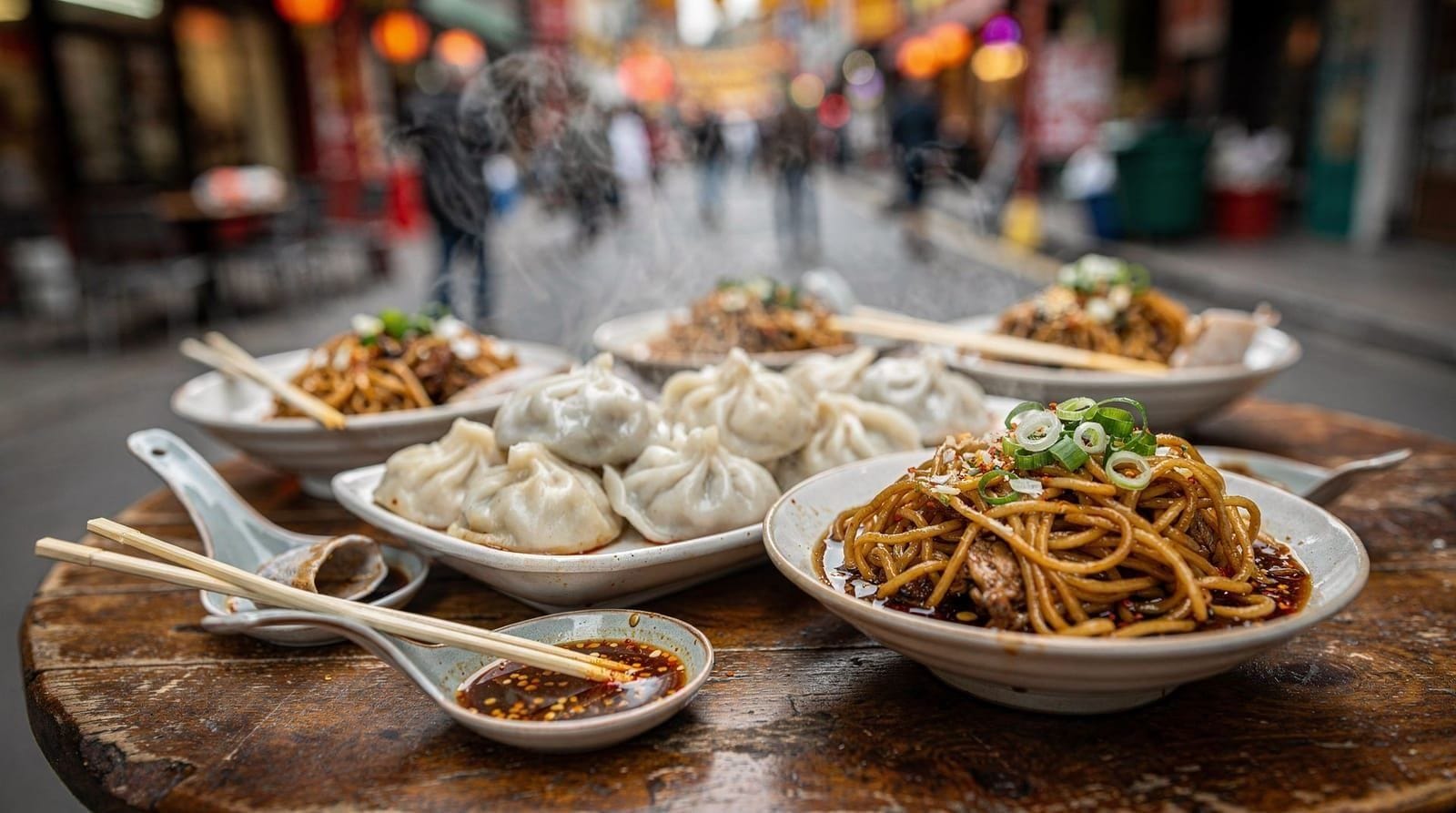
Kensington Market borders Chinatown along Spadina Avenue and Baldwin Street, and most visitors combine the two into a single afternoon — our Chinatown Toronto food guide covers that adjoining neighborhood’s food scene in the same vendor-by-vendor detail. If you’re building a broader downtown food day, St. Lawrence Market and the Distillery District sit on the opposite side of downtown, roughly a 25-30 minute walk or a short streetcar ride away, and work better as a separate day given the distance and the amount of eating involved in doing either neighborhood justice.
How a food crawl here compares to a guided tour
Self-directed grazing suits visitors who already know roughly what Kensington’s food scene looks like and want to set their own pace between the patty counters, Seven Lives, and Rasta Pasta. The Kensington Market international food tour trades that flexibility for context — a guide walking you through the same immigration history that shaped the market block by block, useful if your Toronto time is tight and you’d rather not research vendors yourself.
Neither approach is objectively better; it comes down to whether you value narration or pace more on a single food afternoon. For a broader look at how Toronto’s food-tour options compare across neighborhoods, our Toronto food tours guide covers the full lineup.
Seasonal food events in Kensington Market
Kensington Market’s food scene shifts with the seasons and the neighborhood’s informal event calendar. Summer sees the most vendors operating at full capacity, with several stalls extending hours to catch evening foot traffic and outdoor seating appearing outside cafés that stay indoor-only in colder months. Pedestrian Sundays, running May through October, are as much a food event as a street festival — vendors often set up temporary outdoor stalls in addition to their regular storefronts on these days, widening the available options beyond a typical weekday visit.
Winter thins out the outdoor produce stalls on Baldwin Street considerably, though the market’s indoor and semi-indoor food vendors — patty counters, Casa Acoreana, Wanda’s Pie in the Sky — operate year-round with minimal seasonal disruption, making Kensington a reasonable food destination even on a cold Toronto day when some other outdoor-heavy attractions lose their appeal.
How Kensington Market’s food prices compare citywide
Kensington Market remains one of the more affordable food destinations in downtown Toronto specifically because its vendor base skews toward small, independent, counter-service operations rather than full-service restaurants with the overhead that comes with table service and a larger footprint.
A CAD $15-25 grazing lunch here compares favorably to a CAD $35-55 sit-down dinner in the Distillery District or a CAD $18-30 brunch elsewhere in the city, making Kensington a practical choice for travelers managing a tighter food budget without sacrificing quality or variety. That affordability, combined with the neighborhood’s walkability and lack of reservations culture, is part of why it remains a favorite for a spontaneous, unplanned food afternoon rather than one that requires advance booking.
Practical notes
- Cash: Most vendors take cards now, but a handful of produce stalls and the smaller counters are cash-preferred — carry CAD $20-30 just in case.
- Seating: Limited — Kensington Market is built for walking and eating on the go rather than sitting down, aside from Grasslands and a few small cafés with a handful of tables.
- Hours: Most food stalls open by 10-11am and stay open into the evening; Wanda’s Pie in the Sky and some daytime-only stalls close earlier, around 6pm.
- Weather: Many storefronts are open-air, so a winter visit is colder than a typical indoor food crawl — dress accordingly between November and March.
The market’s food scene versus the rest of downtown
Kensington Market’s food identity is distinct enough from the rest of downtown Toronto’s food scene that it’s worth understanding what makes it different before you visit, particularly if you’ve already explored St. Lawrence Market or the Distillery District.
Where those two neighborhoods lean toward a curated, more formal food experience — permanent vendor stalls in a historic market building, or sit-down restaurants in a pedestrian-only heritage district — Kensington’s food scene grew organically out of successive immigrant communities setting up shop in whatever storefront was available at the time, with far less top-down planning involved. That history is why the market can feel scrappier and less polished than its downtown counterparts, and why prices, on average, run lower here than at either St. Lawrence Market or the Distillery District for a comparable amount of food.
Frequently asked questions about Kensington Market food
What’s the most iconic thing to eat in Kensington Market?
The Jamaican beef patty from one of the counter windows on Baldwin or Augusta — cheap, fast, and as close to a signature dish as the market has.
How much should I budget for a Kensington Market food crawl?
CAD $15-25 per person for a grazing lunch across three or four stalls, rising to CAD $30-40 if you add a sit-down meal at Grasslands or Rasta Pasta.
Is Kensington Market food good for kids?
Yes — the grazing format works well for kids who won’t sit through a long restaurant meal, and patties and tacos are generally kid-friendly. Our things to do with kids in Toronto guide has more on family-friendly options citywide.
Can I find gluten-free options in Kensington Market?
Some — Seven Lives and a few other counters can adapt orders, but gluten-free isn’t a market-wide standard the way vegan options are at Grasslands. Ask directly at each stall.
Is Kensington Market food better than Chinatown food?
They’re different rather than better or worse — Kensington leans Caribbean, Portuguese, and Latin American; Chinatown, its neighboring district, leans Chinese and broader East and Southeast Asian. Most food-focused visitors do both.
What’s the best day to visit Kensington Market for food?
A weekday for the calmest experience with full vendor availability, or the last Sunday of the month from May through October for Pedestrian Sunday’s street-festival energy if your dates line up.
How does Kensington Market’s food compare to Little Italy’s?
They’re built differently — Kensington is a graze-and-go market of counters and stalls, while Little Italy is a sit-down trattoria and gelato strip along College Street. Combining both in one day is possible but heavily food-focused given the strengths of each.
Top experiences
Bookable activities with verified prices and instant confirmation on GetYourGuide.