Guide to The Beaches
What is The Beaches neighborhood in Toronto?
The Beaches is a residential lakeside neighborhood in Toronto's east end, built around a 3-kilometer boardwalk along Lake Ontario with sandy beaches, tree-lined streets, and a small-town main strip on Queen Street East — a quieter, more local alternative to downtown's tourist core.
A different pace than downtown
Most first-time Toronto itineraries never make it east of the Distillery District, which means most visitors never see The Beaches — and that’s the neighborhood’s whole appeal. It’s residential, unhurried, and built around a genuinely long stretch of Lake Ontario shoreline rather than a single attraction. Locals come here to walk the boardwalk, not to check a box, and that’s the mode you should be in if you decide to visit.
| Where | East end, along Lake Ontario from Woodbine to Victoria Park Avenue |
| Cost | Free to walk; food and shopping comparable to or slightly below downtown |
| Time needed | Half a day minimum, a full day in summer |
| Getting there | 20–25 min by 501 Queen streetcar or car from downtown |
| Best time | June–August for swimming; spring/fall for a quieter walk |
The neighborhood runs roughly from Woodbine Avenue to Victoria Park Avenue along the lake, with Queen Street East as its commercial spine — a strip of independent cafés, ice cream shops, boutiques, and a noticeably higher density of dog owners than anywhere else in the city. It has the feel of a small lake town that happens to sit inside Canada’s largest city.
The boardwalk
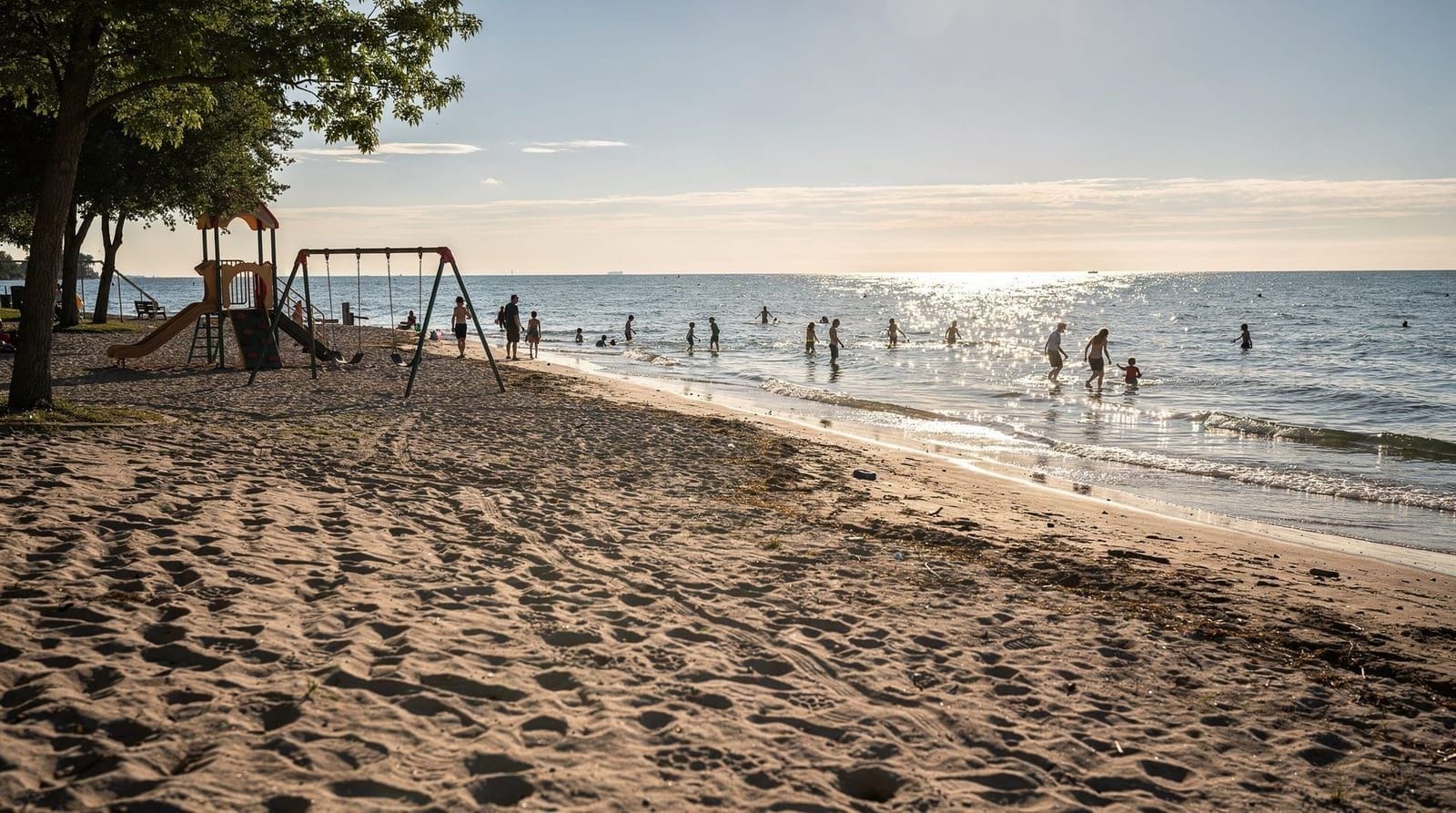
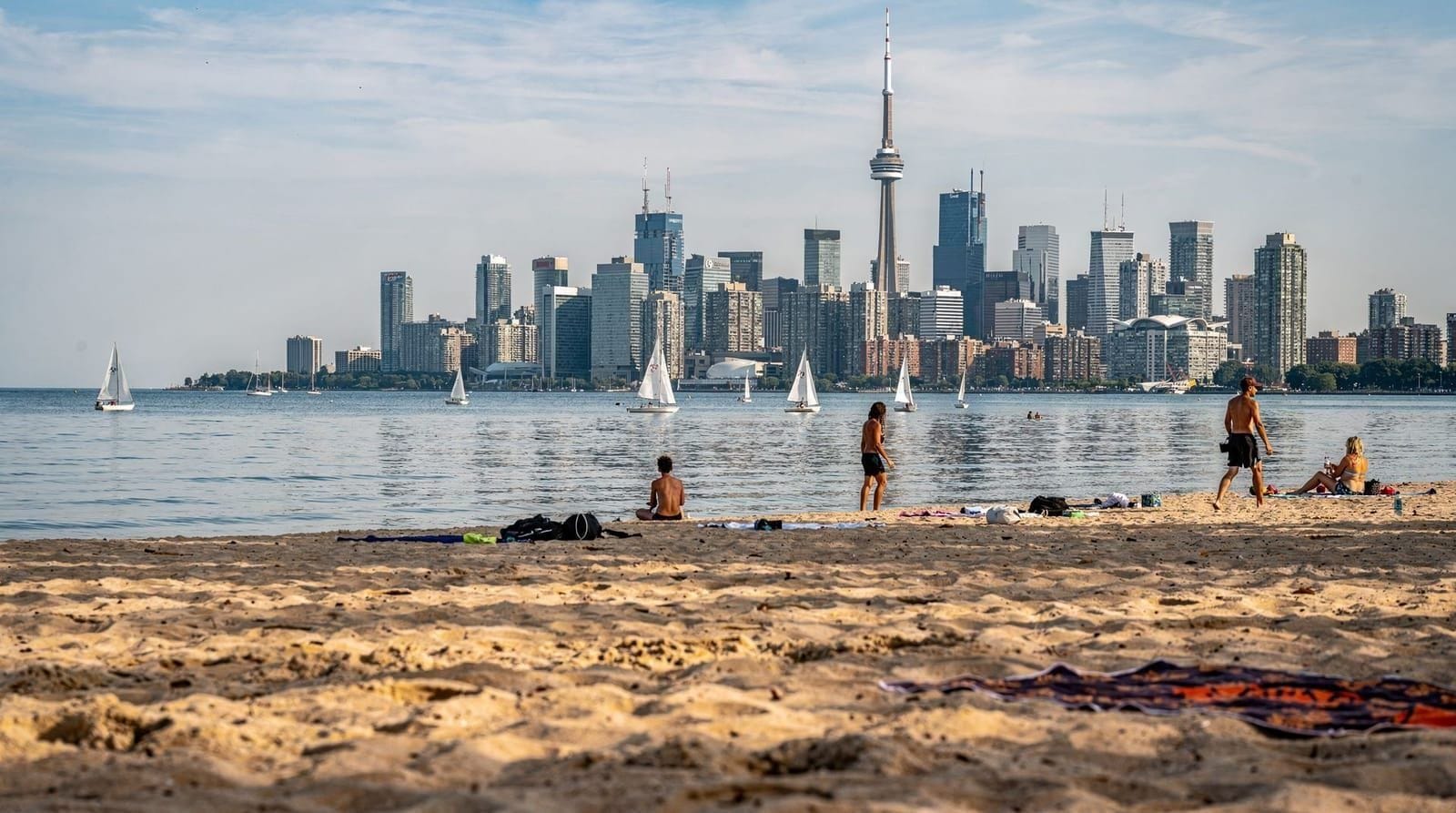
The Beaches boardwalk runs roughly 3 kilometers along the shoreline from Ashbridges Bay Park to the eastern end near Balmy Beach, a continuous wooden path with sand on one side and grassy parkland on the other. It’s flat, wide, and genuinely one of the best places in Toronto for a long walk or run with an actual view — something downtown’s waterfront, hemmed in by condo towers for long stretches, doesn’t offer as consistently.
Along the way you’ll pass Woodbine Beach (the widest and most active, home to summer beach volleyball leagues most weekday evenings) and Kew-Balmy Beach (quieter, more residential, backed by Kew Gardens park with mature trees and a splash pad for kids). Both are supervised and Blue Flag-certified in summer, meaning the city tests water quality daily and posts results — worth checking before swimming, since heavy rain occasionally triggers a temporary advisory across Toronto’s lakefront beaches.
Queen Street East
The main strip runs a comfortable walking length between Woodbine and Beech Avenue, dense with small businesses that have mostly avoided the chain-store creep seen elsewhere in the city. It’s a good neighborhood for aimless browsing rather than a specific shopping list — vintage furniture shops, independent bookstores, and a genuinely high concentration of ice cream and gelato spots given the neighborhood’s small size. Prices run slightly below downtown-tourist-zone rates, since the customer base is mostly local rather than visitor-driven.
Beaches International Jazz Festival
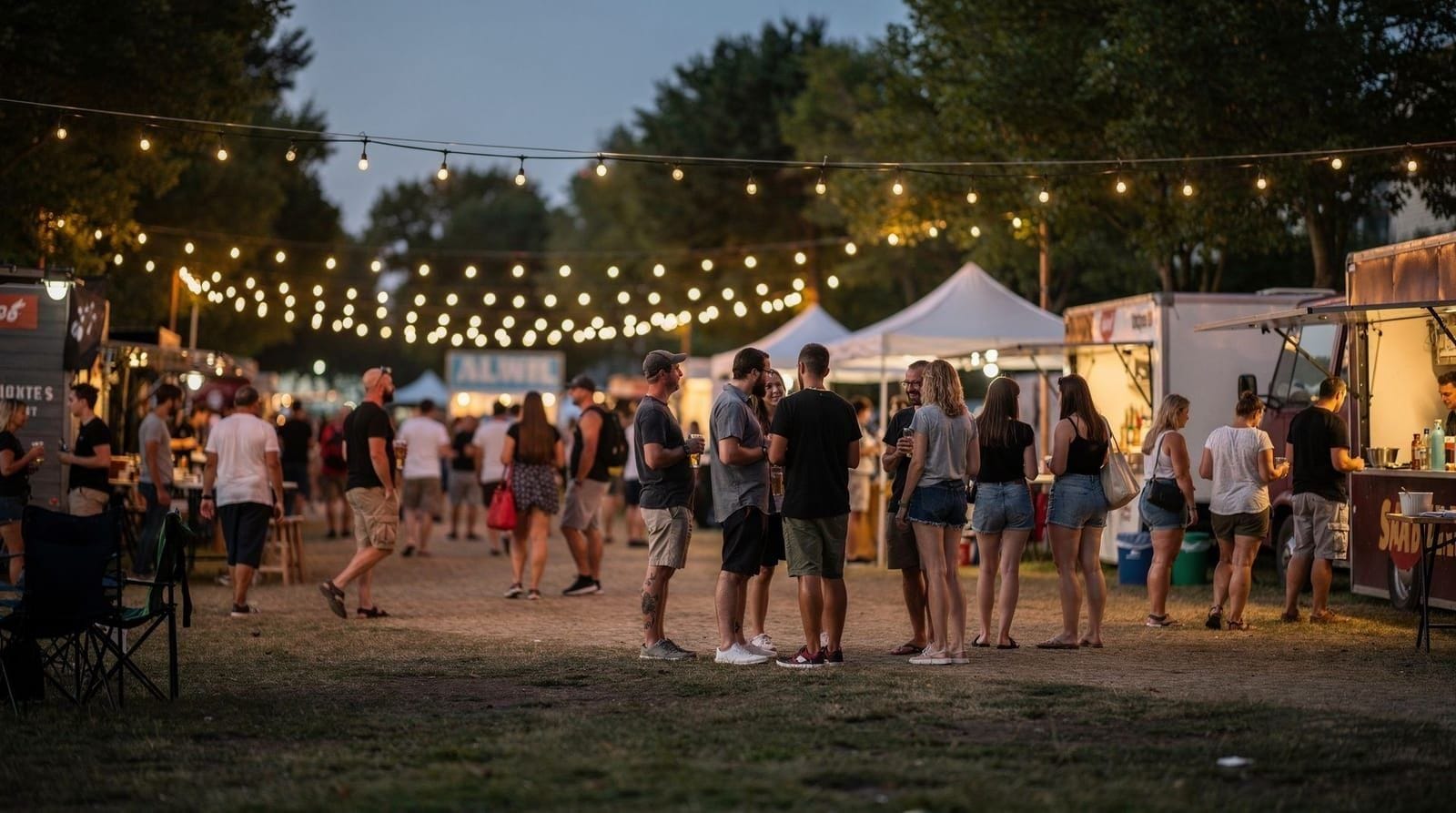
The neighborhood’s biggest annual event takes over Queen Street East and the boardwalk in July, mixing free outdoor stages with ticketed evening shows across multiple venues. It draws a mix of serious jazz fans and neighborhood families out for a summer evening, and it’s a meaningfully different scene than Toronto’s larger downtown jazz festival — smaller, more neighborhood-block-party than concert-hall. If your visit overlaps with it, it’s worth building an evening around, and our Toronto summer festivals guide covers how it fits into the wider summer calendar.
Getting there
The Beaches sits outside comfortable walking distance from downtown — plan on 20-25 minutes by streetcar (the 501 Queen streetcar runs the length of Queen Street East and is the simplest route), or a similar drive time by car if traffic cooperates. There’s no subway station directly in the neighborhood; the nearest Line 2 stations (Main Street or Woodbine) connect via a short bus ride south to the lakeshore.
Because of the added travel time, The Beaches works best as a half-day or full-day dedicated trip rather than a quick stop tacked onto a downtown itinerary. Summer weekends are the busiest, particularly on hot days when the beach parking lots fill and street parking on the side streets becomes the more realistic option — arrive earlier in the day if you’re driving.
Who should prioritize this neighborhood
If your Toronto trip is two or three days focused on downtown highlights — the CN Tower, Kensington Market, the Distillery District — The Beaches is a reasonable one to cut given the travel time involved. But if you have four or more days, or if you’re visiting in summer and want a genuine swimming beach with a real neighborhood attached rather than a tourist-oriented waterfront, it’s worth the trip east. It’s also a strong pick for anyone traveling with kids who want space to run rather than another walking tour, since the boardwalk and beaches give children room to move that denser downtown neighborhoods don’t.
Compare it against Toronto Islands if beach time is your priority but you’re not sure which to choose — that guide covers the ferry-and-skyline-view alternative, which trades convenience for a different kind of setting. Families specifically should also check our guide to the best beaches for families in Toronto, which stacks up The Beaches against the islands and a few lesser-known options on practical grounds like lifeguard coverage and bathroom access.
Where to stay if you want to base here
The Beaches has a smaller hotel footprint than downtown — most visitors who prioritize this neighborhood stay in a short-term rental or one of a handful of boutique guesthouses along Queen Street East rather than a branded hotel. If you’re weighing neighborhoods for where to base your whole trip, our best Toronto neighborhoods to stay guide covers the trade-offs between staying in The Beaches (quiet, residential, longer commute to downtown attractions) versus staying centrally and visiting for a day trip, which is the more common approach for short stays. Our downtown Toronto walking guide covers that central alternative in full.
Seasonal notes
Summer is unquestionably the neighborhood’s peak — warm water, the jazz festival, beach volleyball, and the boardwalk at its busiest. Spring and early fall offer a quieter, still-pleasant version, good for a long walk without swimming plans. Winter transforms the boardwalk into a colder, wind-exposed walk along a mostly empty beach — striking in its own way, with waves sometimes freezing into ice formations along the shore, but not the same trip as a summer visit, and several seasonal businesses along Queen Street East reduce their hours.
How a lakeside resort town became a Toronto neighborhood
In the late 1800s, The Beaches existed as a separate resort community outside Toronto’s city limits entirely — well-to-do Torontonians took a steamer or a long carriage ride east to rent cottages along the lake for the summer, escaping the heat and industrial smoke of the growing city. Amusement parks operated along the shoreline in this era, including Munro Park and later Scarboro Beach Park, drawing day-trippers on excursion boats and, once it was built, the radial streetcar line that ran out along Queen Street.
The neighborhood was formally annexed into the City of Toronto in stages beginning in the 1880s, and the streetcar line that had carried summer visitors gradually became a year-round transit connection as cottages were replaced by permanent, insulated homes and the seasonal population became a full-time residential one. Kew Gardens, purchased by the city in the early 1900s from a private estate, anchors much of that history — a lot of what’s now parkland along the boardwalk was originally private summer-estate land before the city began acquiring and consolidating it into public space through the early 20th century.
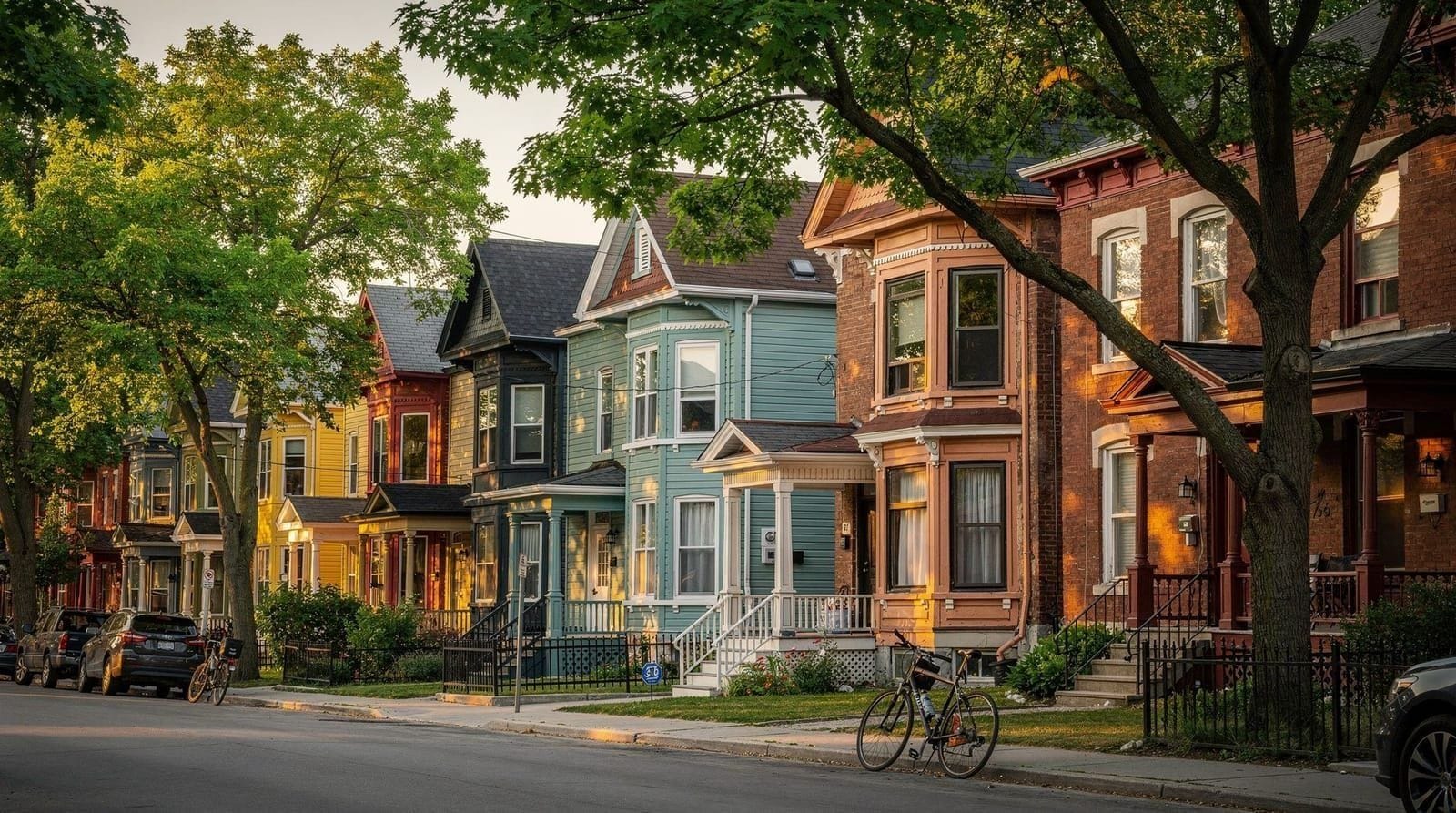
The boardwalk itself was built in stages rather than as a single project — sections were added over several decades, and the continuous 3-kilometer path that exists today wasn’t fully connected until well into the 20th century. That gradual, patchwork development is part of why the neighborhood still has a slightly different architectural character than most of Toronto: a mix of Victorian-era cottages that were winterized rather than rebuilt, alongside larger homes built once the area’s amusement-park-and-cottage identity gave way to a conventional streetcar suburb.
By the mid-20th century, the amusement parks were gone — Scarboro Beach Park closed in the 1920s, its site later redeveloped for housing — but the neighborhood kept the lakeside orientation and pedestrian scale that the resort era had established. The 501 Queen streetcar route running the length of Queen Street East today traces almost exactly the same corridor as the original line that carried the first wave of summer visitors more than a century ago, a rare case in Toronto where the transit route has outlasted nearly everything else about the era that built it.
The neighborhood’s name is itself a decades-long local dispute that occasionally makes the news. Officially, the City of Toronto and Canada Post both use “The Beaches,” and it’s the name that appears on most maps and signage. But a vocal segment of longtime residents and the area’s business association have pushed for years to have it referred to as “The Beach,” singular, arguing that’s the name used by the neighborhood’s earliest 20th-century residents and that “Beaches” was a later addition meant to appeal more broadly to visitors.
” It’s a minor thing, but locals occasionally enjoy testing visitors on which version they use.
Ashbridges Bay, at the boardwalk’s western end, has its own quieter transformation story. Long before it became the marina and parkland it is today, the bay was a shallow, marshy wetland — one of the largest on the Toronto waterfront — that the city spent decades filling in with landfill and dredged material through the early-to-mid 20th century to create usable park and industrial land, a common practice for Great Lakes waterfronts of that era. What remains of the original marsh today is a small protected wetland area within Ashbridges Bay Park, managed specifically to preserve habitat for migratory birds — a quiet counterpoint to the boardwalk’s beach-town energy a short walk away, and worth a detour if birdwatching interests you.
Practical notes
- Cost: Free to walk the boardwalk and beaches; food and shopping along Queen Street East run comparable to or slightly below downtown prices.
- Bathrooms: Public facilities are available at several points along the boardwalk during the summer season, though hours can be limited outside peak months.
- Accessibility: The boardwalk itself is flat and accessible; sand access to the water requires crossing loose sand, which is harder going for wheelchairs and strollers.
- Dogs: Off-leash areas exist near Woodbine Beach and are heavily used — expect a lot of dogs on the boardwalk generally, leashed or not.
The Beaches isn’t a neighborhood you stumble into by accident the way you might Kensington Market or Chinatown — it takes a deliberate trip east. For visitors with the time, it’s worth it precisely because it doesn’t feel built for tourists.
A simple half-day plan
Arrive by streetcar around late morning and start at Woodbine Beach, walking east along the boardwalk toward Kew-Balmy Beach — roughly 45 minutes to an hour at an easy pace, longer if you stop to sit on the sand. Break for lunch on Queen Street East once you’ve reached the Beech Avenue stretch, then either backtrack for an ice cream and a slower browse of the shops, or continue east if you still have energy for the quieter end of the boardwalk near Balmy Beach. If you’re visiting with kids, budgeting time at Kew Gardens’ splash pad breaks up the walk well. In summer, plan around the water-quality postings if swimming is part of the day — they’re updated daily and posted at the supervised beaches.
How it compares to other Toronto beach options
Beyond the Toronto Islands, a couple of other lakefront spots occasionally come up as alternatives, though neither matches The Beaches for a genuine neighborhood-plus-swimming combination. Cherry Beach, near the Port Lands, is smaller and more industrial in setting, popular with a younger, less family-oriented crowd. Sunnyside Beach, near High Park, has a historic bathing pavilion and pool but sits closer to a busy road than The Beaches’ quieter, tree-lined streets. For most visitors weighing a dedicated beach trip, it comes down to The Beaches versus the Toronto Islands — mainland convenience versus a ferry-and-skyline setting.
Frequently asked questions about The Beaches
How far is The Beaches from downtown Toronto?
About 20-25 minutes by streetcar or car from Union Station, or roughly 8 kilometers east along the lakeshore. It’s outside easy walking distance from downtown, unlike Kensington Market or the Distillery District, so plan on it being a dedicated trip rather than a quick add-on.
Is The Beaches worth visiting if I’m only in Toronto for a few days?
It’s a lower priority than downtown neighborhoods on a short trip, but worth it if you want to see how Torontonians actually live day-to-day, or if you’re visiting in summer and want real swimming beaches rather than a quick photo stop.
Can you swim at the beaches in The Beaches?
Yes, Woodbine Beach and Kew-Balmy Beach are supervised, Blue Flag-certified swimming beaches in summer, with lifeguards on duty and daily water-quality postings. Water is coolest in June and warmest in late July and August.
What’s the difference between The Beaches and Toronto Islands for a beach day?
The Beaches is mainland, reachable by streetcar with no ferry required, and has a longer continuous boardwalk with a real neighborhood attached. The Toronto Islands require a ferry but offer skyline views and a more isolated, car-free feel, and many visitors pick one, not both, given the travel time to each.
Is The Beaches good for families?
Yes — the boardwalk is flat and stroller-friendly, the beaches are supervised in summer, and Queen Street East has enough casual restaurants and ice cream shops to make a full family afternoon without much planning.
When is the Beaches International Jazz Festival?
It runs annually in July along Queen Street East and the boardwalk, with free outdoor stages alongside ticketed shows — one of the neighborhood’s biggest yearly draws and a good reason to time a visit around it if jazz is your thing.
Is The Beaches walkable without a car?
Yes, once you arrive — the boardwalk and Queen Street East are both flat and easy walking, and there’s no need for a car within the neighborhood itself. Getting there from downtown is easiest by the 501 Queen streetcar rather than driving.
Are there other beaches near The Beaches worth knowing about?
Cherry Beach and Sunnyside Beach are the two other mainland options, though neither matches The Beaches’ combination of a long boardwalk and a real neighborhood strip — most visitors treat The Beaches as the primary choice and the others as secondary if time allows.